
Fast Facts | 2026 Honda Accord Hybrid
🔋 Powertrain: Two-motor hybrid system with 2.0-liter four-cylinder
⚡ Output: 204 horsepower total system output
⛽ Fuel Economy: 44 mpg combined (Hybrid Touring)
🖥️ Infotainment: 12.3-inch touchscreen on hybrid models
🚗 Drive Feel: EV-like operation at low and moderate speeds
💰 Price Range: $34,850 to $40,950 MSRP including delivery
It wasn't that long ago that midsize sedans were the bestselling segment of the U.S. market outside of full-size trucks, with over two million sales in 2015. But as consumers have flocked to crossovers, that number's dropped by roughly half. For more than two decades, the Toyota Camry and Honda Accord battled for the top spot in this segment, and while both remain strong sellers, the Accord has since been overtaken by its smaller sibling, the Civic.
I recently got to spend time in the latest 2026 Accord Hybrid Touring, and I came away feeling that this is a car that deserves a lot more attention.
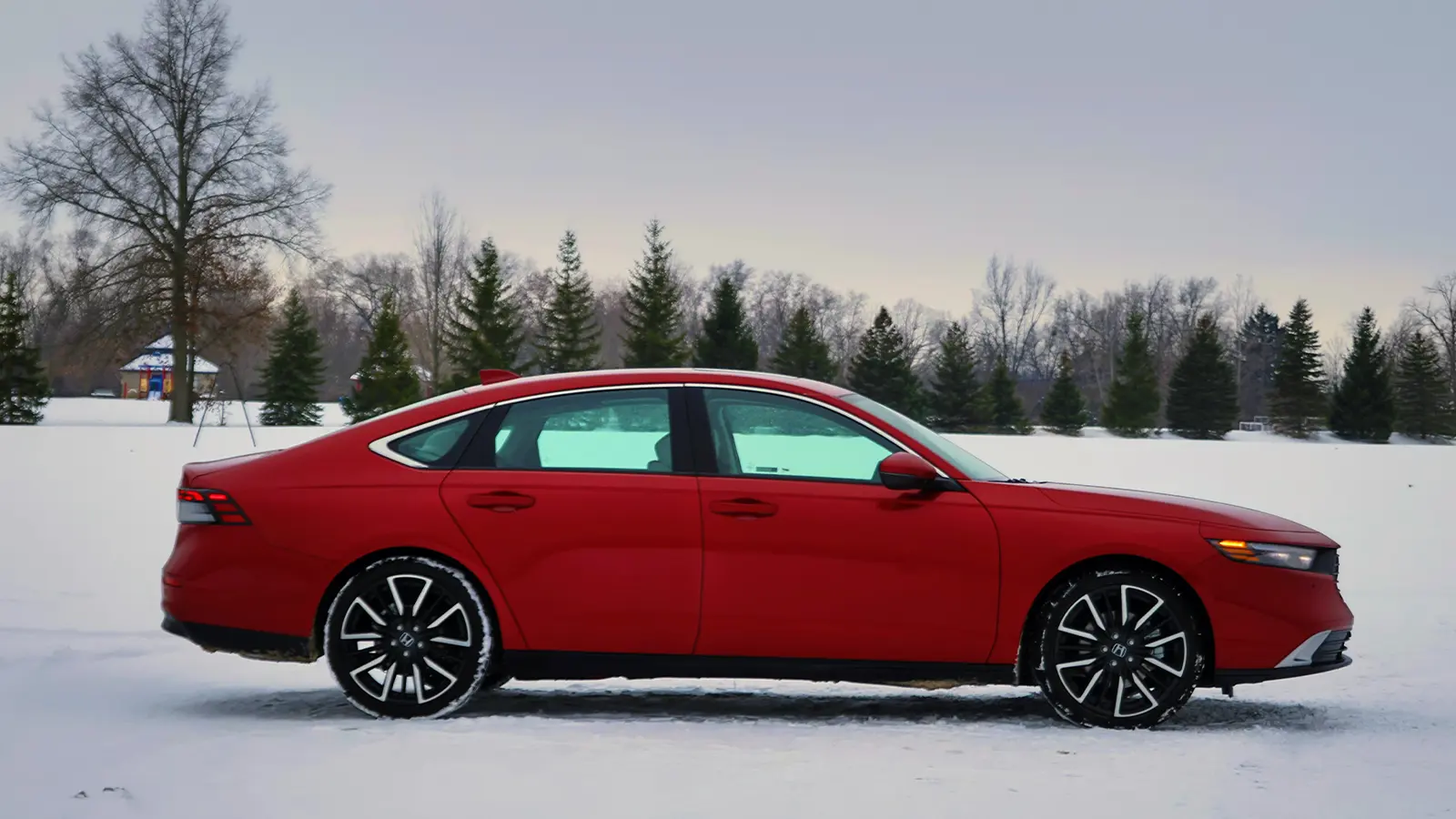
A Clean, Refined Look
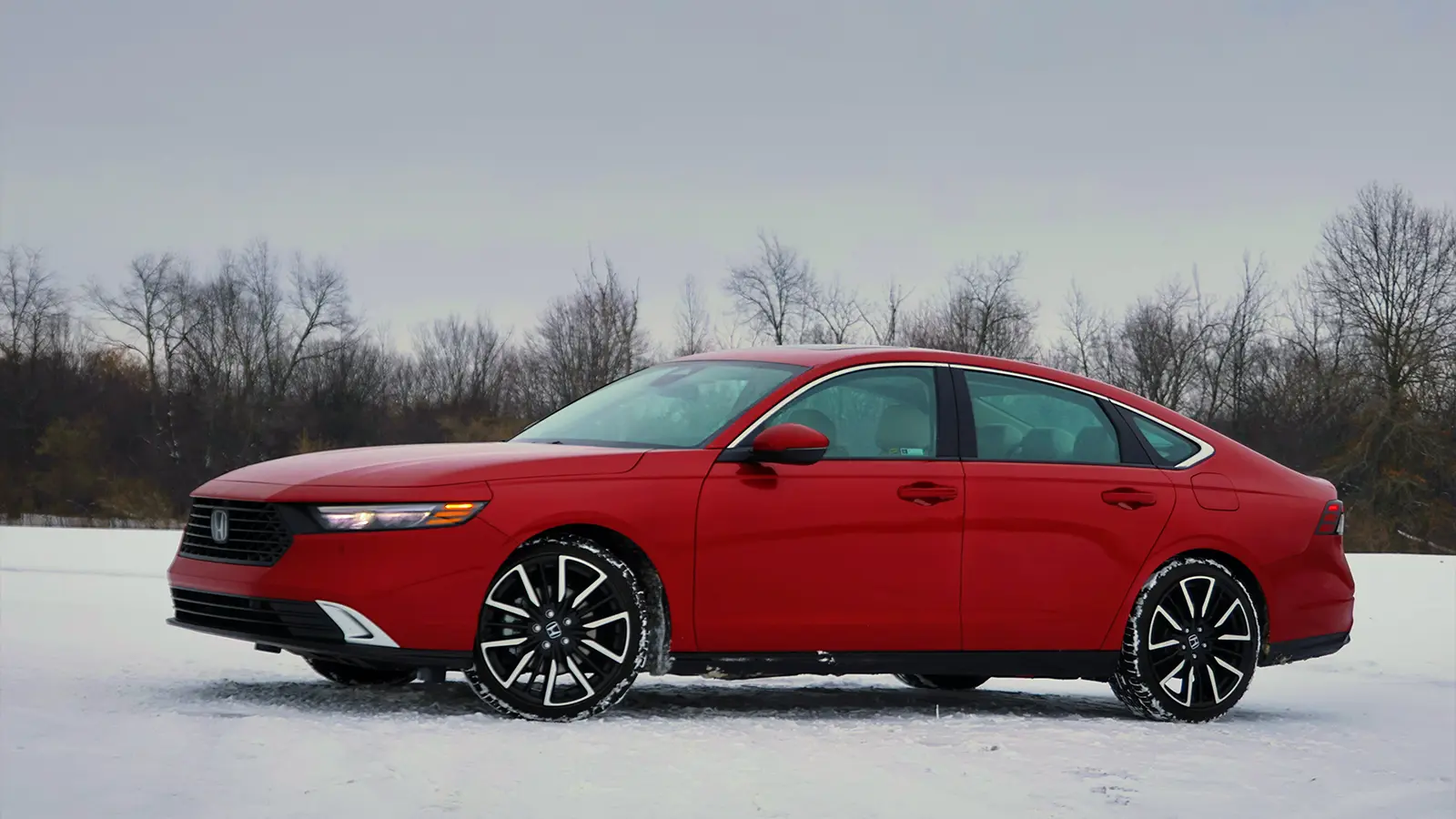
Over the last two generations, Honda, like the rest of the industry, has shifted the Accord away from its original three-box sedan form (engine bay, passenger compartment, and trunk) toward a sleeker, coupe-like fastback profile. Along with that evolution came the demise of the two-door coupe variant (the wagon was dropped from the American lineup in the late 1990s).
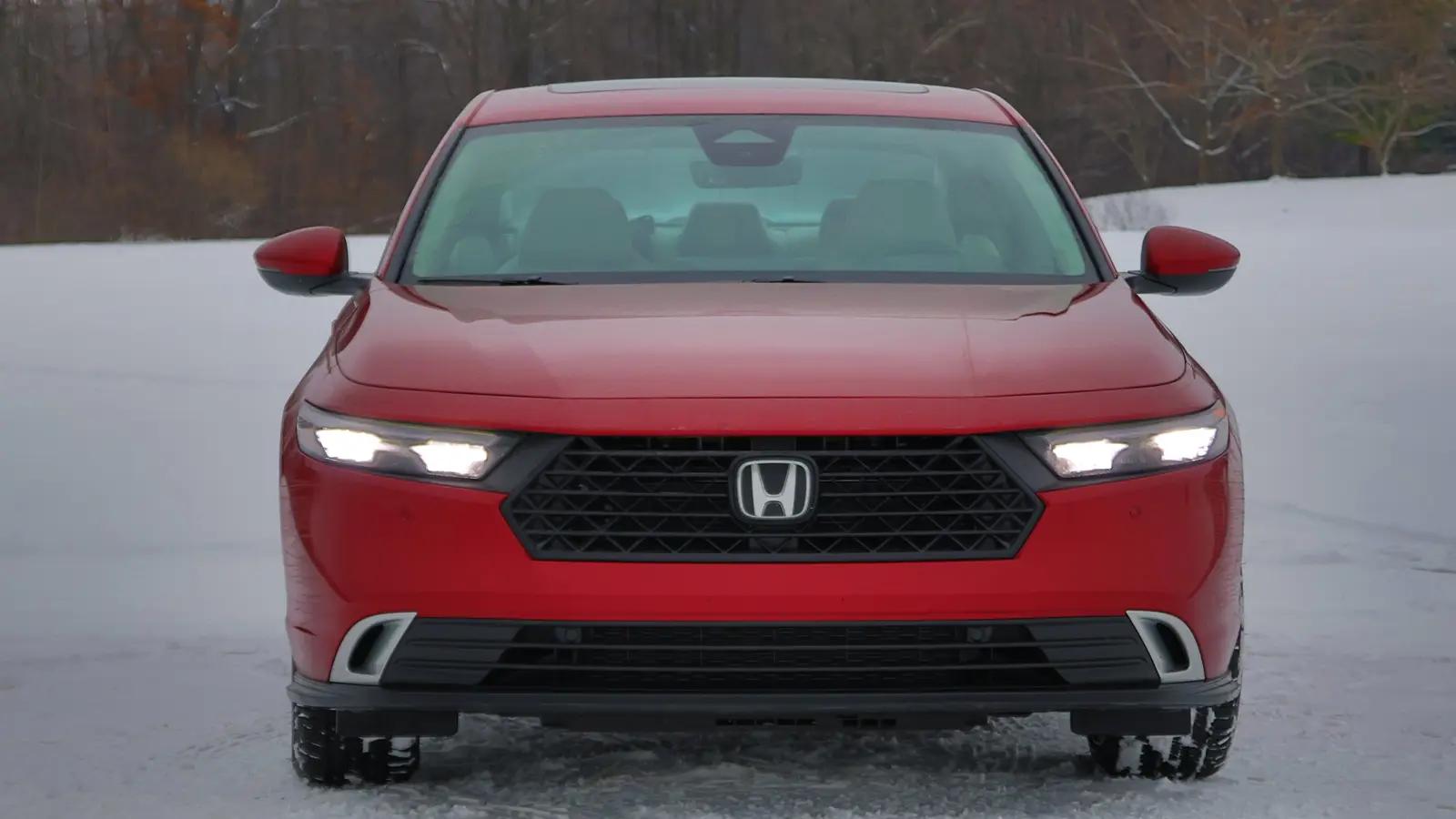
The current 11th-generation Accord is a cleaner take on the last model's overall shape, with smoother, less pronounced sculpting on the sides and, counter to current industry trends, a less prominent grille. Overall, it's a much tidier design than the Camry.
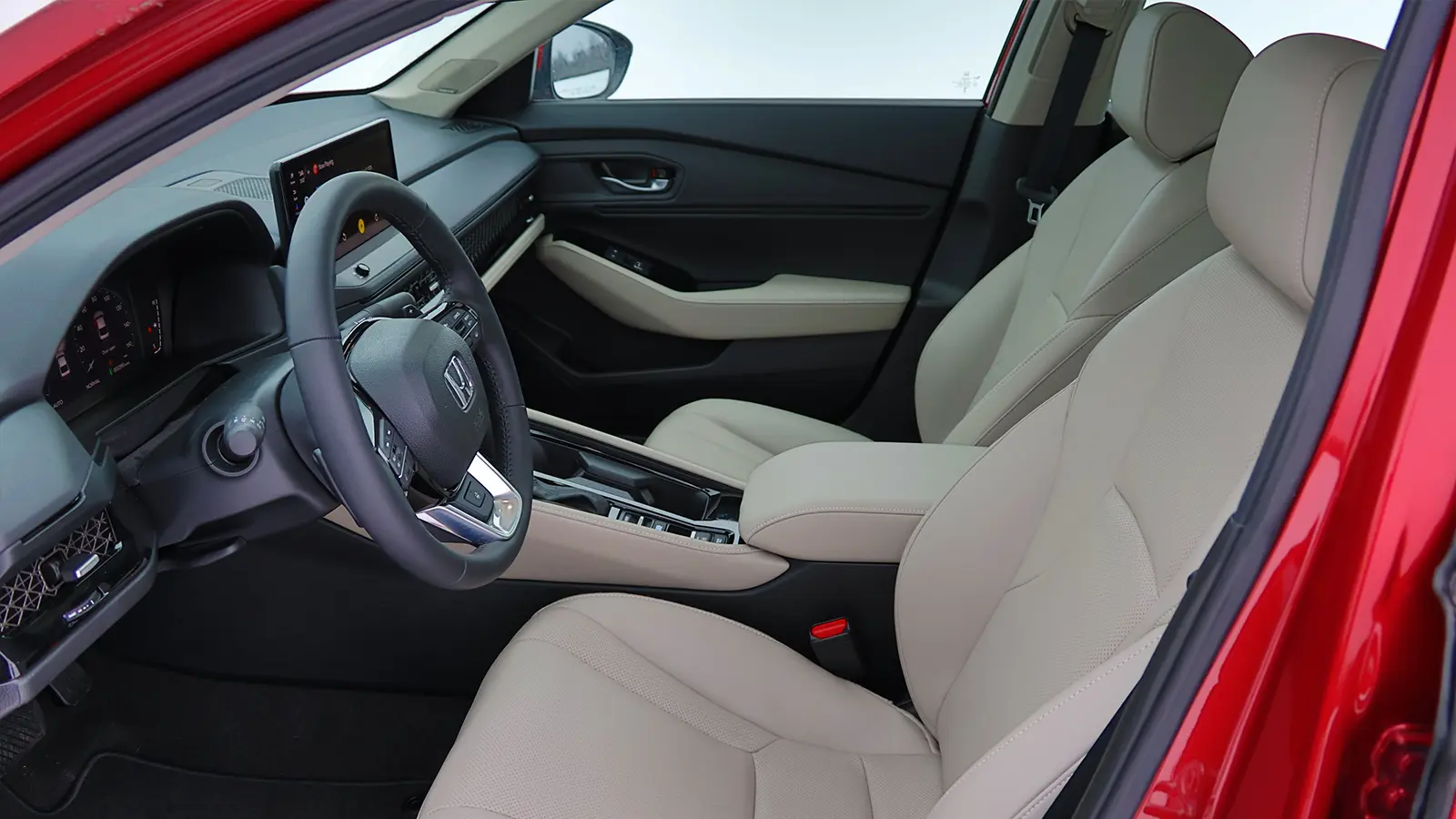
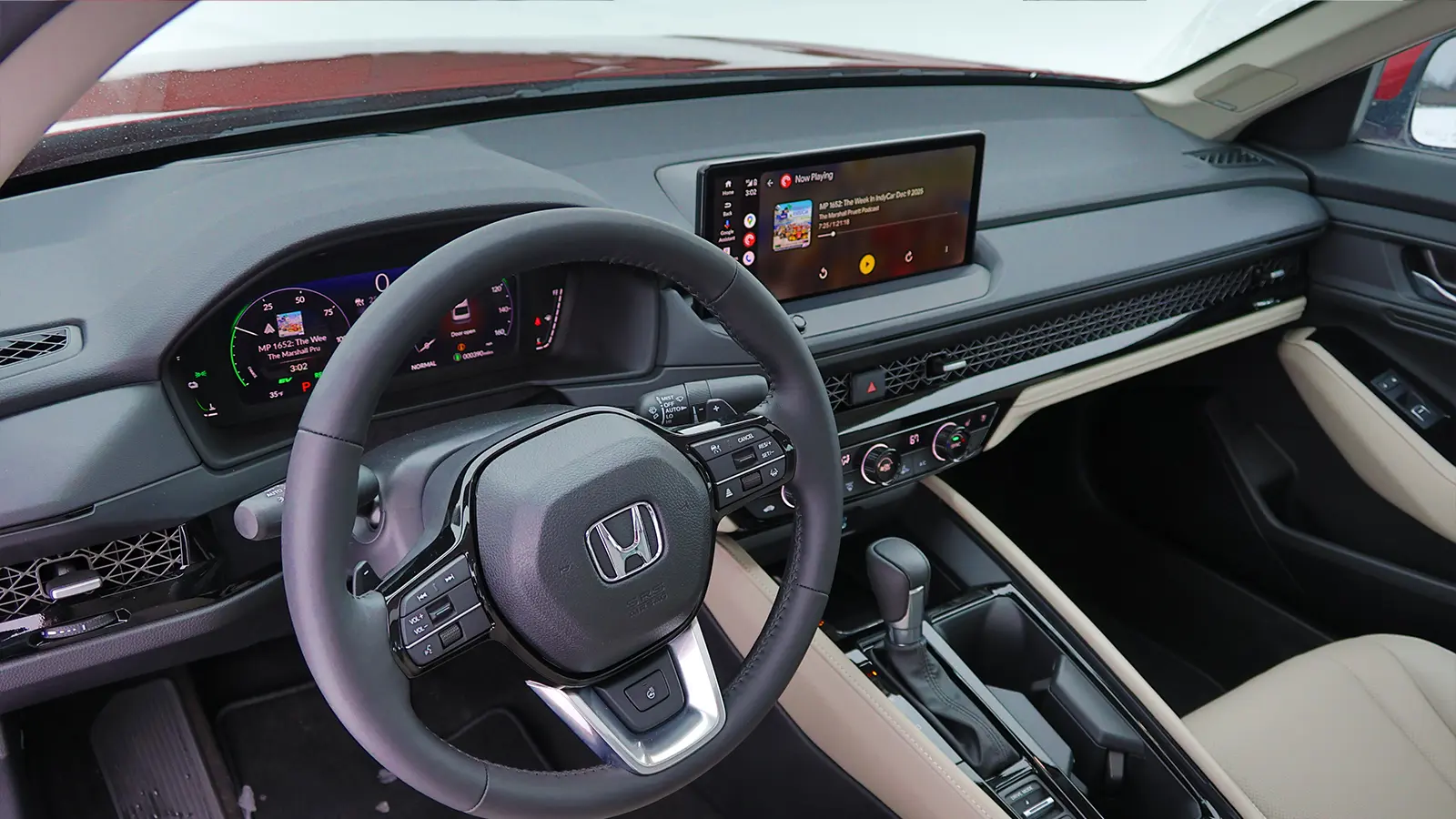
Familiar Honda Interior with Upgraded Tech
Inside, the cabin will feel familiar to anyone who's spent time in a recent Honda, especially the Civic, with its mainly horizontal theme that emphasizes width. There's a tidy digital instrument cluster directly in front of the driver with a stand-up touchscreen for infotainment perched atop the center of the dashboard. The gas-engined models get a modest 7.0-inch display, while the hybrids get a more spacious 12.3-inches screen.
On all but the top Hybrid Touring model, the Accord uses a Honda-designed interface built on Android software. The Hybrid Touring I drove gets a Google Built-in system with the Google Play Store, Assistant, and Maps. The Google version also includes three years of built-in connectivity to support the apps, and both infotainment versions support wireless Apple CarPlay and Android Auto phone projection as well.
Shopping hybrids right now and want the short list first? Start with the standouts ➜
Since Google Built-in doesn’t have any messaging, calling, or calendar apps available in the Play Store yet (although they're supposed to be added at some point), I had my phone connected. I logged into my Google account so I could access my saved locations in Maps, and I also downloaded Pocket Casts in the vehicle to listen to my favorite podcasts.
Honda has always produced very comfortable and supportive seats, even though most don’t have a multitude of adjustments, and the Accord continues that tradition. The back seat is also very roomy for legs, hips, and shoulders, although riders over 6 feet tall might find headroom a bit snug thanks to that sleek roofline. Another downside of those rooflines is that they tend to result in a tight opening to the trunk, even though overall cargo volume is generous. This is definitely the case with the Civic sedan, which is why I generally prefer the hatchback. The Accord’s trunk opening, though, is surprisingly large and tall, with 16.7 cubic feet of cargo room.

Outstanding Hybrid System
Honda currently offers the Accord with two powertrain options: a gas-fueled, 192-hp version of the turbocharged 1.5-liter four-cylinder also used in the Civic and CR-V, or a 204-hp hybrid powertrain also used in the CR-V, Civic, and Prelude.
What really sets this Accord apart in the segment is the hybrid powertrain. It's very biased toward electric propulsion. There are two motor-generator units (MGU), with one primarily acting as a generator and the other handling propulsion and regenerative braking. That primary MGU delivers 181 horsepower and 247 pound-feet of torque and does nearly all of the driving under most conditions. The 2.0-liter four-cylinder engine typically only drives the second MGU to provide electricity to the lithium-ion battery. Only at higher speeds does a clutch engage to send some of the engine torque directly to the wheels.
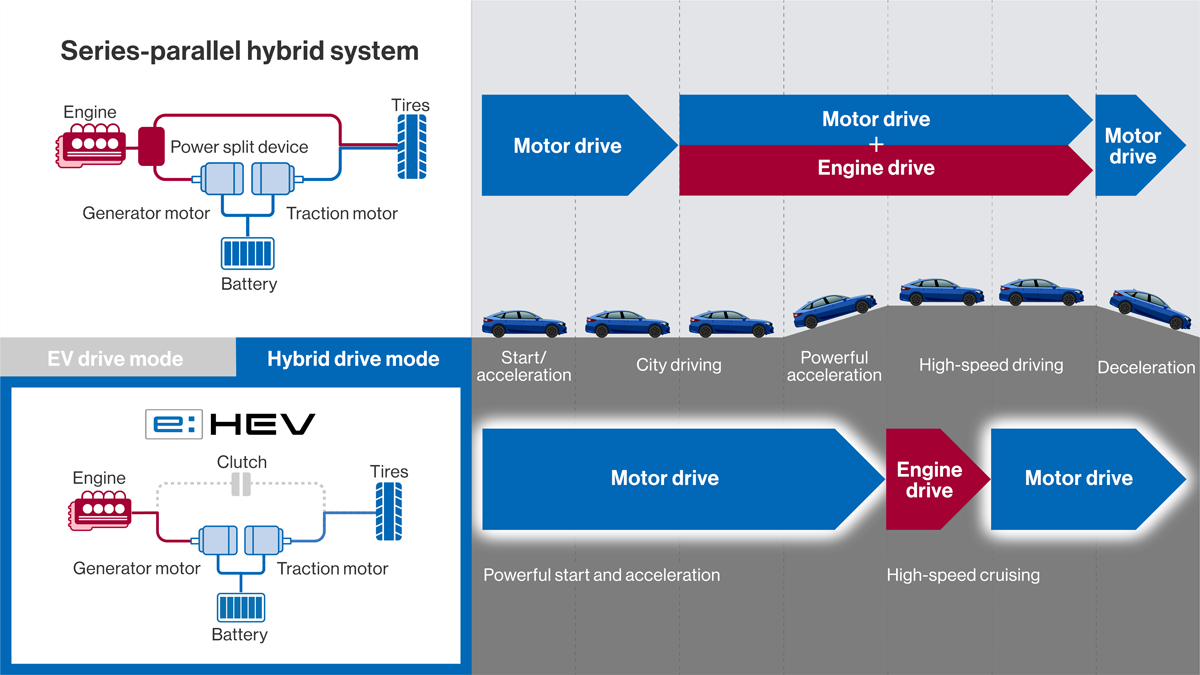
This is distinct from the Toyota approach, which has only 134 horsepower from its primary MGU and uses a planetary gear set to blend in engine torque most of the time. I recently spent some time with a 2025 Camry rental car, and like other Toyota hybrids, during acceleration, the engine typically revs to about 4,000 rpm and absolutely makes its presence felt with noise.
Because the Honda engine is decoupled from the wheels most of the time, it gives the Honda engineers more freedom in controlling its speed. It tends to rev slower than the Toyota, and instead of staying at constant revs, it gradually builds and then drops as if it's shifting gears. Honda simulates a three-speed transmission with its current hybrids but uses the same mechanism with different software in the Prelude to simulate eight gears.
The result is a more natural-feeling operation in the Accord compared to the Camry, and even under maximum acceleration, it’s substantially quieter than the Toyota. In many respects, it feels more like driving an EV. The Honda hybrid system is one of the best in the industry right now, although the upcoming Nissan e-Power series hybrid is also excellent.
If you’re cross-shopping midsize hybrids and want to compare trims, pricing, and fuel economy side by side, compare them directly using the GreenCars Buyer’s Guide ➜
The trade-off for Honda's more pleasant driving experience is slightly lower fuel economy. While it's still excellent, it's not quite as outstanding as the Camry. With comparable 19-inch wheels, top Camry hybrid trims are EPA-rated at 47 mpg combined, while the Accord Hybrid Touring comes in at 44 mpg combined. But once you’re up into the 40s, the actual difference in fuel consumption for every mpg gets very small. Based on the calculator at fueleconomy.gov, the annual fuel cost for the Accord would only be about $50 more than the Camry.
Besides the feel of the powertrain, the Accord has better steering feel and handling than the Toyota, making it generally more fun to drive on a daily basis. The Accord has paddles on the back of the steering wheel that allow the driver to adjust the amount of regenerative braking effort. In Normal mode, tapping the left paddle as you lift off the accelerator increases the amount of regen, but it’s only for that particular stop. As soon as you press down the pedal, the regen reverts to a more modest level that feels like coasting. Using the mode switch behind the shift lever on the console to switch to Sport puts the regen in Manual mode. In this mode, it stays at whatever level you set it to, with the right-side paddle reducing the regen.
An Outstanding Choice For Hybrid Buyers
The 2025 Honda Accord Sport Hybrid starts at $34,850 MSRP, including delivery, while the loaded Accord Touring Hybrid I drove goes for $40,950 MSRP. Of the current batch of non-plug-in hybrid systems available, Honda’s solution is the one I'd choose, although my personal vehicle preferences run more toward the smaller Civic. However, if you regularly carry more than one passenger and want to spend a minimum on fuel while still enjoying the drive, the Accord Hybrid is an outstanding choice.
🔋 More Hybrid Insights
2025 Toyota Camry Hybrid Road Test
A real-world drive of the Accord’s closest rival, with efficiency and daily usability front and center
Read More ➜
2025 Honda Civic Sport Touring Hybrid Review: Fun Meets Efficiency
If you like Honda’s hybrid feel but want something smaller, this one makes a strong case
Read More ➜
Buying a Hybrid Electric Vehicle
A practical guide to buying an HEV, including what to prioritize and what to ignore in the specs race
Read More ➜