
Fast Facts | Ferrari Luce
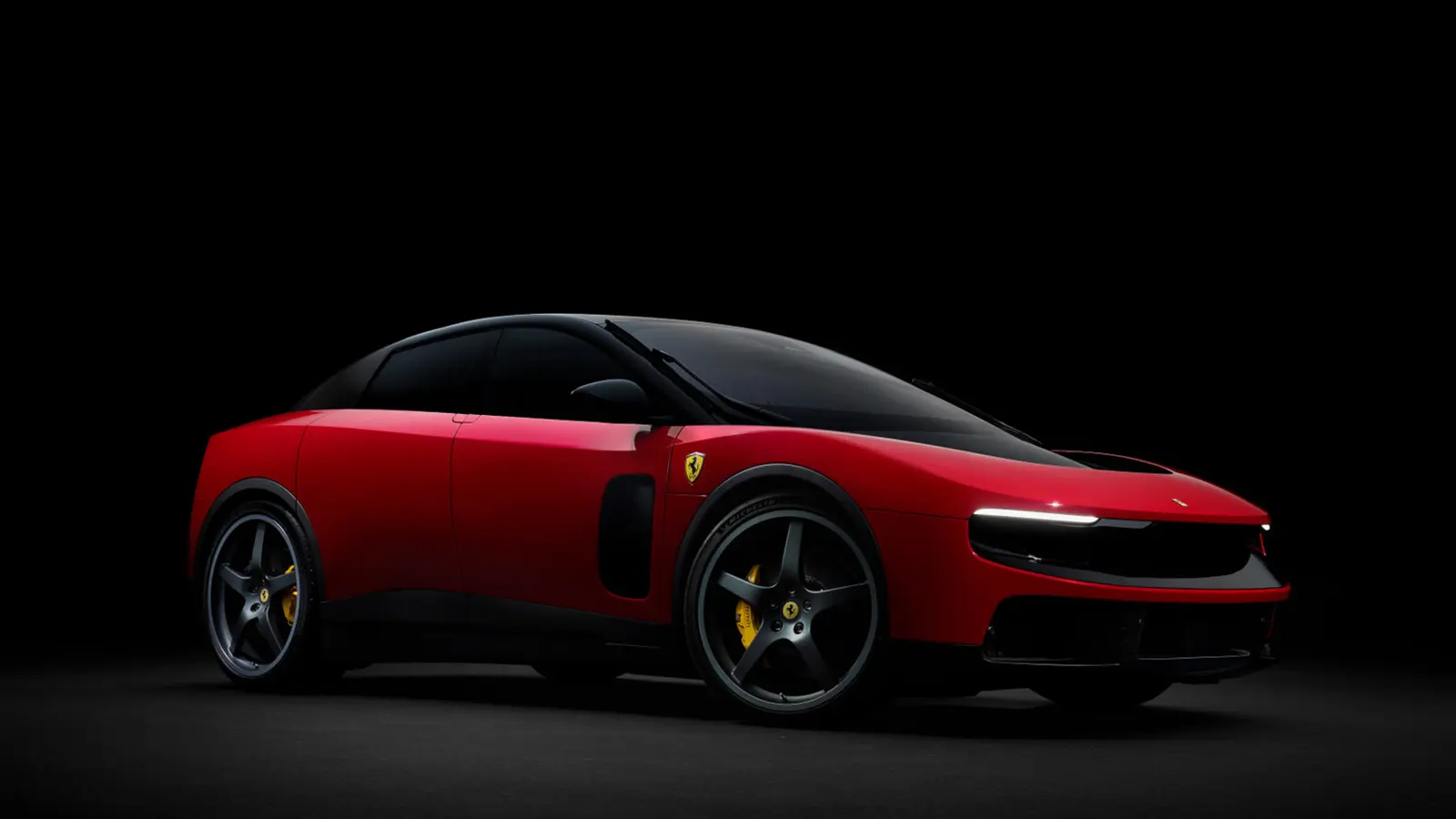
⚡ Power: The Ferrari Luce uses four electric motors producing 1,035 horsepower
🚀 Performance: The Luce reaches 62 mph in 2.5 seconds and has a top speed of 193 mph
🔋 Battery: The Luce uses a 122-kWh battery pack
🔌 Charging: Its 800-volt electrical architecture can charge at up to 350 kW
🛣️ Range: Ferrari estimates about 330 miles of range on the European WLTP cycle, while U.S. EPA range has not been announced
🎨 Design: Jony Ive and Marc Newson of LoveFrom helped shape the Luce’s interior and exterior
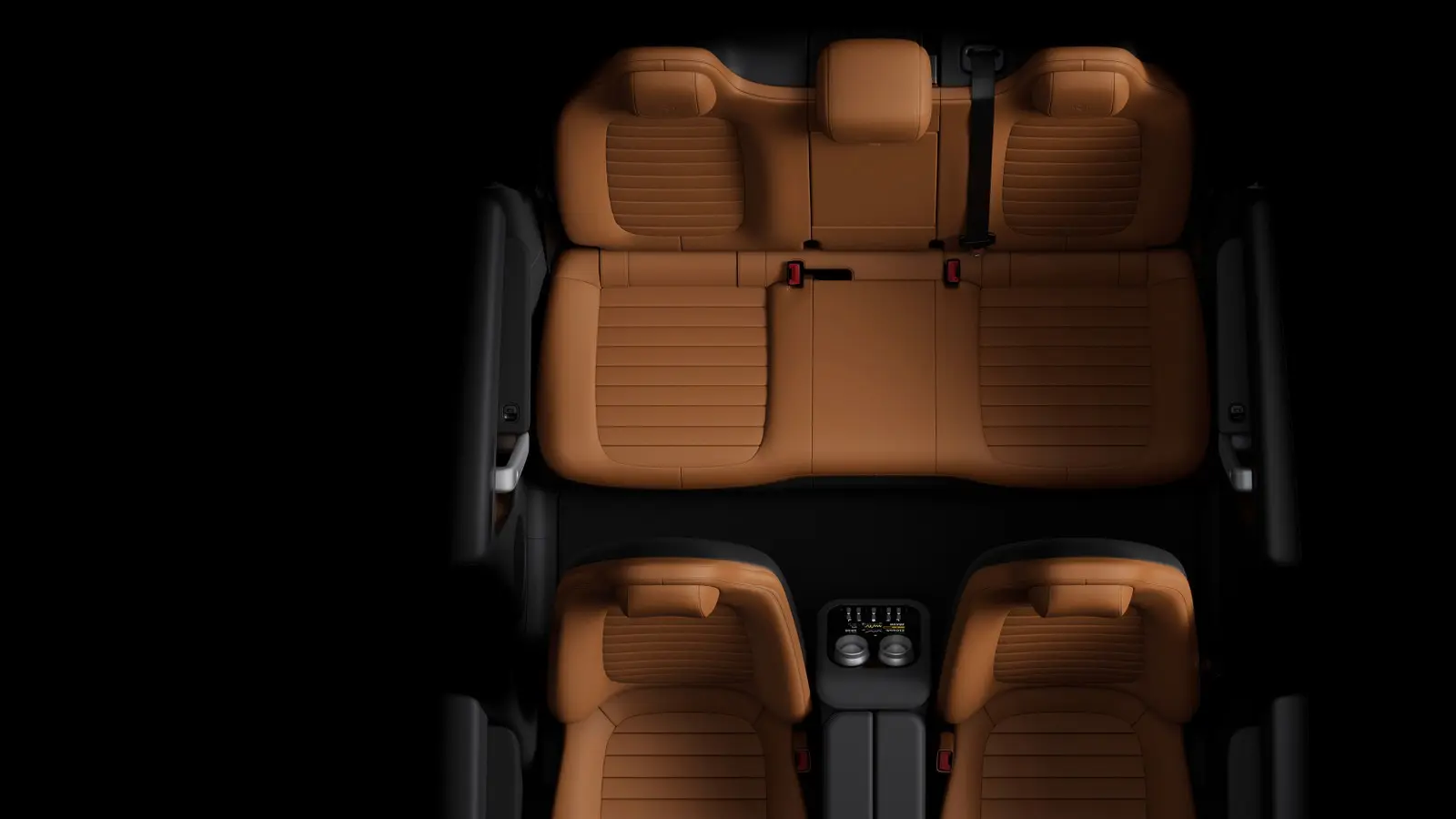
🚪 Layout: The Luce is a four-door, five-seat electric grand tourer with center-opening doors and a rear liftgate
Ferrari has finally built its first electric vehicle, and the reaction has been about as quiet as a pit lane during qualifying. The new car is called the Luce, pronounced “loo-chey,” which means “light” in Italian, but the debate around it has been anything but.
The Luce is a four-door, five-seat electric grand tourer, not a low-slung two-seat supercar with batteries tucked under the floor. It is fast, expensive, unusual, and designed to make Ferrari fans argue about what the prancing horse is allowed to become.
That argument started quickly because Ferrari is not just selling transportation. It is selling sound, ritual, scarcity, racing history, and the strange emotional physics of a red car making unreasonable noise on a mountain road.
The Luce asks whether that emotion can survive without a combustion engine. Ferrari says yes, but some of the brand’s loudest traditionalists are not exactly nodding politely.
A Very Different Kind of Ferrari
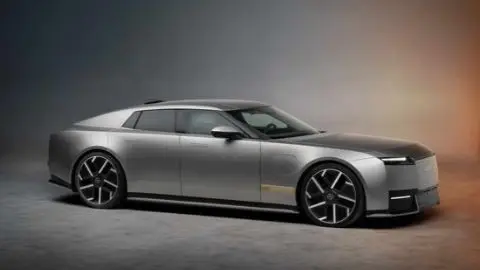
The hardware is serious, even if the shape has become the argument. The Luce uses four electric motors, produces 1,035 horsepower, reaches 62 mph in 2.5 seconds, and has a claimed top speed of 193 mph, according to Ferrari’s official specifications.
Its battery is a 122-kWh pack, and the car uses an 800-volt electrical architecture that can charge at up to 350 kW. Ferrari is estimating about 330 miles of range on the European WLTP cycle, though U.S. EPA range has not been announced.
The more important design story is who helped shape it. Ferrari brought in Jony Ive and Marc Newson, the LoveFrom founders closely associated with Apple’s most influential product-design era, to work on the Luce’s interior and exterior.
That gives the car a different kind of pressure: it has to be a Ferrari and a high-design object at the same time. Ive and Newson’s fingerprints help explain why the Luce does not look like a normal Ferrari stretched over an EV skateboard.
It has center-opening doors, a rear liftgate, a cabin pushed forward over an aluminum body, and a cleaner, more minimalist stance than many people expected from Maranello. Ferrari could have built something more familiar and been accused of timidity. Instead, it built something different enough that people started asking whether it should wear the badge at all.
Ferrari also gives the Luce its own connected layer through the Ferrari Luce app, which the brand describes as “a new way to connect your car.” The app shows range, lock status, climate controls, and charging or energy-use information, while the car’s 21-speaker audio system adds another sensory layer inside the cabin.
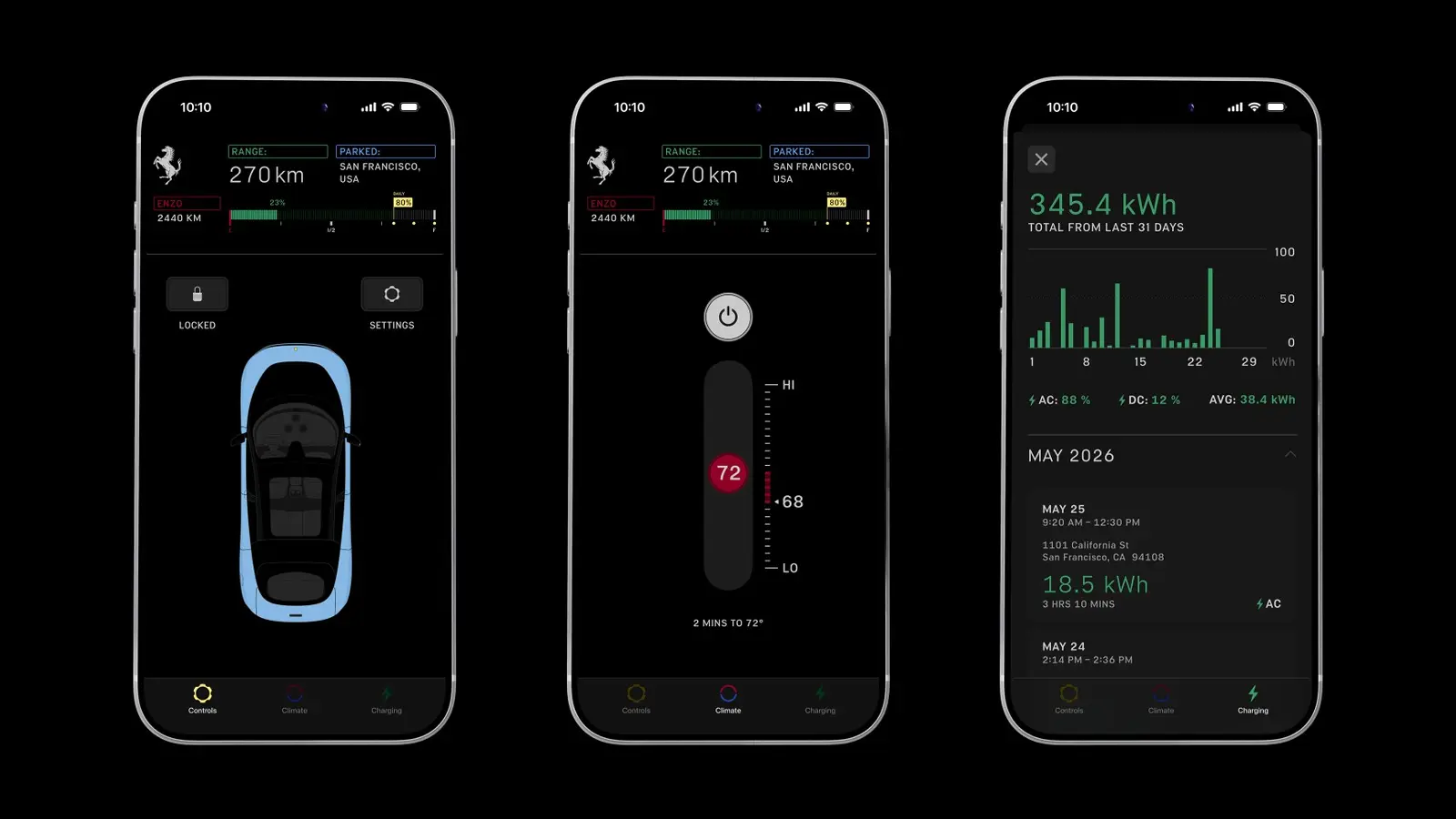
For a brand that has historically sold emotion through engines, pedals, metal, and noise, those details matter. The Luce is not just asking buyers to accept an electric powertrain. It is asking them to accept a new version of Ferrari theater.
Why the Backlash Hit So Fast
The criticism has focused on three things: the look, the silence, and the feeling that Ferrari has moved too far from the mechanical drama that made the brand famous. Online, the comparisons came fast, with some critics seeing more luxury EV experiment than Italian supercar mythology.
The harshest criticism came from Luca Cordero di Montezemolo, Ferrari’s former chairman, who led the company for more than two decades. “We’re risking the destruction of a legend, and I’m truly sorry about that. I hope they at least remove the prancing horse [logo],” he said, according to The Guardian.
That line landed because Montezemolo is not just another commenter with a phone and a grudge. He is one of the people most associated with modern Ferrari’s mythology, and a TikTok clip of his criticism has been circulating as a kind of shorthand for the traditionalist backlash.
There is also a larger brand story underneath the outrage. Ferrari has always balanced heritage and evolution, and a recent Wall Street Journal piece on Montezemolo and Ferrari’s brand identity is useful context for why this particular EV feels like more than another model launch.
Ferrari Says the Luce Is Still a Ferrari
Ferrari’s answer is simple: see the car, drive the car, then judge the car. CEO Benedetto Vigna has pushed back against the criticism, saying the company is seeing strong interest from both existing and new customers.
The company showed the Luce to 1,600 customers during the Rome launch, opened order books shortly afterward, and had already received bank transfers from interested buyers, Vigna said in comments covered by Reuters. He also stressed that the Luce is an addition to Ferrari’s lineup, not a replacement for gasoline-powered or hybrid models.
That distinction matters. Ferrari is not turning the whole showroom into a silent electric lounge, which is probably the only way the company could attempt this without starting a small civil war among collectors.
The sound strategy is also more interesting than a simple fake-engine soundtrack. Ferrari developed a system that captures mechanical sound from inside the rear axle and processes it based on drive mode, tying the Luce’s acoustic signature to the electric hardware instead of piping in recycled V-12 theater.
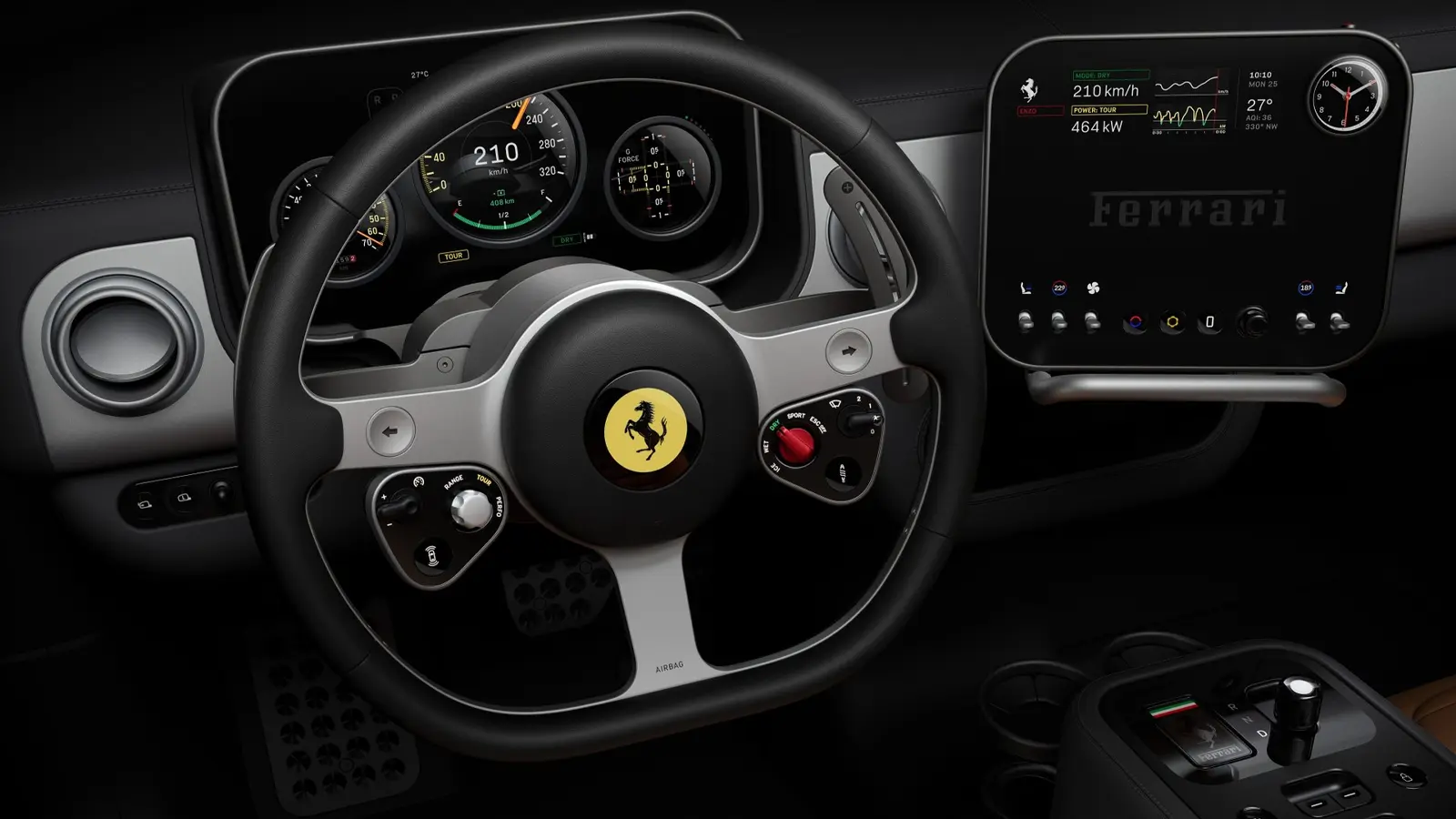
The interior may end up being the car’s strongest argument. The Luce leans into physical controls, OLED displays, steering-wheel switchgear, regenerative braking paddles, torque-adjustment paddles, and a center touchscreen that can pivot toward either the driver or front passenger.
What This Means for Electric Performance Cars
The Luce is bigger than one controversial Ferrari because it shows how difficult electrification becomes when a brand sells emotion as much as transportation. For mainstream automakers, the EV conversation often centers on range, charging speed, price, and incentives, but Ferrari has to solve for desire.
That is a much harder assignment. Electric performance is no longer the difficult part, since plenty of EVs are brutally quick, and the Luce clearly has enough power to rearrange a passenger’s thoughts.
For another look at how exotic brands are blending electrification with theater, McLaren’s plug-in Artura shows how batteries can support performance without erasing supercar personality in our Artura road test ➜
The harder question is whether an EV can create the same sense of occasion in a segment where sound, vibration, gearshifts, and mechanical ritual have always been part of the price. Ferrari is not only asking buyers to accept a plug. It is asking them to accept a new definition of Ferrari emotion.
The backlash was inevitable because the first electric Ferrari was never going to please everyone. If the Luce had looked like a normal Ferrari, critics would have called it timid, and because it looks so different, they are calling it heresy.
The truth is more interesting. Ferrari built an electric car that forces the brand to answer its hardest question in public: how much can the prancing horse change before people stop recognizing it?
For now, Ferrari says customers are interested, critics should see the car in person, and the Luce is not replacing the engines that built the brand. That may be enough for buyers with the money and curiosity to want something no Ferrari has ever been before.
If Ferrari gets this right, it may prove that even the loudest skeptics can be won over when the product feels special enough. If it gets it wrong, the Luce may become a case study in how hard it is to electrify a legend without dimming what made it one in the first place.
⚡More High-Performance GreenCars Stories
Ferrari’s New 1200-hp Hypercar Is a Three-Motor Hybrid
Ferrari’s F80 shows how the brand is already using electrification to boost performance while protecting its supercar mythology.
2025 Audi RS e-tron GT Performance Review
Audi’s flagship performance EV delivers massive power, brutal acceleration, and a more familiar vision of electric grand touring.
Porsche Taycan GTS Sport Turismo: The Ultimate Super Wagon
The Taycan GTS Sport Turismo offers another take on electric speed, premium design, and everyday performance-car usability.