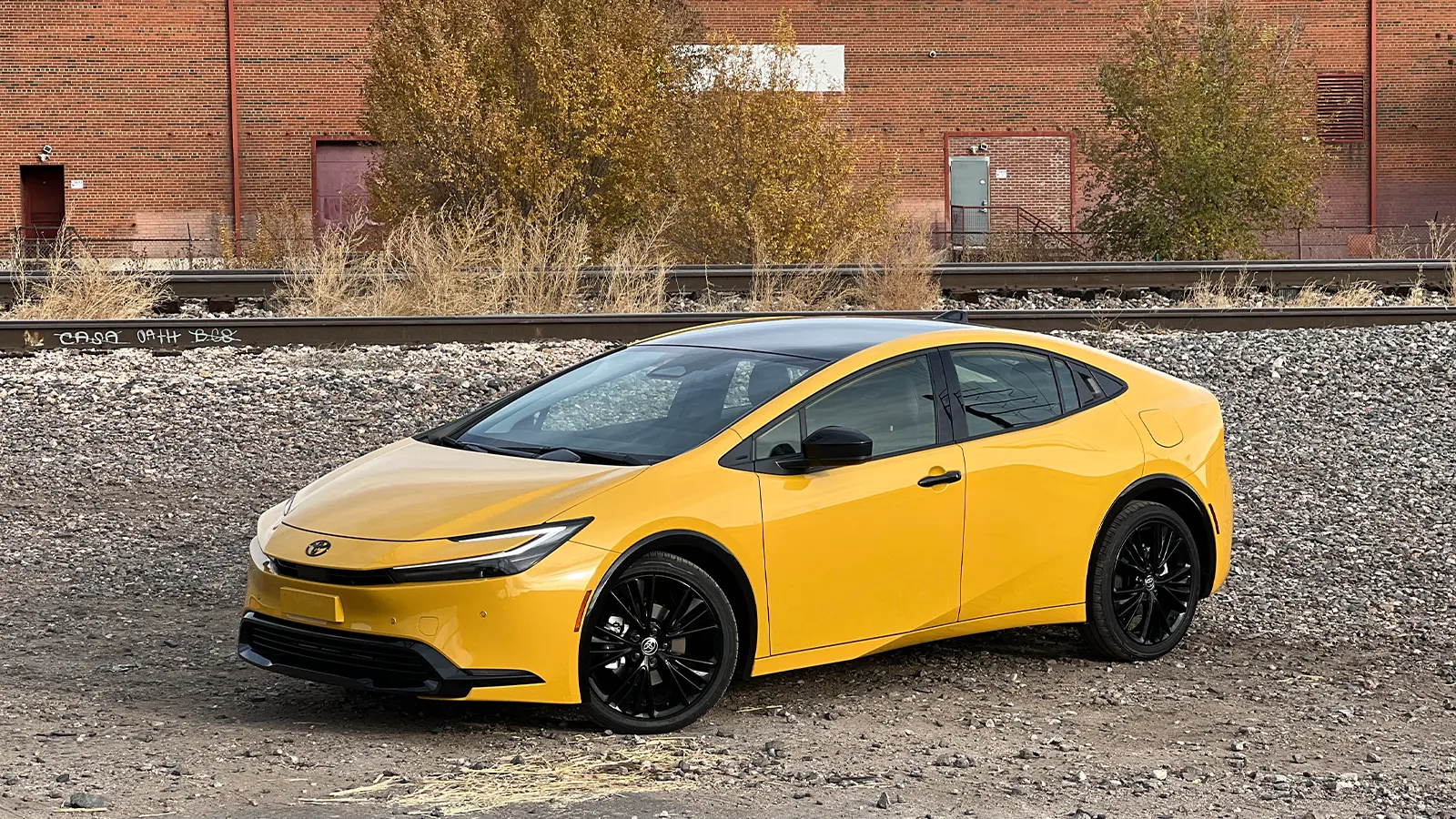

Fast Facts | 2026 Toyota Prius XSE PHEV Nightshade
🏎️ Power: 220 horsepower from a 2.0-liter + dual-motor hybrid system
🛣️ Fuel Economy: Up to 44-mile all-electric range and 52 mpg combined (manufacturer-estimated)
📦 Cargo: 20.3 cu ft behind rear seats
🎯 Price: Starts at $34,970 MSRP, including destination
🏆 Safety: Standard Toyota Safety Sense 3.0 driver aids
🎵 Tech: Available 12.3-inch touchscreen, 7.0-inch digital cluster, JBL audio, and wireless device charging pad
The Hybrid Icon That Learned New Tricks
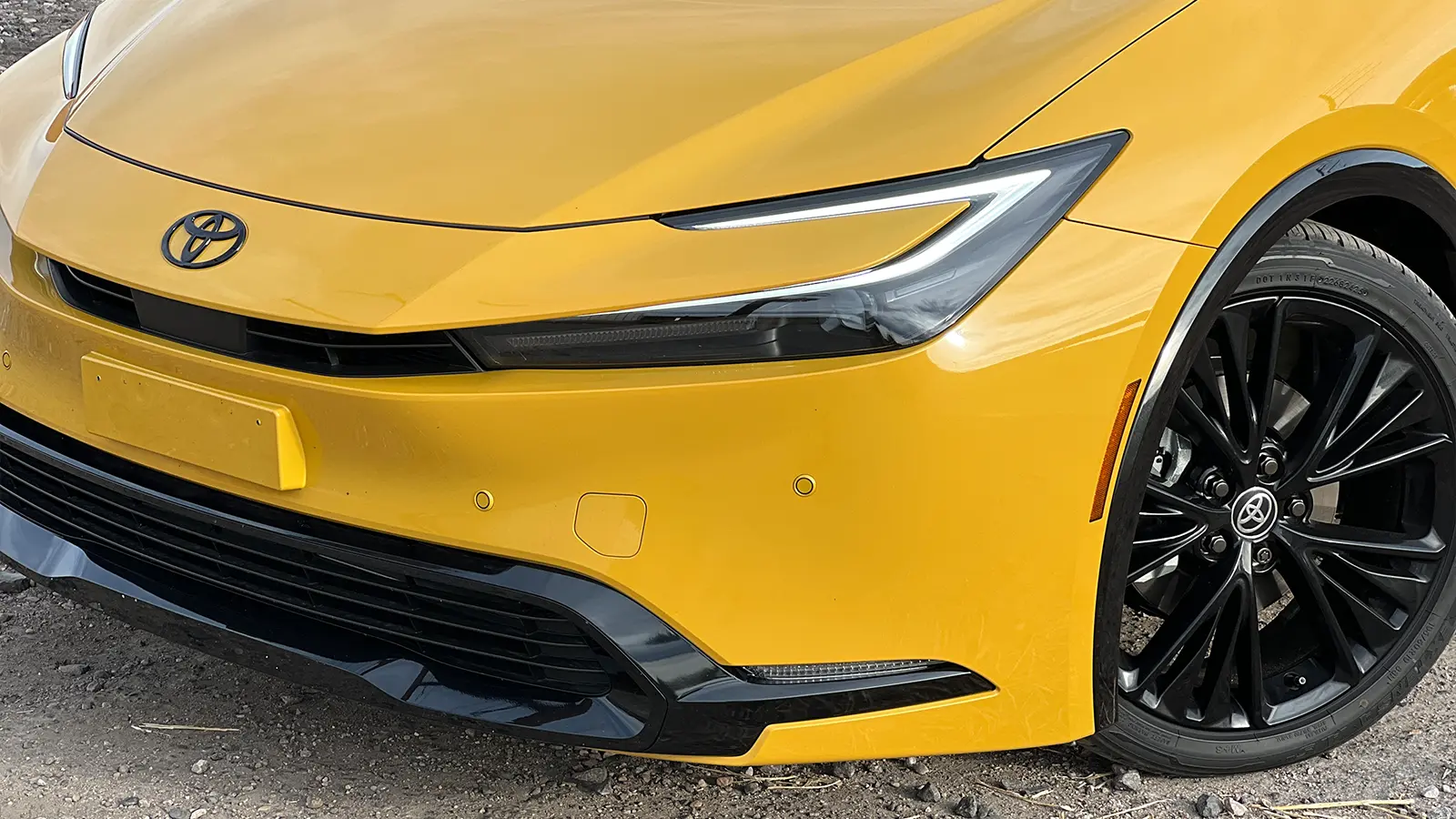
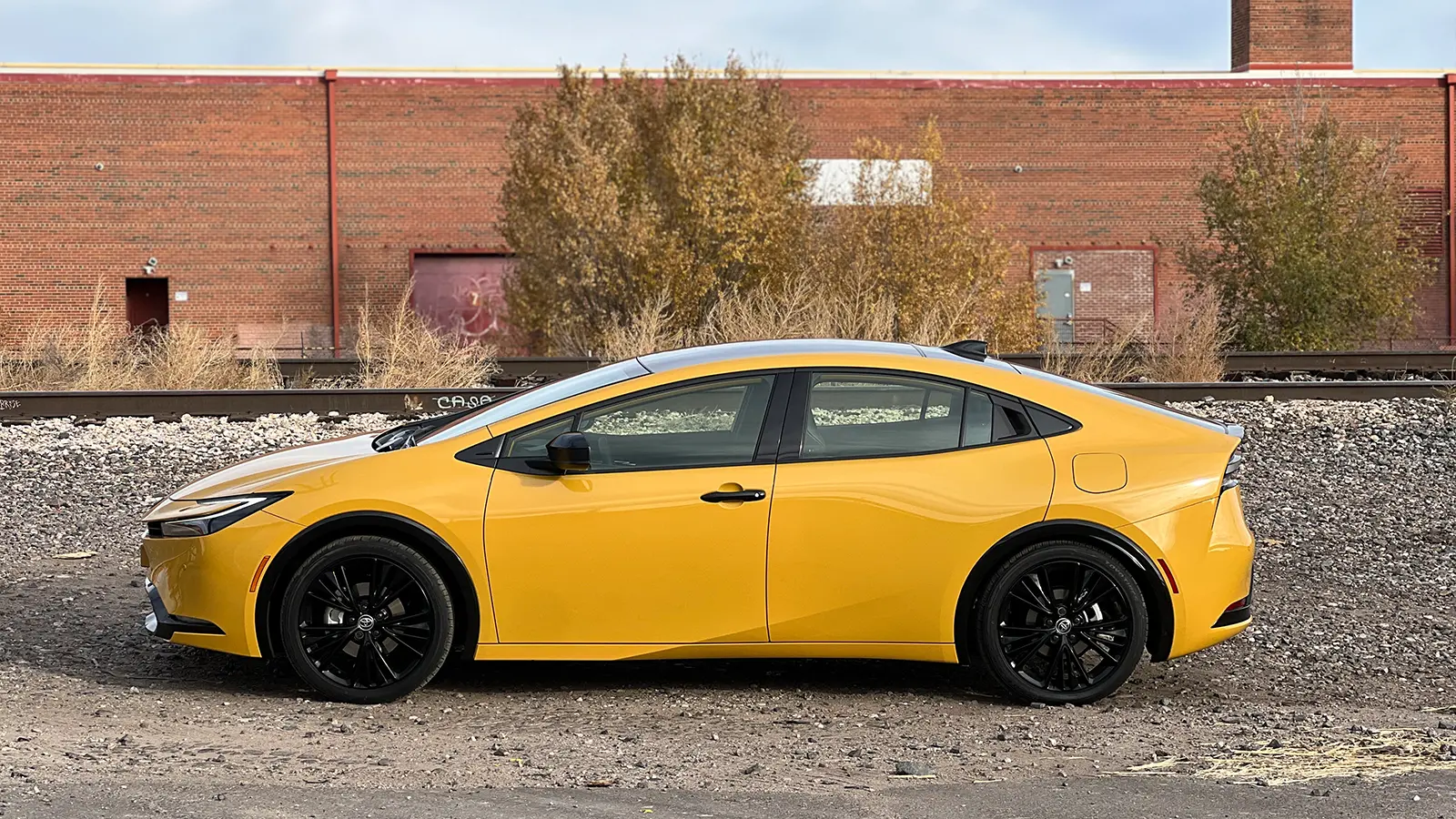
Once the most frugal car on the road, the Toyota Prius faced an existential crisis a few years ago. Though some rivals crept closer to its real-world fuel economy, its biggest competition came from its own siblings: hybrid versions of the Camry, Corolla, and RAV4, the last of which nearly matched its mpg while offering more conventional SUV-styling. Toyota had to act. Instead of retiring the nameplate that had practically been the Merriam-Webster definition of "hybrid car," it gave it a new lease on life for 2023 with svelte styling and driving dynamics that are downright sporty, at least by hybrid standards.
The glow-up has been a resounding success. Toyota sold more Priuses in the first nine months of 2025 than it did in all of 2024, which itself was a better year than 2023. So, what makes the Prius such a hot commodity these days? Let’s find out.

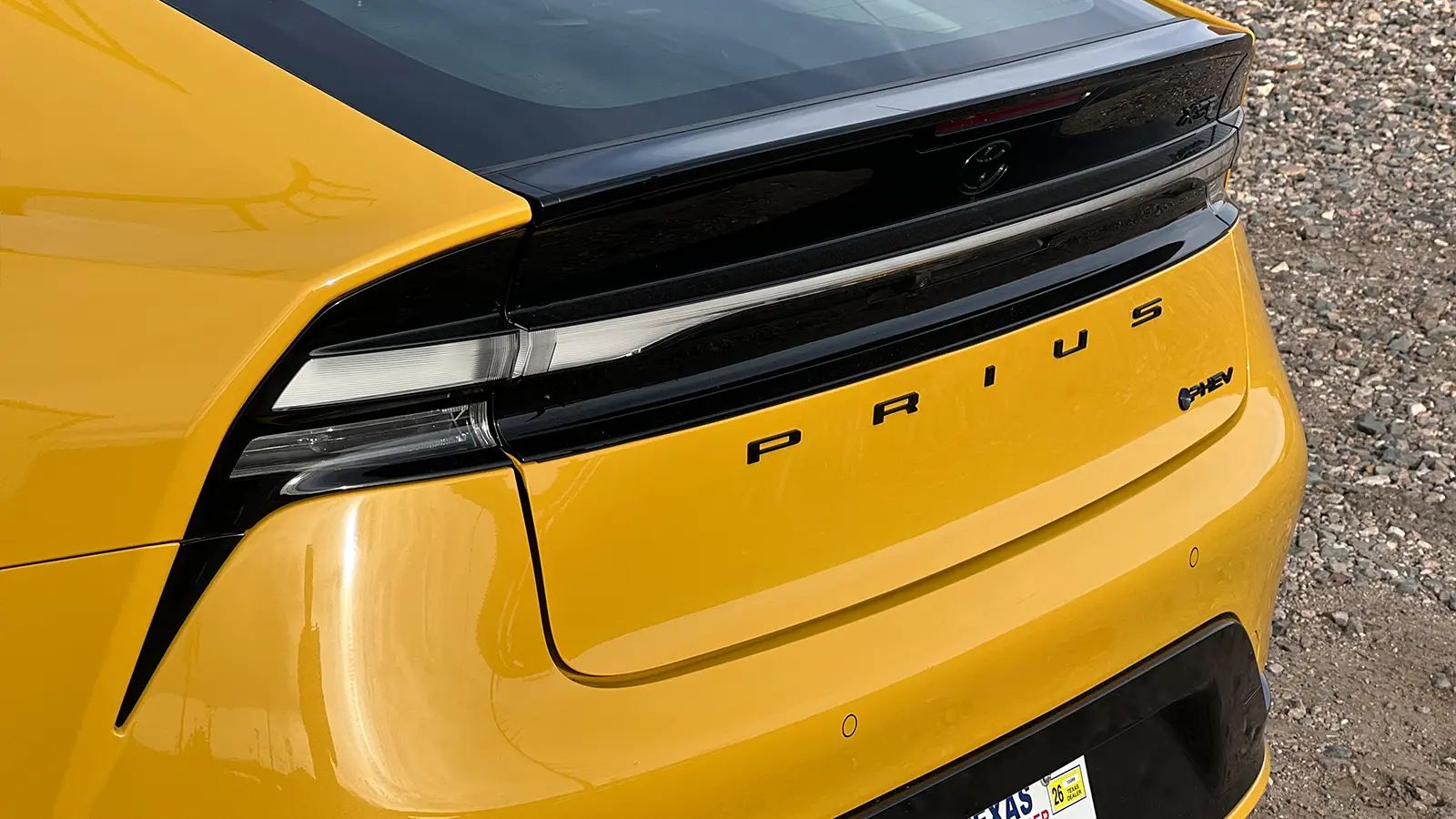
Athletic Personality
Toyota builds three basic versions of the Prius: a conventional hybrid with front- or all-wheel drive, and a plug-in hybrid with front-wheel drive. The non-plug-in model puts out 194 horsepower (front-wheel drive) or 196 horsepower (all-wheel drive) via a 2.0-liter four-cylinder engine teamed with either two (front-wheel drive) or three (all-wheel drive) electric motors. It's rated for up to 57 mpg combined, though all-wheel-drive models and higher trims with spiffy, upsized wheels aren’t as fuel-efficient. But a loaded-up all-wheel-drive model still impresses with 49 mpg combined.
My test car was the plug-in hybrid, which is rated for up to 44 miles of all-electric range and 52 mpg combined thereafter. Per Car and Driver testing, the PHEV can sprint to 0-60 mph in 6.7 seconds. That’s about a half-second zippier than the standard model, and toggling Sport mode means it’s possible to chirp the front tires when the accelerator is mashed to the floor.
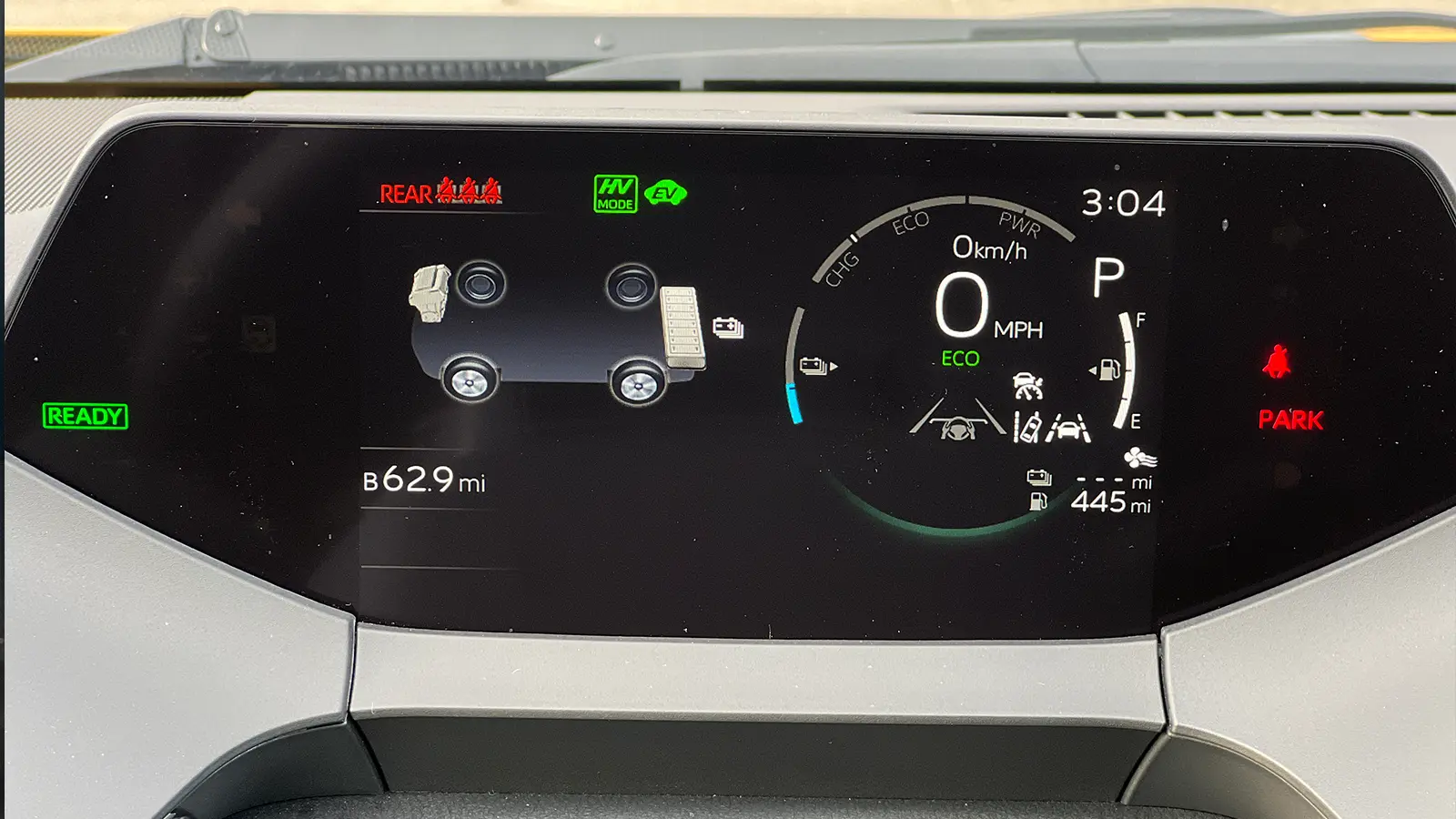
Speed aside, the latest Prius drives with zeal. It took a little while to get situated in the low, somewhat soft driver’s seat, in part because the narrow 7.0-inch instrument cluster was difficult to frame behind the small steering wheel. Once I tilted the wheel down almost as far as it went, I got comfortable. I felt like I was in a go-kart, which is an apt metaphor, since the Prius has snappy reflexes. Point its steering wheel just a bit left or right of center, and off it goes in that direction, with almost none of the slack built into most other cars.
My tester’s 19-inch alloy wheels wearing low-profile tires delivered a relatively firm ride. The narrow tires are aimed more toward maximizing fuel economy than grip, so they howled in hard cornering. But in normal driving, the Prius has a sporty, precise personality. It’s downright fun.
It’s also just as thrifty as promised. I saw around 45 miles of electric range on a full charge, and then nearly 50 mpg afterward, even with a good amount of quick highway acceleration. Top-end trims are also available with a solar panel on the roof that Toyota says will trickle in a bit more charge to the battery on a sunny day, powering some accessories. However, this option hasn't been evaluated on its own for the EPA test, so it’s really more of a high-tech bragging right than a true value-add.
Lots of Tech in a Small Package
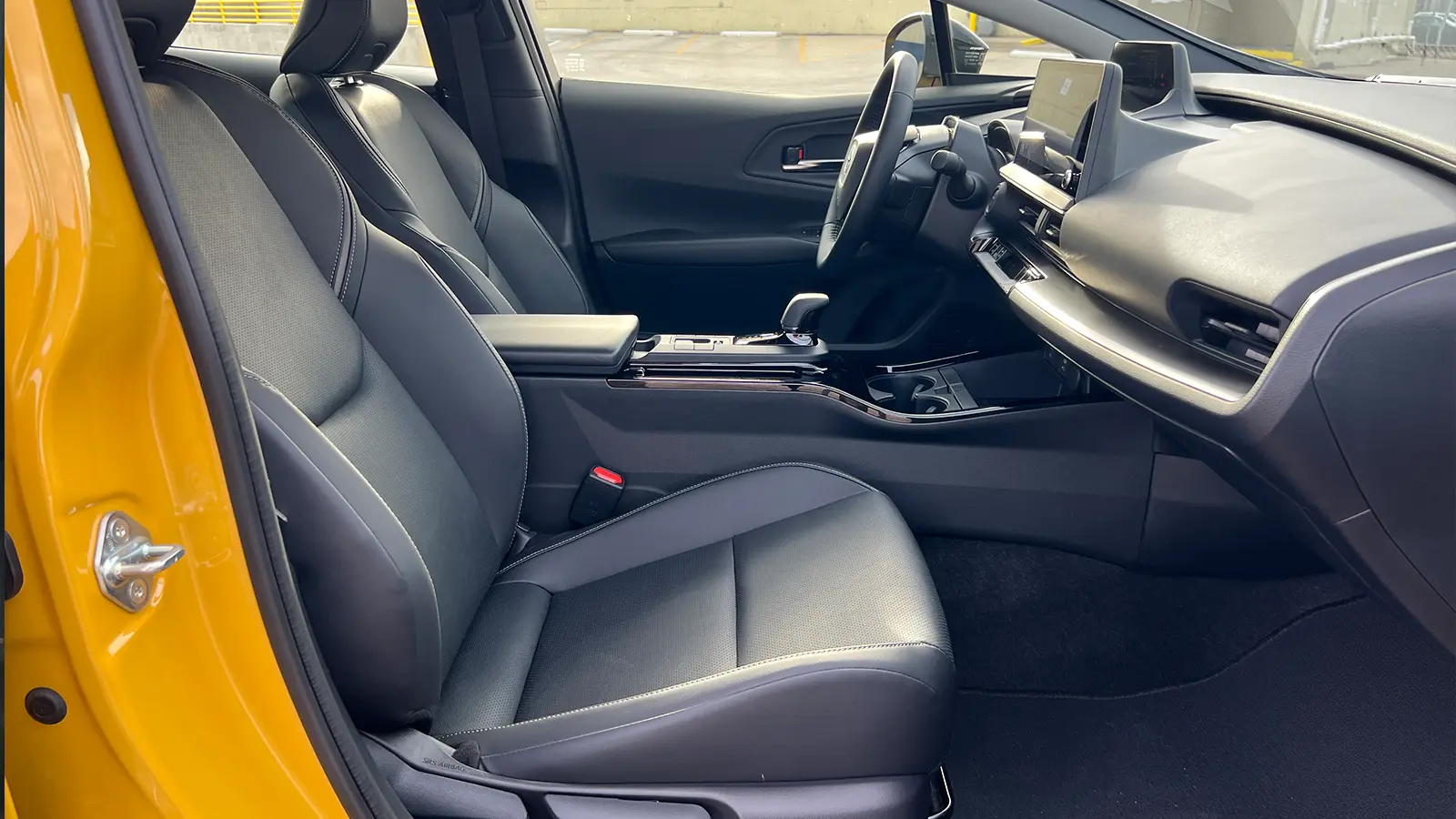
Inside, the Prius' seats are deliberately mounted low since there’s not much in the way of headroom. At about 5’11, my head nearly brushed against the roof, even with the seat lowered almost as much as possible. The situation was slightly alleviated by my test car’s $1,000 fixed glass roof, which has retractable covers for front- and rear-seat passengers. Open them up, and it feels airier, even though it’s not very spacious.
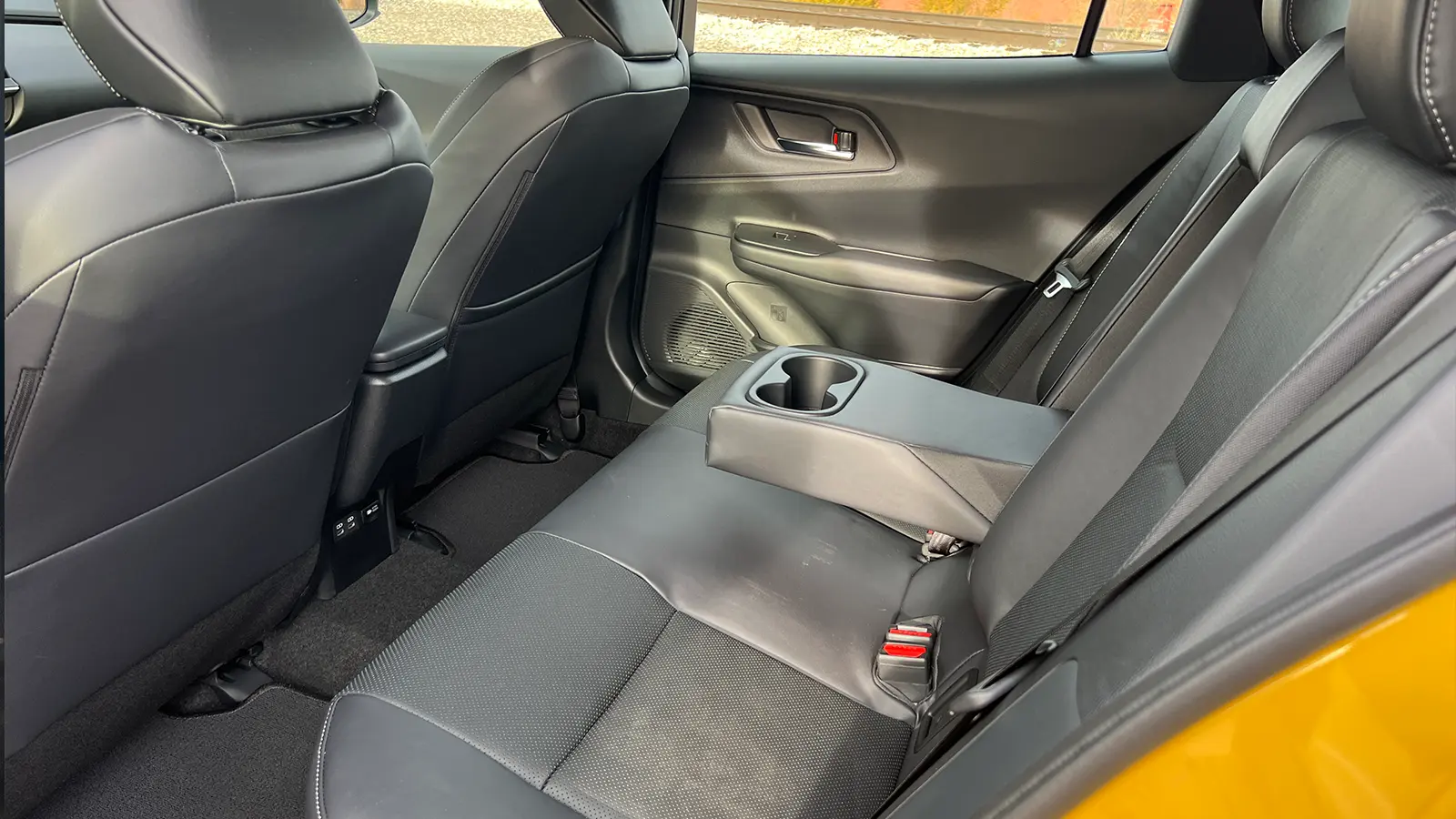
Rear-seat riders have limited legroom, though their headroom situation is more tolerable than what’s up front, thanks to less intrusive roof pillars. Behind the back seat, the cargo area has a high but flat floor. Toyota says there’s 20.3 cubic feet of space back there, but much of that is above the window line. You won’t be able to haul tall items here as you can in, say, Toyota’s RAV4 Plug-In.
Charging doesn’t have to be a mystery, even if you’re new to plugging in at home or out in the wild. Read More ➜
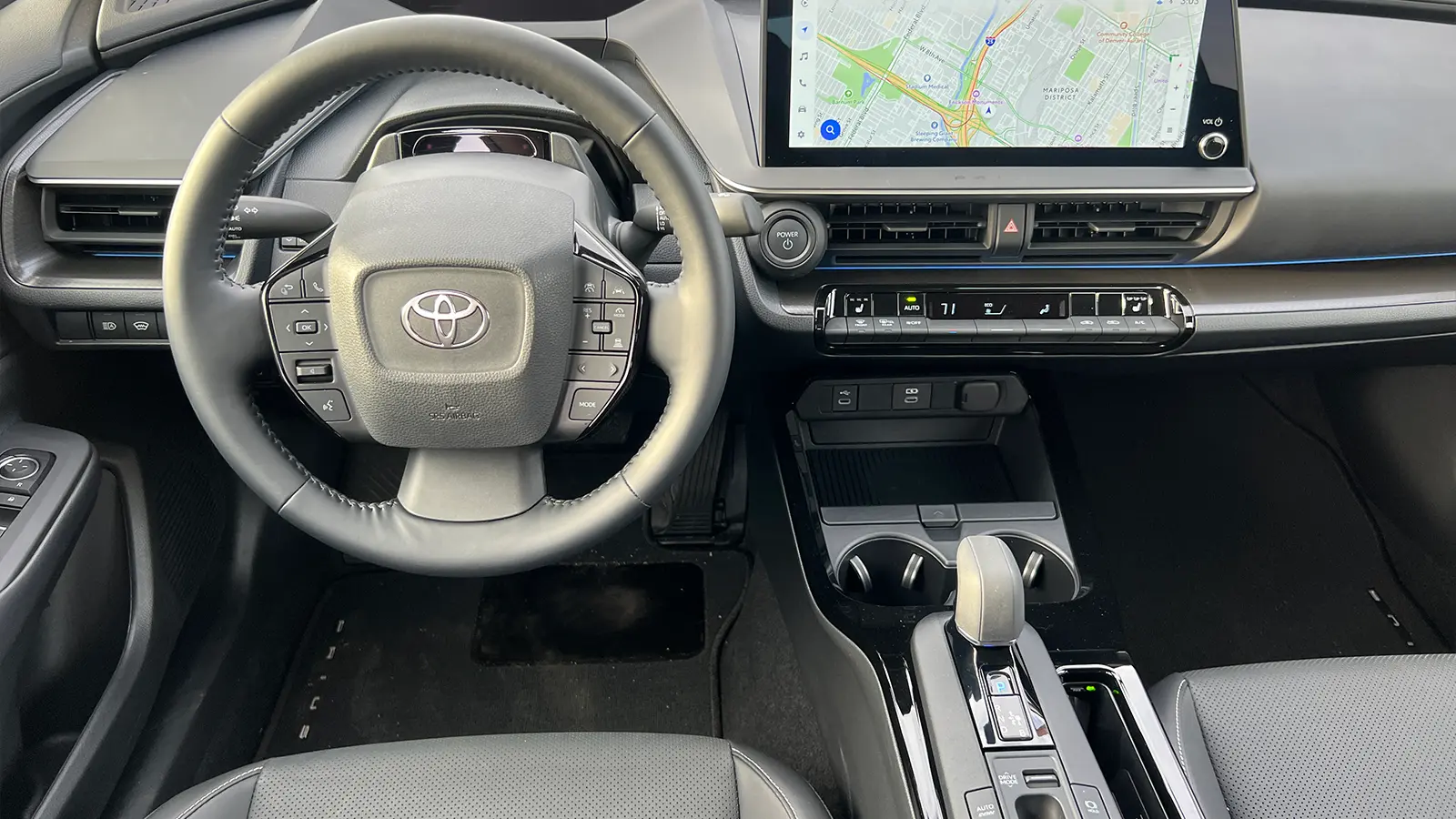
Higher trim levels get a fantastic 12.3-inch touchscreen running Toyota's infotainment software with wireless Apple CarPlay and Android Auto compatibility. The screen itself is bright and crisp, and the software responds quickly. It’s a worthwhile upgrade over the comparatively dim base 8.0-inch screen. The volume knob’s location at the bottom right corner of the screen is a boon to passengers but a long reach for the driver, who must contend with a complicated array of steering wheel buttons.
A wireless device charging pad sits between the front seats, though I struggled to get it to recognize my iPhone. Thankfully, Toyota avoids touchscreen-only climate controls. Simple physical buttons handle most climate controls, including the heated front seats and steering wheel.
Toyota’s suite of driver-assistance tech comes standard across the line, including adaptive cruise control with stop-and-go that allows for extended hands-free/eyes-on stints. It kept the Prius centered in its lane and away from cars ahead. The driver-attention monitor occasionally struggled with my polarized sunglasses. It never took over the controls, but it admonished me for not looking forward even though my eyes were definitely on the road ahead.
A Different Kind of Value
The Prius Plug-In Hybrid comes in four trim levels: SE, XSE, Nightshade Edition, and XSE Premium, which loosely mirror the LE, XLE, Nightshade Edition, and Limited trims of the standard Prius. The value battle here is between the base Prius Plug-In Hybrid SE at $34,970 MSRP and the standard Prius LE, which is about $5,000 less. That gap can be hard to justify purely through fuel savings. The plug-in's 44-mile electric range is roughly equal to a gallon of gas in the standard Prius, so it would take a long time to "break even" on cost alone.
But the value of the plug-in doesn't lie in math alone. If your commute fits within the 44-mile electric window, the plug-in can function like an EV most of the time, delivering silent, tailpipe-emission-free driving while still offering the security of a hybrid powertrain on longer trips. It's also the quicker of the two models, with stronger electric assist that gives it a livelier feel when merging and passing.
My Nightshade Edition Prius PHEV tester checked in just shy of $40,000 MSRP with the optional glass roof. It’s the only way to get the plug-in with the Karashi exterior paint, a yellow hue named after the spicy mustard popular in Japan. Skip the plug, and you can get the same color on a regular Prius for less, but of course without the extra performance or electric-only driving experience.
All mileage is EPA estimated.
Keep the Hybrid Momentum Going
2025 Toyota Camry Hybrid Road Test
Toyota’s best-selling sedan goes hybrid-only and gets sharper inside and out, with efficiency that rivals much smaller cars
Read More ➜
2025 Honda Civic Hatchback Hybrid Review: Efficient, Fun, and Practical
A direct efficiency-minded alternative with real-world usability and a surprisingly enjoyable drive
Read More ➜
Kia Niro Hybrid, PHEV and Electric Options
One nameplate, three powertrains, and a clean way to compare hybrid vs plug-in vs EV in the same footprint
Read More ➜