

Fast Facts | 1,700-Mile EV Road Trip
🐶 Mission: Operation Frodo dog rescue transport from Omaha, NE to Portland, OR
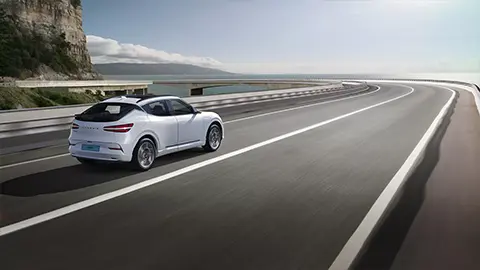
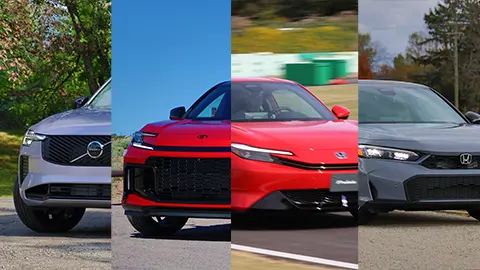
🚙 EV Fleet: Cadillac Escalade IQ, Kia EV9, Hyundai Ioniq 9, and Lucid Gravity
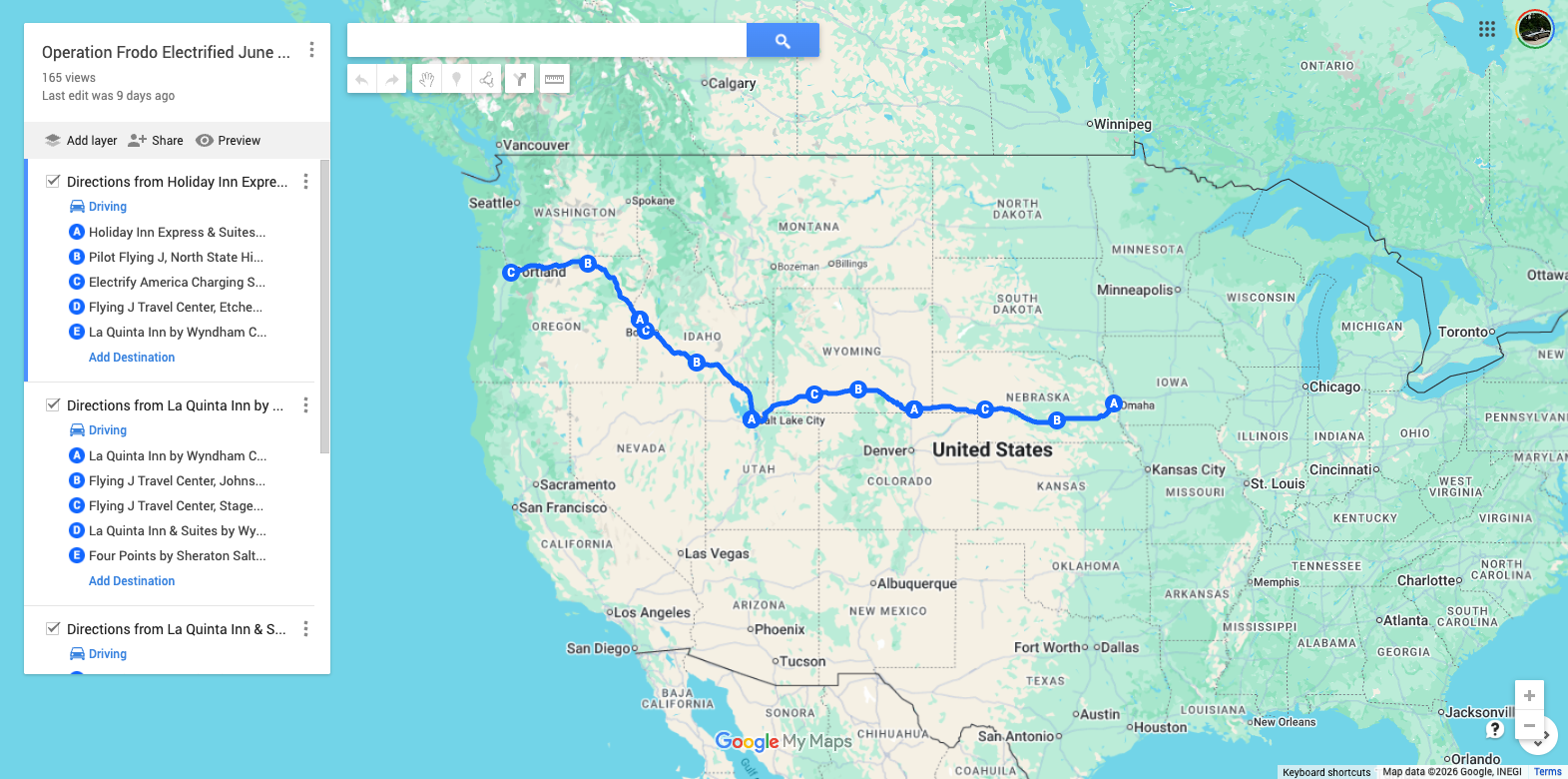
🛣️ Distance: Nearly 1,700 miles across five western states
📍 Route Challenge: High-speed highways, mountain climbs, headwinds, and remote stretches
🔋 Planning Buffer: Charging stops were planned roughly every 150 to 170 miles
⚡ Charging Networks: EVgo, Electrify America, Walmart, and Pilot Flying J travel centers
🌬️ Biggest Range Factor: Speed and headwinds had a major effect on projected arrival charge
🏔️ Mountain Lesson: Regenerative braking added range downhill, but climbs required extra planning
✅ Final Result: The convoy completed the trip without being stranded by a dead battery
A Real-World Charging Test Across the American West
I recently put real-world EV road-trip planning to the test, driving four electric SUVs nearly 1,700 miles across five states, from Omaha, Nebraska, to Portland, Oregon. The trip was part of an annual dog rescue mission called Operation Frodo, which you can read more about the background of here.
Here's what I learned about planning an EV road trip, charging, and troubleshooting when things don't go as planned.
Accounting for Speed and Wind
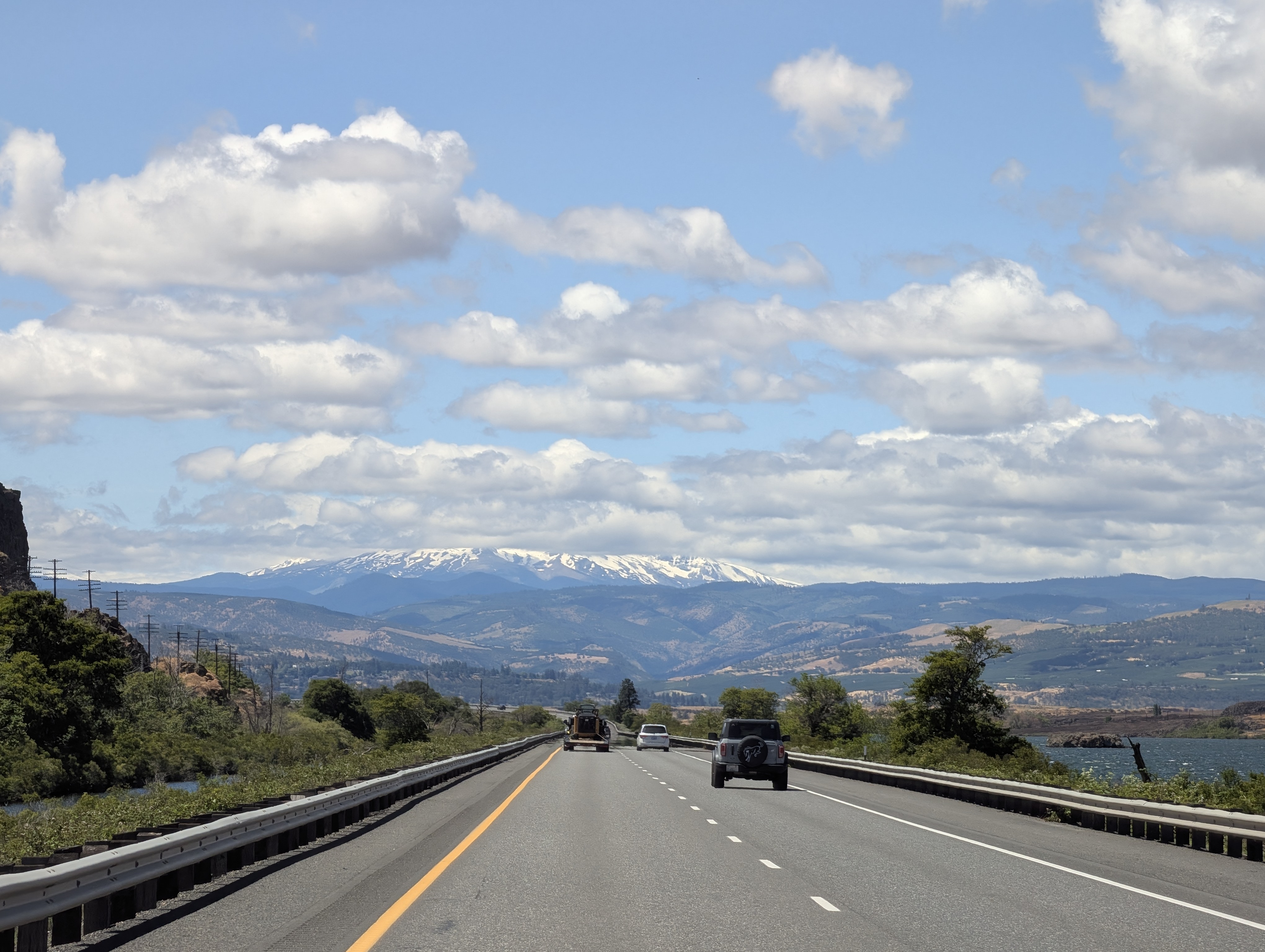
First off, I had to calculate the EVs' range, which isn't as simple as it sounds. EPA range ratings are based on a mix of city and highway driving, but highway speed is where aerodynamics really start to matter. Aero drag increases with the square of your speed, so creeping from 60 to 70 or 80 mph reduces range quickly. Through much of Nebraska, Wyoming, and Idaho, speed limits hit 80 mph, and that takes a real toll. Heading west almost meant fighting strong winds most of the way, which made the math even tougher.
Knowing all that going in, I planned charging stops every 150 to 170 miles. That gave us enough buffer in most cases, plus time to let the dogs out for a walk and a bathroom break. The strategy worked great for the first two days, from Omaha to Cheyenne, Wyoming, and on to Salt Lake City. Our fleet included a Cadillac Escalade IQ, a Kia EV9, a Hyundai Ioniq 9, and a Lucid Gravity, and the Escalade IQ, with its massive battery and 450-mile range, was even able to skip a couple of charging stops.
When Charging Doesn't Go as Planned
The only real hiccup in those first two days came at an Electrify America stop in Ogallala, Nebraska. Temperatures were in the low 90s, and when we plugged in the Cadillac, capable of charging at up to 350 kilowatts, it wouldn’t go above 60 kW. Meanwhile, the Ioniq 9 was charging at the adjacent stall at up to 230 kW. Once the Hyundai finished, we moved the Cadillac over to that same charger, and it still charged at 60 kW.
However, each charger has two cables, used depending on where the charge port sits on the car. We'd been using the opposite cable from the Hyundai, so we swapped, and the Cadillac's charging speed immediately jumped to 270 kW. Fast-charging cables are liquid-cooled to manage the heat from high-power charging, and it looks like the two slower cables may have had a cooling issue. Switching to a known-good connector solved the issue quickly.
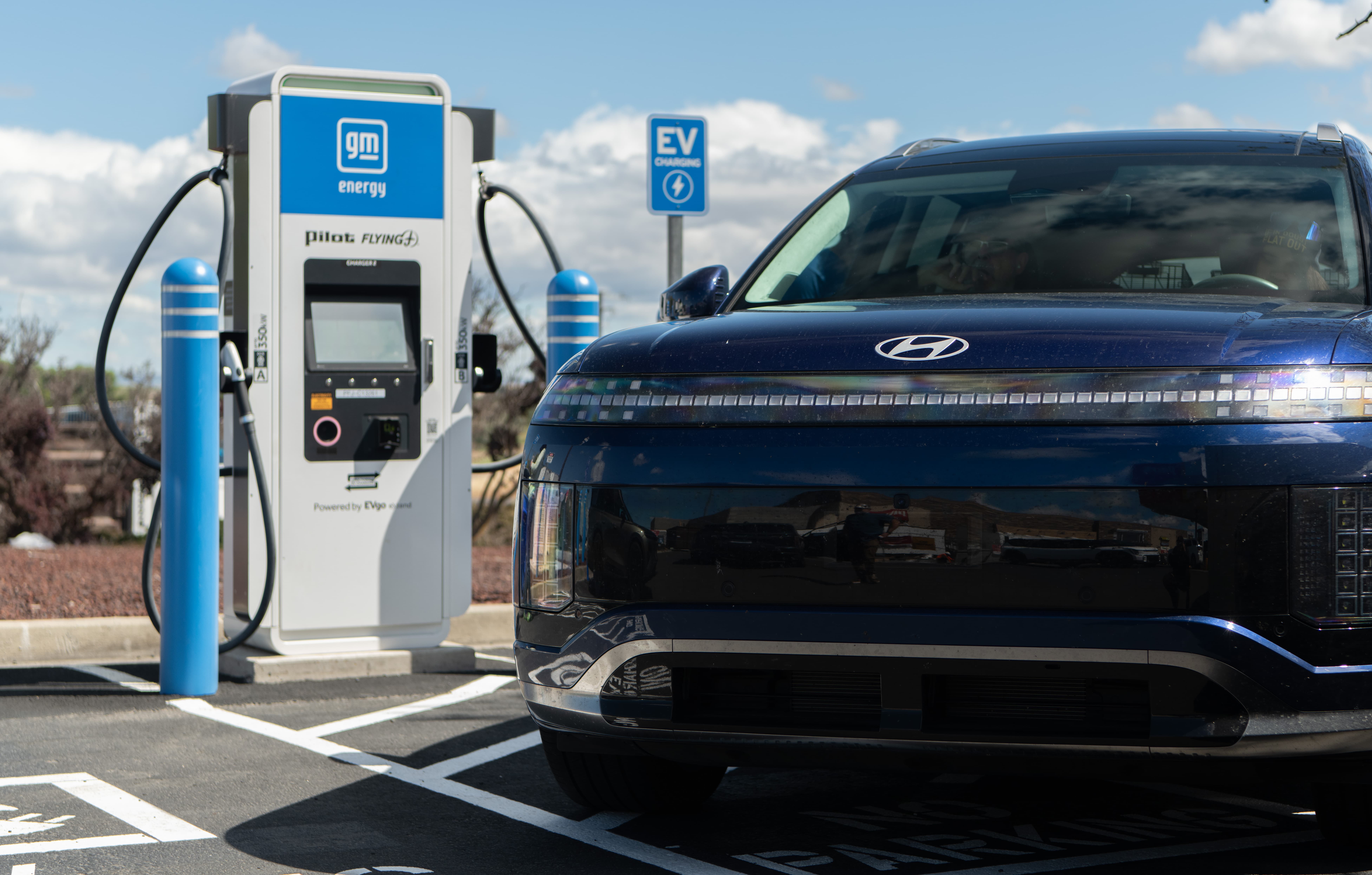
Three of the four vehicles (everything but the Cadillac) have native NACS charging ports, while most of the stations we used still had only CCS connectors, meaning we had to use adapters. That generally wasn’t an issue, but if you're using a CCS-to-NACS adapter, I suggest connecting the adapter to the cable first, then plugging the whole thing into the port. Plugging in the CCS cable into an adapter that's already in the car's port is awkward and sometimes takes a couple of tries to get a solid connection. Many automakers, including Hyundai, Kia, Lucid, and Toyota, now include the adapter with EVs that have NACS ports. For others, the adapters are typically available for about $200.
Adjusting the Plan for Mountains and Headwinds
After tracking actual energy usage during the first two days, especially in the Kia and Hyundai, which have smaller batteries than the Lucid and Cadillac, I adjusted the charging plan for days three and four.
My original plan for day three was for two charging stops, the first in Jerome, Idaho, 220 miles from Salt Lake City. Under normal conditions, all four vehicles could've covered that distance. But the climb out of Salt Lake City involves a lot of elevation gain going into the mountains.
On day two, coming down those mountains into the Salt Lake valley in the Lucid, we actually gained 15 miles of range thanks to regenerative braking. Climbing back up into Idaho was going to cost us more than that, so I added a short, extra stop in Snowville, Utah, about halfway to Jerome. Ten minutes there was enough to add the juice we needed to get to our next scheduled charging and lunch stop in Jerome. From there, we all made it the rest of the way to our next charge just past Boise, across the Snake River, for our final overnight stay in Ontario, Oregon, without any issues.
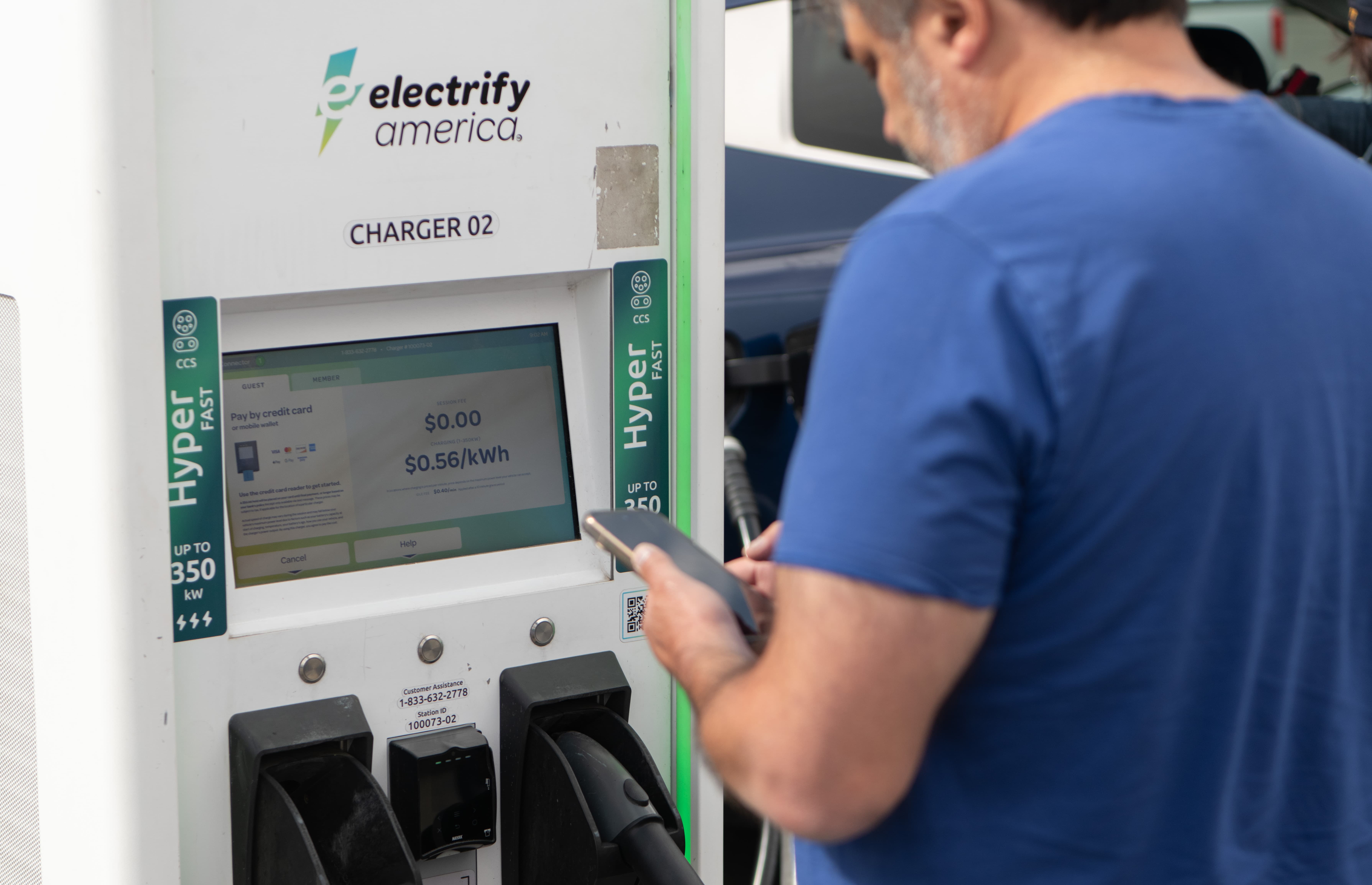
On day four, I originally scheduled a single stop midway into our 375-mile final trek to Portland. But with more climbing ahead and fairly strong winds, I opted for one extra stop at the Electrify America in Island City, Oregon, about 116 miles in. Since we'd gotten an early start to make our 2 p.m. meetup with the fosters and adoptive families from Cascade Beagle Rescue, the extra stop gave the team time to bump up the batteries and hit the neighboring Starbucks for caffeinated refreshments.
At our final scheduled stop in Stanfield, 186 miles from Portland, I figured we’d be in pretty good shape, since we'd soon be heading mostly downhill through the Columbia River Gorge. What I didn't account for was the headwind. We rolled out of Stanfield in the Escalade IQ with about 245 miles of range showing, and Google Maps estimated we’d arrive with 15 percent state of charge.
By the time we finished the climb and started down into the gorge, that buffer was shrinking, and so was our projected arrival charge. At this pace, it was clear we’d need one more stop. The built-in Google Maps integration GM uses showed us a bunch of options, including an Electrify America station in Troutdale that looked like the best candidate. I tapped to add it to our route, but then something changed.
Sticking close to the 65 mph speed limit on I-84, we encountered a large delivery truck moving at about the same pace. I engaged GM’s hands-free Super Cruise and tucked in a safe distance behind it. That truck was enough to give even the mammoth Escalade a nice big hole in the wind for the next 70 miles, right until it exited the highway just outside of Portland. We ended up skipping that extra stop after all, rolling into the EVgo station in Portland, where we were meeting up with the new adoptive and foster parents for our four-legged companions, with 46 miles of range and 10 percent state of charge.
What We Learned as EV Road-Trippers
This trip took a lot of planning, between the logistics of getting four vehicles to Omaha, wrangling 16 dogs, and coordinating charging, lunch breaks, and overnight hotels along the way. The varying capabilities of our vehicles, plus the charging credits EVgo donated, meant we prioritized their stations, though we also relied on Electrify America and Walmart. Even with those constraints, we never felt at risk of being stranded with a dead battery.
For the average driver or family taking a road trip across the vastness of North America, though, it actually becomes quite a bit easier. There are now nearly 18,000 DC fast-charging locations with 82,000 charging ports, stretching from the Atlantic coast up into the Yukon and Alaska. These days, there aren't many places you can go without finding charging.
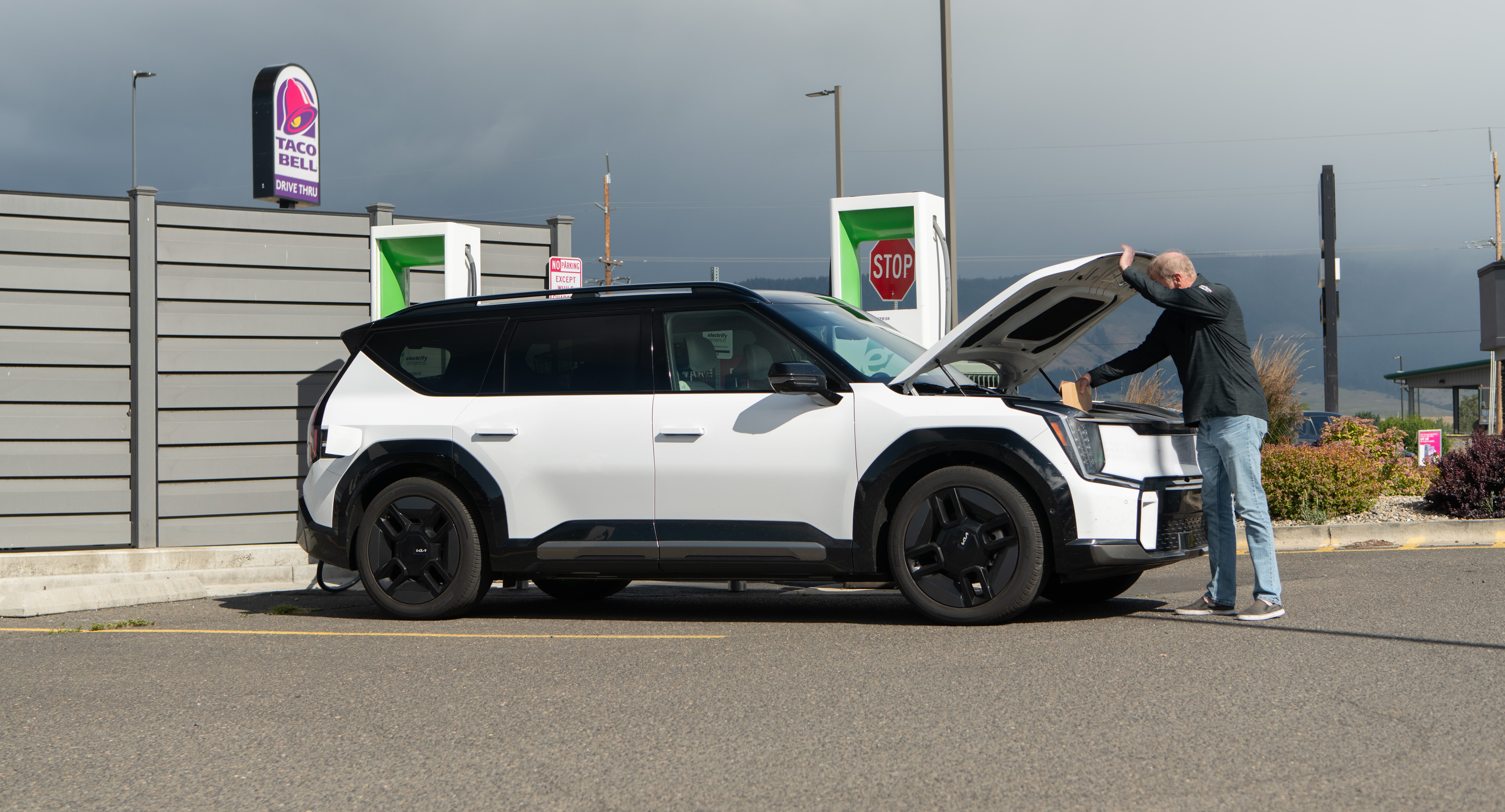
The GM Energy/EVgo/Pilot Flying J partnership is a great example of how this should work: reliable stations, convenient locations, and on-site amenities that are almost always open. And as more EVs are coming from the factory with NACS charging ports, we’re seeing more chargers offer both CCS and NACS cables, including the Walmart chargers we used and the EVgo station where we ended our journey.
Even narrowing things down to stations with 350-kW charging power, there are nearly 2,800 locations and more than 13,000 charge ports across the country today. That number's growing fast as Walmart, Ionna, and even chains like Waffle House add more charging equipment in places where you'd actually want to spend a few minutes while your car tops off.
Even when weather or terrain forces a few schedule adjustments, EV charging infrastructure has reached the vast majority of America, including the vast middle that some dismiss as “fly-over country.”
All mileage is EPA estimated.
More EV Road Trip Planning Guides
How to Plan the Perfect EV Road Trip
Learn how to map charging stops, use EV route planners, build in a range buffer, and prepare for long-distance driving before you leave home.
Tips for Long-Distance EV Travel
A practical guide to charging stops, hotel charging, route planning, and keeping an EV road trip smooth over longer distances.
One Big EV Charging Barrier Is Starting to Fade
See how broader fast-charging access, NACS compatibility, and improving network coverage are making public charging less intimidating for EV shoppers.