Fast Facts | NACS Charging in 2026
🔌 NACS Definition: NACS stands for North American Charging Standard
⚡ Origin: NACS began as Tesla’s charging connector for its vehicles and Supercharger network
📄 Standard Name: NACS is also known as SAE J3400 in technical and standards documents
🔋 CCS Context: CCS remains usable for many non-Tesla EVs already on the road
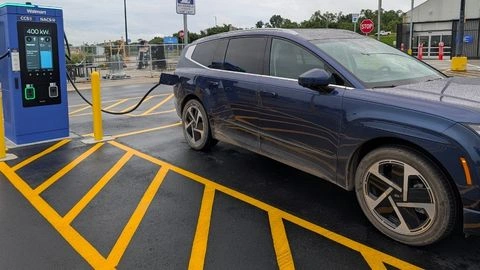
🧰 Adapters: Many CCS-equipped EVs can access Tesla Superchargers with an automaker-approved NACS-to-CCS adapter
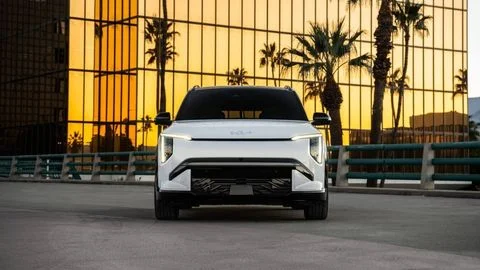
🚗 Native Ports: Many newer EVs are moving toward built-in NACS ports from the factory
🏠 Home Charging: NACS mostly affects public charging; home Level 2 charging still depends on your charger, adapter, and vehicle port
🛣️ Road Trips: More NACS access can make route planning easier by opening more Supercharger options to non-Tesla EV drivers
The Charging Plug Conversation Finally Gets Practical
If you have been watching dealer videos or scrolling EV forums lately, the letters NACS keep showing up. Here is what they actually mean for your car, your charging options, and your next long drive.
If you are shopping for an EV right now, or you already drive one, you have probably noticed the letters NACS popping up more often: in dealer conversations, on charging maps, in the small print on a new car's spec sheet. Here is what NACS actually means in everyday terms, and what to check before you sign for your next EV or plan your next long drive.
What NACS Actually Is
NACS stands for North American Charging Standard. It began as the connector Tesla designed for its own cars and Supercharger network. In late 2022, Tesla published the design so other automakers could use it. It has since been formalized as SAE J3400, which is the name you may see on technical paperwork (SAE International, June 2024).
For readers who need the charging basics before getting into NACS, our EV charging basics guide explains home charging, public charging, charging levels, and how different plugs fit into daily EV ownership ➜
The other connector you will come across is CCS, short for Combined Charging System. It has been the default on non-Tesla EVs for years and continues to work exactly as it always did. The two plug heads look different, but both deliver the same kind of power to your battery.
How Adoption Has Played Out
Over the past few years, most automakers selling EVs in North America have agreed to move toward NACS. Some are doing it by building new cars with a NACS port from the factory. Others are issuing NACS-to-CCS adapters to existing owners so their cars can charge at Tesla Superchargers. The change has rolled out brand by brand, model by model, on different timelines.
For shoppers, that means one of two everyday situations in 2026. Many newer EVs come with a NACS port from the factory and plug straight into Tesla Superchargers and most other public networks. Many EVs sold over the past few years use a CCS port plus a NACS adapter, often provided by the automaker, to access the Supercharger network.
Both setups work day to day. The adapter is small enough to live in a frunk or glove box, and once you have used it a couple of times it is just another step.
If You Already Own A CCS-Equipped EV
Your car still charges where it always did, and you can add Supercharger access on top of that. Check with your automaker for three things:
- Whether an official NACS-to-CCS adapter has been issued for your specific model and trim, and what it costs.
- Whether your vehicle needs a software update before it can charge on the Supercharger network.
- Whether you start sessions through your automaker's app or through the Tesla app. Most non-Tesla EVs authenticate through the brand's own app.
A few practical notes for day-to-day use:
- Plug-and-Charge support varies. Some networks recognize your vehicle automatically; others ask you to start the session manually.
- Pull-through stalls are uncommon at Tesla Superchargers, which were laid out around Tesla's rear-driver-side charge port. If your port is on the front or opposite side, you may need to park across two stalls. On busy weekends, take a look around first and be courteous about it.
- Tuck the adapter somewhere it stays put. You will want it on any road trip until your next EV has a native NACS port.
If You Are Shopping For An EV Right Now
Two questions worth asking the dealer before you sign:
- Does this specific trim ship with a native NACS port, or with a CCS port plus an adapter? Both are workable. Native is a little more convenient day to day.
- Is the included adapter, if any, the automaker's own unit, or a third-party adapter? Official adapters generally come with better warranty and support coverage.
Spec sheets have been updated repeatedly during this rollout. It is worth confirming what is on the lot rather than relying on what you read six months ago.
The NACS transition can get confusing fast, so our EV charging terminology guide is a helpful glossary for CCS, J1772, Level 2 charging, DC fast charging, and other plug-in vocabulary ➜
If You Are Planning Road Trips This Summer
This is the part of the transition that genuinely changes the experience. The Tesla Supercharger network has consistently scored at or near the top among public networks for uptime and ease of use in J.D. Power's annual EV charging studies (J.D. Power 2024 U.S. Electric Vehicle Experience Public Charging Study, March 2025). Now that more brands can access it, route planning gets simpler.
That does not mean other networks are going away. Electrify America, EVgo, ChargePoint, Shell Recharge, and others continue to expand, and the competition is helping reliability across the board. For most road trips in 2026, a sensible approach is to let your car's built-in route planner do its job, treat Superchargers as a strong primary option, and use other networks as backups or when they fit your route better. Our companion guide on backup strategies when public chargers are unavailable walks through what to do if your first-choice stop is full or offline.
A Quick Note On Home Charging
NACS and home charging are mostly separate questions. Most Level 2 home chargers sold today still ship with a J1772 plug, which works with every EV sold in North America (Tesla included, via the adapter Tesla provides). Some newer home chargers ship with a NACS plug instead. Either is fine for your current vehicle; the J1772 version remains a flexible default if your household might have more than one EV over the years.
The Bottom Line
NACS adoption has been one of the calmer changes in the EV world. The adapter works. The ports work. More public chargers are usable by more drivers. If you already own an EV, the practical change is that you can charge in more places now. If you are shopping, the question is which of two perfectly workable setups your specific car has. Either way, plug compatibility is much less of a worry than it was a couple of years ago.
Keep Learning About EV Charging
Mastering Public Charging and Fast Charging
Learn how public Level 2 charging and DC fast charging work, including when each type makes sense for daily driving and road trips.
Level 1, 2, and 3 Charging Explained
Compare the three main EV charging levels so you know what to expect at home, at work, and on longer drives.
Introduction to EV Batteries
Understand how EV batteries affect range, charging, performance, and long-term ownership before diving deeper into charging strategy.