

Datos clave | Accord Híbrido frente a Camry Híbrido
⚡ Potencia: El Accord Híbrido produce 204 CV, mientras que el Camry genera 225 CV con tracción delantera o 232 CV con tracción total
🌧️ Tren motriz: Todos los Accord tienen tracción delantera, mientras que cada versión del Camry está disponible con tracción delantera o tracción total
⛽ Mejor consumo de combustible: El Accord Híbrido más eficiente alcanza un estimado por la EPA de 48 mpg combinado, mientras que el Camry LE alcanza 51 mpg combinado
🖥️ Infoentretenimiento: Todos los Accord Híbridos incluyen una pantalla táctil de 12.3 pulgadas, mientras que el Camry comienza con una pantalla de 8 pulgadas y ofrece una unidad de 12.3 pulgadas en las versiones superiores
🦵 Asiento trasero: El Accord ofrece más espacio para las piernas en la parte trasera, lo que lo convierte en la opción más sólida para compradores que transportan regularmente a adultos o adolescentes altos
💰 Precio inicial: El Camry comienza en $29,300 MSRP antes de los gastos de envío, mientras que el Accord Sport Híbrido comienza en $33,795 MSRP antes de los gastos de envío
🛡️ Seguridad: El Camry 2026 obtiene el premio Top Safety Pick+ del IIHS, mientras que el Accord 2026 obtiene el Top Safety Pick.
🎯 Mejor opción: El Accord favorece el refinamiento y la sensación de conducción, mientras que el Camry responde con un precio más bajo, un MPG máximo ligeramente mejor y tracción total disponible.
Toyota y Honda compiten directamente en casi todos los segmentos principales, y sus sedanes medianos, el Camry y el Accord, se han enfrentado durante décadas. Los sedanes no son tan populares en el mercado estadounidense como lo fueron antes, pero siguen siendo una excelente alternativa a un SUV compacto. Ambos coches ofrecen más espacio para las piernas en la parte trasera que los crossovers inmediatamente superiores en sus respectivas gamas.
El Camry es ahora solo híbrido a partir del año modelo 2025, y aunque el Accord todavía ofrece una opción solo de gasolina, aquí nos centraremos en el híbrido. Hemos revisado tanto el Accord Híbrido como el Camry individualmente, pero aquí los compararemos.
Diseño Exterior y Dimensiones
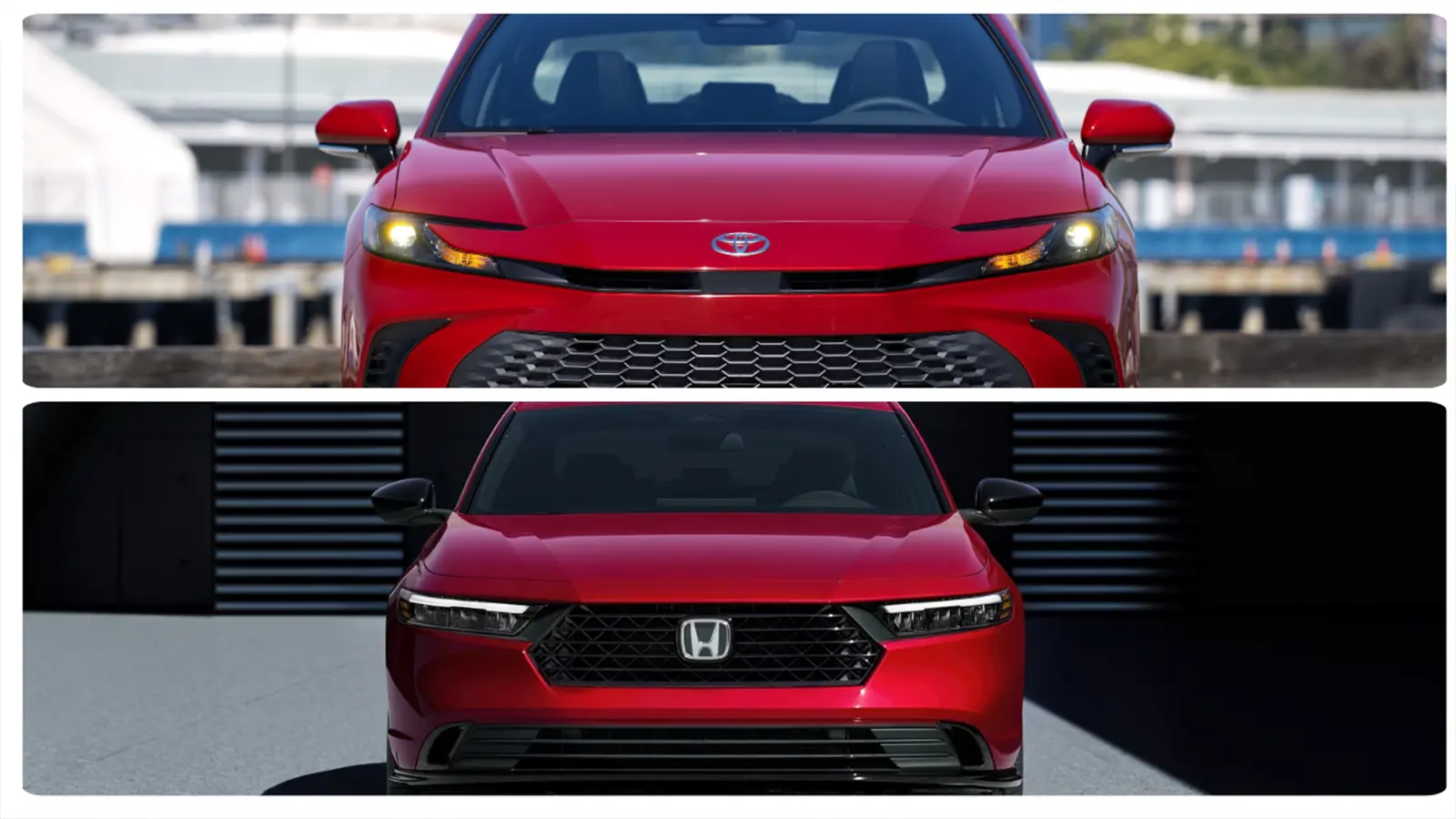
Uno al lado del otro, estos dos no podrían ser más diferentes. El Accord tiene un diseño limpio y elegante, con una pequeña parrilla y sencillos faros LED en la parte delantera. El perfil lateral sigue la misma línea, con mínimas líneas de diseño y un perfil tipo fastback.
El Camry va en la dirección opuesta, con un estilo sedán de tres volúmenes más típico. La distintiva iluminación "hammerhead" de Toyota ancla el frontal, flanqueada por prominentes líneas en el capó y una gran parrilla. El estilo agresivo continúa con líneas de diseño afiladas a lo largo de los laterales.
Espacio Interior y Tecnología
En la hoja de especificaciones, el Honda supera ligeramente al Toyota en la mayoría de las medidas interiores, pero las diferencias son bastante pequeñas. La brecha más notable está en el espacio para las piernas trasero, donde el Accord ofrece 5 cm más que el Camry. Si regularmente lleva adultos o adolescentes de piernas largas en la parte trasera, podrían agradecer la diferencia.

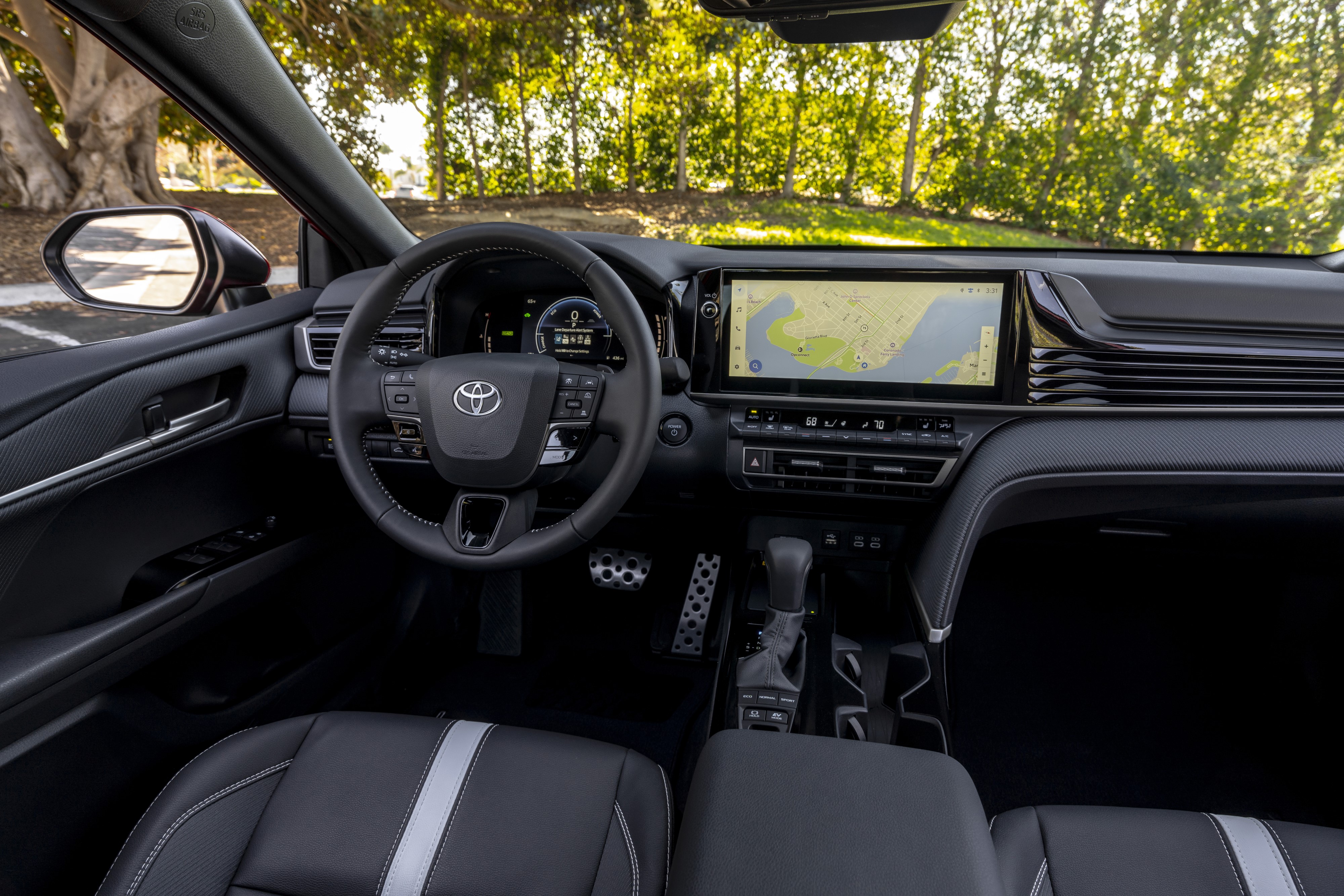
Todos los Accord vienen de serie con una pantalla de infoentretenimiento de 12.3 pulgadas. El Camry comienza con una pantalla de 8.0 pulgadas y asciende a una pantalla táctil de 12.3 pulgadas en las versiones superiores. Ambos son compatibles con Apple CarPlay y Android Auto inalámbricos, pero el Accord también añade integración con Alexa y Google integrado (disponible).
Tanto Honda como Toyota tienen una excelente reputación en seguridad, y estos dos sedanes vienen equipados con mucha tecnología de seguridad. Ambos incluyen de serie control de crucero adaptativo, alerta de salida de carril con asistencia de dirección, luces altas automáticas, asistencia de señales de tráfico, cámara de marcha atrás y asistencia de mantenimiento de carril.
El Accord y el Camry utilizan enfoques fundamentalmente diferentes para combinar la potencia de gasolina y eléctrica, y nuestra guía sobre cómo funcionan los coches híbridos explica los sistemas en serie, paralelo y serie-paralelo de forma sencilla ➜
Hay algunas diferencias que vale la pena destacar. El Accord incluye la asistencia en atascos como característica de serie, pero en el Camry es un extra, y un monitor de visión panorámica está disponible en el Camry, pero no se ofrece en absoluto en el Accord.
Cuando el IIHS somete a ambos a sus pruebas de seguridad anuales, los dos han figurado constantemente en la lista Top Safety Pick durante al menos la última década. Pero el Camry sale ligeramente por delante con la designación Top Safety Pick+.
Tren motriz y consumo de combustible
El Honda Accord Híbrido está impulsado por un motor de cuatro cilindros y 2.0 litros acoplado a dos motores eléctricos, entregando una potencia combinada de 204 caballos. El Accord Híbrido solo se ofrece con tracción delantera; la tracción total solo se ofrece en el Accord de gasolina.
El Toyota Camry, ahora ofrecido exclusivamente como híbrido, utiliza un motor de cuatro cilindros y 2.5 litros. Los modelos con tracción delantera producen 225 caballos de potencia combinada, y los modelos con tracción total incorporan un tercer motor eléctrico que impulsa solo las ruedas traseras, elevando la potencia combinada a 232 caballos.
Toyota y Honda adoptan dos enfoques completamente diferentes para sus sistemas híbridos, por lo que la experiencia de conducción no es la misma. El Camry utiliza energía eléctrica parte del tiempo y depende más de la potencia del motor para la mayoría de tus hábitos de conducción. El Accord, por otro lado, depende principalmente de la energía eléctrica, solo recurriendo al motor para cargar la batería híbrida o para velocidades de conducción en carretera.
En cuanto al consumo de combustible, el nivel de acabado que elijas afectará la frecuencia con la que repostarás. En su versión más eficiente, el Camry base con tracción delantera gana por un pelo con un estimado por la EPA de 52/49/51 mpg en ciudad/carretera/combinado. Los números de conducción en carretera del Accord estándar lo bajan un poco, con un estimado por la EPA de 51/44/48 mpg. Los Camry base con tracción total registran un estimado por la EPA de 50/49/40 mpg.
Precio
El Accord tiene un cargo por destino de 1,195 $ y el Camry uno de 1,295 $ añadido a sus MSRP. El Camry comienza en más de 4,000 $ más barato: 30,595 $ MSRP frente a 34,990 $ MSRP para un Accord Híbrido base. En la parte superior de la gama, el Camry se sitúa en 36,995 $ MSRP, mientras que el Accord Híbrido de gama alta te costará 40,690 $ MSRP.
Al volante
Al revisar las hojas de especificaciones del Accord y el Camry, no hay mucho que los diferencie. Son bastante similares en tamaño, y los sistemas híbridos de dos motores parecen producir potencias y relaciones peso-potencia similares. Pero la sensación general de estos dos sistemas de propulsión es fundamentalmente diferente.
Cada uno tiene una unidad motor-generador (MGU) que proporciona el principal esfuerzo de propulsión, mientras que la segunda es impulsada principalmente por el motor para cargar la batería. Pero el sistema de Toyota solo tiene 134 caballos de su MGU principal y depende mucho más de que el motor combine su potencia a través de un conjunto de engranajes e-CVT. Al acelerar, el motor del Camry sube de revoluciones hasta unas 4,000 rpm y se mantiene ahí, haciendo ruido hasta que la velocidad del vehículo se iguala.
El Accord entrega 181 caballos de fuerza desde su MGU principal, y el motor permanece aislado de las ruedas la mayor parte del tiempo. El Honda se siente mucho más como conducir un vehículo eléctrico, enviando potencia a las ruedas solo a velocidades más altas, donde realmente no se oye.
El Camry tiene una ligera ventaja en eficiencia de combustible nominal, pero la diferencia real en el consumo de combustible es bastante insignificante. Aparte del ruido, los Toyota se han vuelto mucho más divertidos de conducir en la última década, pero el Honda sigue teniendo una ventaja en dinámica de conducción, especialmente en lo que respecta a la sensación de la dirección; la calidad de marcha es bastante similar.
Perspectiva del analista (Cuál es el adecuado para ti)
Desde una perspectiva puramente funcional, la mayor diferencia entre estos dos sedanes radica en el refinamiento del tren motriz y la tracción en invierno.
El Accord es significativamente más silencioso al acelerar, pero si sientes que necesitas el agarre extra de la tracción total para nieve y hielo, el Camry es el único que ofrece esa opción. Sin embargo, si realmente prefieres el aspecto y el refinamiento del Accord, un buen juego de neumáticos de invierno te acercará bastante a lo que ofrece un coche con tracción total y neumáticos para todas las estaciones.
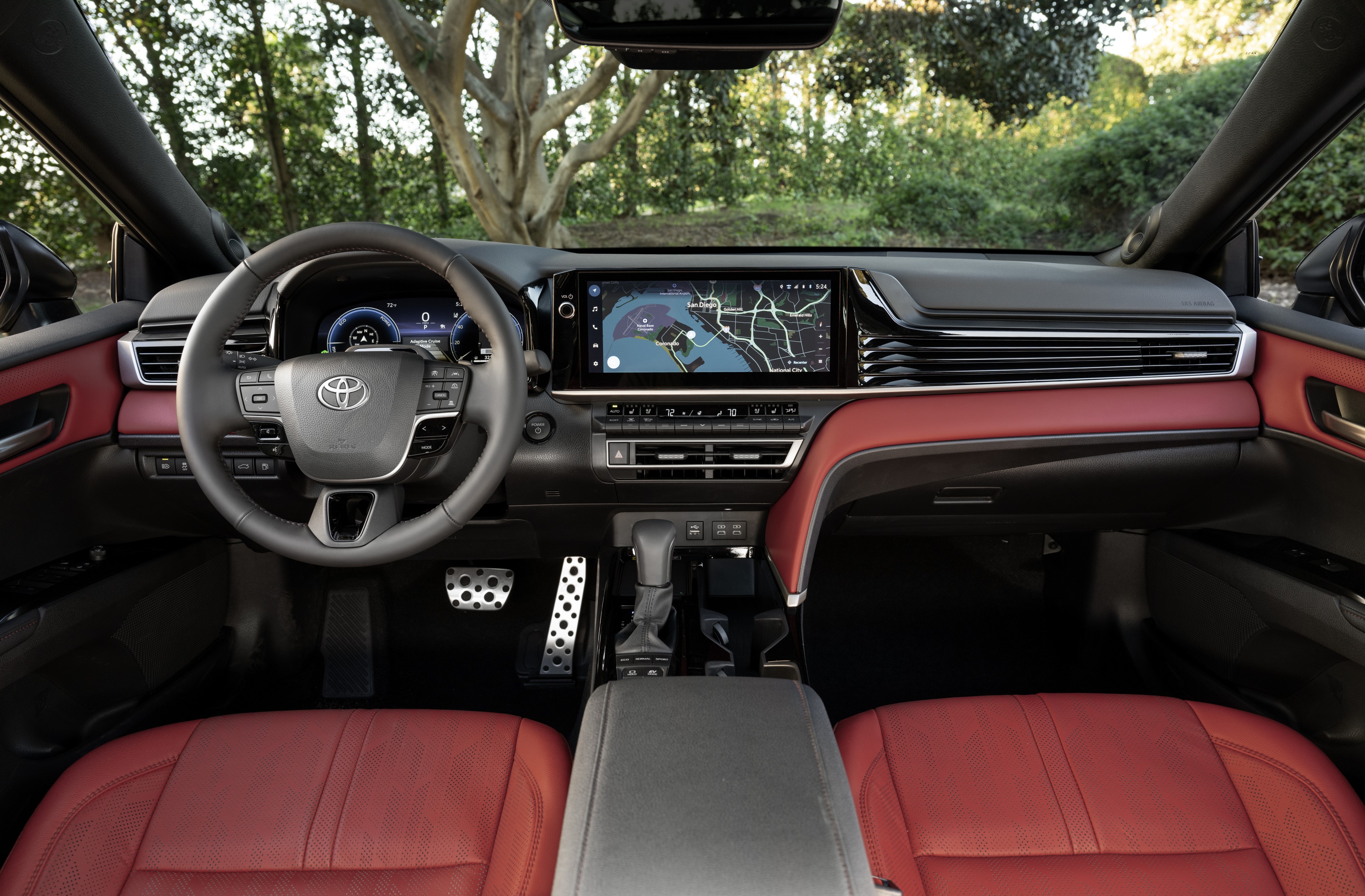
Si buscas un diseño más atrevido, tanto por dentro como por fuera, el Camry definitivamente tiene más que ofrecer, con opciones de pintura bitono disponibles que incluyen un techo negro contrastante, e incluso una opción de interior con cabina roja. El Accord actual es mucho más sobrio, pero ambos coches tienen una buena ergonomía general. Mi preferencia personal sería el Accord, pero no te equivocarás con ninguna de las dos opciones.
Echa un vistazo más de cerca a ambos sedanes híbridos
El Honda Accord Híbrido Merece Tu Atención
Analiza en detalle la entrega de potencia similar a la de un VE del Accord Híbrido, su interior espacioso, su excelente economía de combustible y su refinada experiencia de conducción.
Análisis del Toyota Camry 2026 con tracción total
Descubre cómo se comporta la tracción total disponible del Camry Híbrido en condiciones invernales y si le otorga al Toyota una ventaja significativa sobre sus rivales de tracción delantera.
Compra vehículos híbridos en todo el país
Explora sedanes híbridos, crossovers, SUV y vehículos de bajo consumo reales a la venta a través del mercado de GreenCars.