
Fast Facts | 2025 Nissan Qashqai e-Power First Look
⚡ System Type: True series hybrid (electric motor drives the wheels 100% of the time)
🔧 Gas Engine Role: Turbo 1.5L engine acts as a generator, not a direct drive source
🔋 Battery Size: 2.1 kWh buffer battery to smooth power delivery and reduce engine strain
🚗 Drive Layout: Front-wheel drive on Qashqai, AWD expected for the 2027 Rogue version
🏁 Power: 188 hp Normal mode, 202 hp Sport mode
🧠 Key Upgrade: Third-gen e-Power targets 30% cost reduction vs earlier versions
🦶 EV-Style Control: e-Pedal mode enables stronger regen and easier one-pedal driving
⛽ Expected MPG: Nissan targets roughly 39–41 mpg for the upcoming Rogue e-Power
Here at GreenCars, we usually stick to reviewing vehicles you can buy in the U.S. But sometimes what's happening in other parts of the world gives us a glimpse of what's headed our way. One such example is the third-generation Nissan Qashqai, sold just about everywhere but the U.S.
The last time we saw a Qashqai here was in the second half of the 2010s, when the second-generation model was sold as the Rogue Sport. While the U.S. won't see the newest Qashqai on our shores, we will get its newest powertrain - Nissan’s third-generation e-Power series hybrid - in the redesigned 2027 Rogue arriving mid-2026.
What is e-Power?
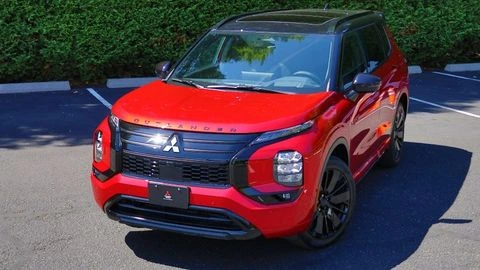
We haven't seen many Nissan hybrids here in North America: just three to date. Nissan tried a Toyota-sourced system in the Altima back in the late 2000s, offered a Nissan-developed Rogue Hybrid from 2017 to 2020 (which sold poorly), and recently launched a rebadged version of the Mitsubishi Outlander PHEV as the Rogue PHEV. But e-Power is quite different from all of those.
First introduced in Japan in 2016 on the compact Note hatchback, e-Power is a true series hybrid, meaning only the electric motor drives the wheels. Most hybrids use a parallel system that combines two or more power sources to propel the wheels, typically an internal-combustion engine and an electric motor. Some, like Honda’s latest two-motor hybrid and the former Chevrolet Volt, can switch between parallel and series operation depending on the conditions. e-Power does not; it's electric drive all the time.
The best way to think of e-Power is as a self-charging EV. The newest system uses a turbocharged 1.5-liter three-cylinder engine connected to an electric generator. It's based on the same engine architecture used in the current Rogue, but because it tends to run in a narrower operating range, Nissan was able to simplify it and reduce cost. When running, the engine and generator send electricity to a 2.1-kilowatt-hour battery pack, and from there it flows to a motor that drives the front wheels and recovers kinetic energy from braking to put back into the battery. It's designed to behave like an EV.
Earlier series-only hybrids, like the Fisker Karma, typically used relatively large batteries that could be charged from a plug to provide some electric-only drive. However, e-Power goes in the opposite direction: the battery is smaller, lighter, and cheaper than a plug-in hybrid's, and the layout is mechanically simpler than a parallel system.
The third-generation e-Power cuts overall cost by 30 percent compared to the 2019 version, with less vibration from the engine and better efficiency. Nissan achieved this by sharing components with its latest battery EVs, including the power electronics, motors, reduction gears, and other driveline components. It's essentially the same architecture as a Leaf or Ariya, but scaled down and paired with an engine-generator. Everything except the battery is packaged into a smaller, stiffer casing that keeps things quieter.
One downside of series hybrid systems like e-Power is that they tend to be less efficient at higher speeds and heavy loads because of the energy losses inherent in going from alternating current (AC) in the generator to direct current for the battery and back to AC for the drive motor.
Systems like Honda's overcome this by adding a clutch that allows the engine to drive the wheels directly at highway speeds. Instead, Nissan uses a 2.1-kWh battery (slightly larger than the 1.0 to 1.5 kWh batteries in most hybrids) for the Qashqai, which allows it to store more energy when the car is running at lighter loads and deliver it when the drive motor needs it. That means the engine-generator doesn’t have to work as hard when driving at high speeds or climbing hills, which makes the system quieter and more efficient.
Driving e-Power
I first tried out e-Power in Japan in 2023 in an X-Trail (that's what they call the Rogue everywhere outside of North America). That was the second-gen e-Power system, and it was quite impressive, even then. It was much quieter than most Toyota hybrids, which rely on an electronically controlled continuously variable planetary gear system to blend engine and motor torque, and because it has less motor power, it tends to rev the engine much faster. Because e-Power's battery acts as a buffer to provide energy for transient acceleration, the engine can generally run slower and quieter.
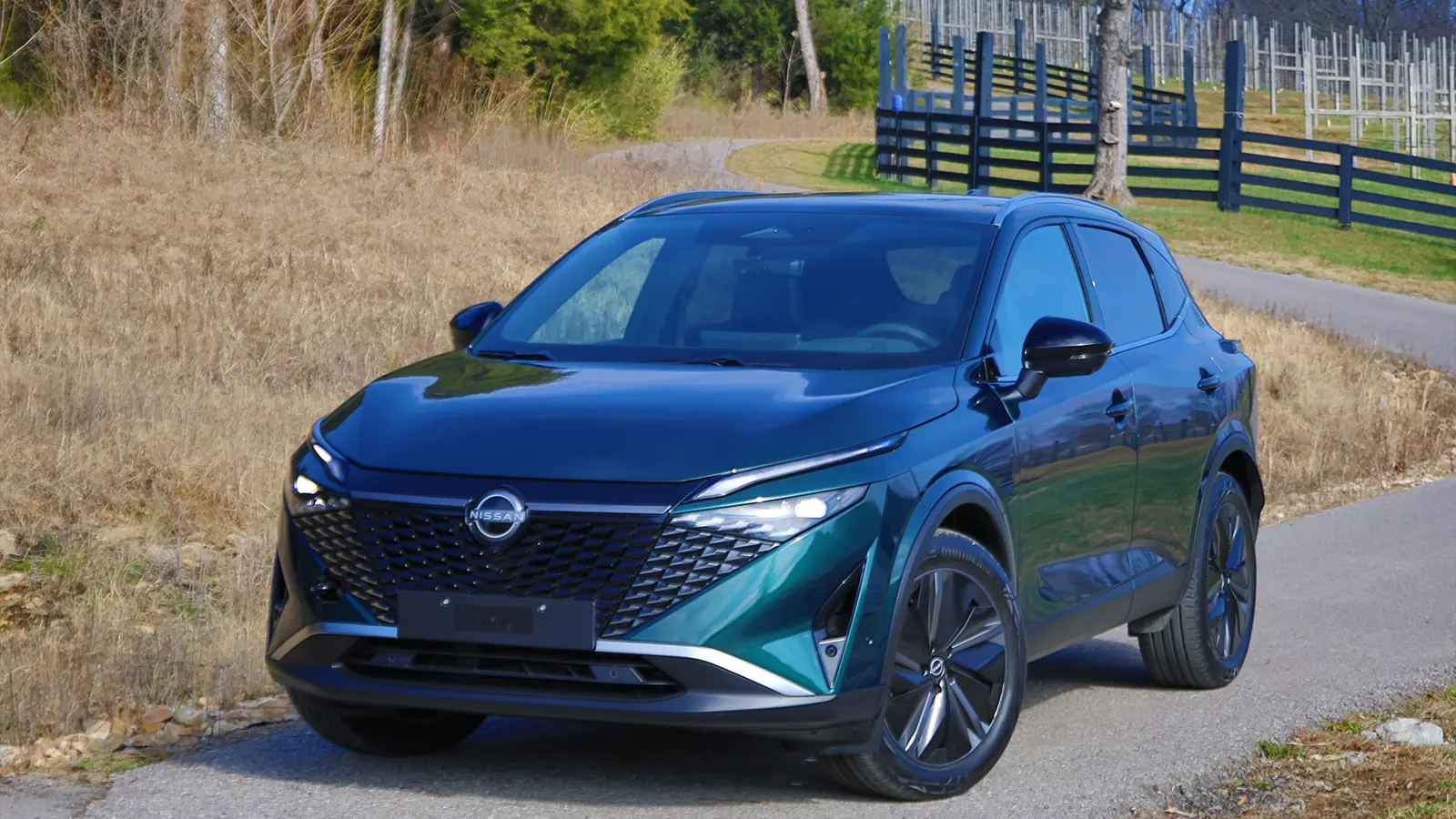
The Qashqai itself is built on the same platform as the Rogue, but it’s almost nine inches shorter overall with a wheelbase that's 1.6 inches less, putting it between the Rogue and Kicks in size. The newer generation e-Power system improves on both the earlier system I drove in Japan and the turbocharged 1.5-liter three-cylinder engine currently in the Rogue.
The Qashqai's system delivers 188 horsepower in Normal mode or 202 horsepower in Sport mode, and it's front-wheel drive only. When the 2027 Rogue e-Power arrives in mid-2026, it will get a second drive motor on the rear axle for all-wheel drive and will likely deliver more power, possibly in the 230-horsepower range, but otherwise will work and feel the same as the Qashqai.
Because it's exclusively electric drive, Nissan also includes e-Pedal mode with stronger regenerative braking for one-pedal driving like in EVs. Because the engine is never directly connected to the wheels, less vibration is transmitted to the rest of the car, making it feel quieter and more refined. It’s not as silent as a battery EV, but under most driving conditions, the engine is barely audible.
Off the line, the powertrain delivers the same instant responsiveness as an EV, making it very easy to drive in traffic, especially when using the e-Pedal mode. You rarely have to move your right foot from the accelerator unless you're coming to a full stop. During a stretch of highway driving, going uphill at 70 mph, the Qashqai accelerated smoothly, and while the engine was louder under load, it was far less intrusive than a typical Toyota hybrid. The Qashqai e-Power will accelerate to 60 mph in the mid-7-second range, and we’d expect the next Rogue to offer similar performance with the added benefit of all-wheel drive's improved poor-weather traction.
While it’s too soon to give definitive fuel efficiency numbers, Nissan expects the Rogue e-Power to deliver somewhere in the 39 to 41 mpg range, similar to what a Toyota RAV4 delivers. Nissan hasn’t ruled out eventually using a larger battery and a plug in the future to create an extended-range EV system of e-Power. But it will probably be several years until that arrives. Perhaps that will be in the upcoming Infiniti crossover expected around 2028.
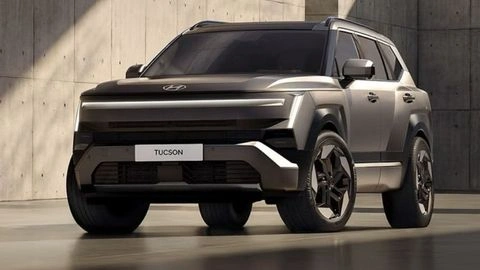
Nissan may be a bit late to the hybrid crossover party, but based on our first taste of the third-generation e-Power Qashqai, Nissan’s unique flavor of electrification should make the new Rogue fully competitive with hybrid heavyweights like the CR-V, RAV4, Tucson, and Sportage.
Keep Reading: More Hybrid Breakdowns and Real-World Picks
2026 Nissan Rogue Plug-In Hybrid Review
A close look at Nissan’s plug-in Rogue setup, how it drives, and where it fits as a bridge to what’s coming next
Read More ➜
Best Plug-In Hybrid Crossover SUVs
A curated list of the most compelling PHEV crossovers right now, with the real-world pros and tradeoffs that matter
Read More ➜
Best Hybrids of 2025
A high-signal roundup of standout hybrids across key segments, including what makes each one worth considering
Read More ➜