- Market Share Collapse
- Legacy automakers' collective share of China's passenger vehicle market has fallen from more than 50 percent to roughly 27 percent in the past two years
- Demographic and Value Shifts
- Sub-$30,000 EVs now out-feature $50,000+ vehicles in the U.S. and Europe
- Exports
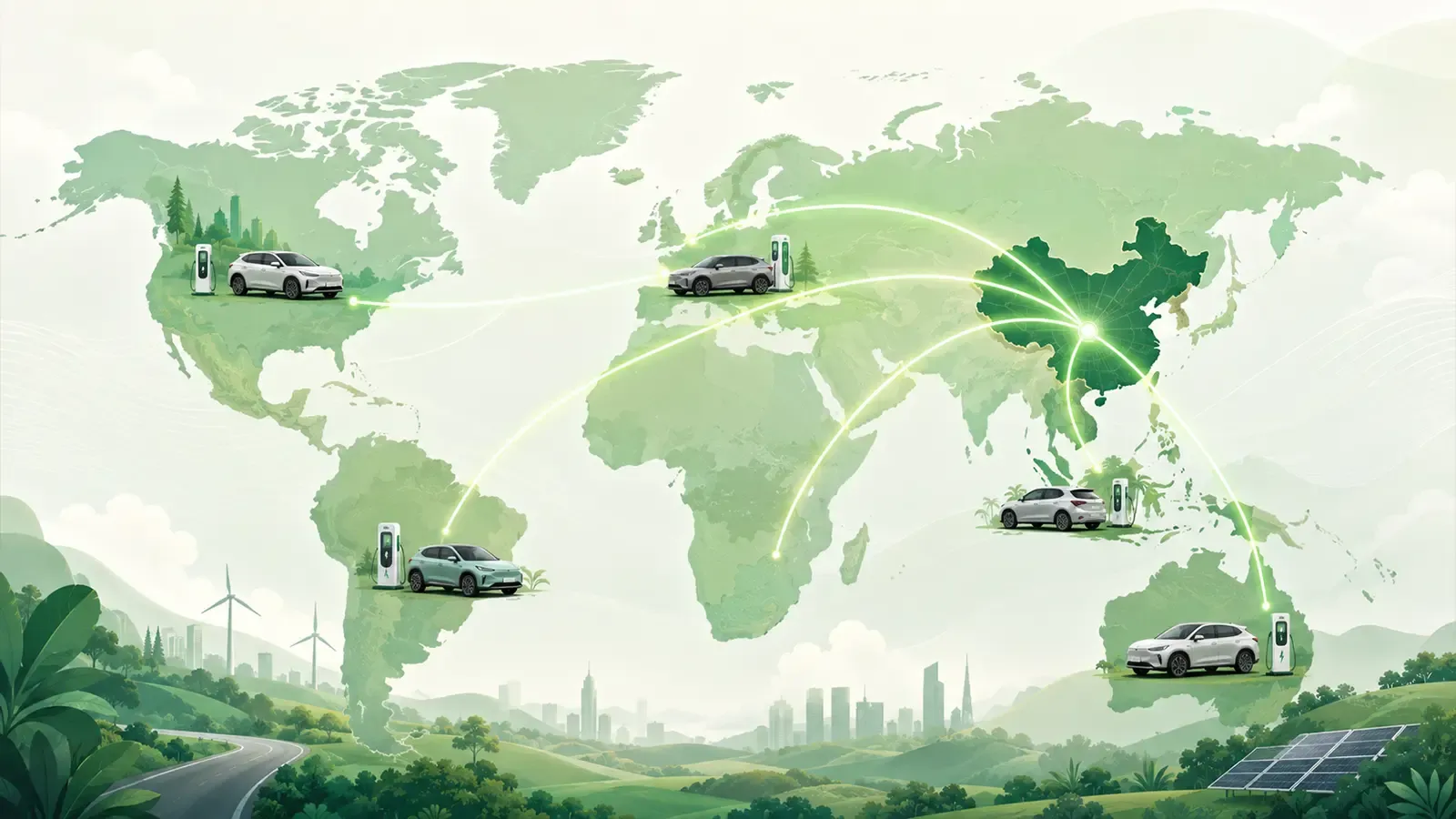
- China's auto industry is exporting its overcapacity, already nearing 20% of Mexico's market, while Canada is allowing in 49,000 Chinese EVs in a year
- Not Coming to the U.S.
- Proposed legislation would keep Chinese EVs out of the US over data-security concerns
- Competition
- Tu Le argues the U.S. can't match China's manufacturing scale, so it's about competing, not catching up
China’s Auto Market Has Flipped
Legacy automakers held more than 50 percent of China's passenger vehicle market as recently as two years ago. That share has now fallen to around 27 percent. Volkswagen and GM have each lost more than a million units in sales in China over the past four to five years, while Porsche has slid from a peak of 92,000 units to around 45,000 this year. Meanwhile, BYD has scaled from fewer than 500,000 units in 2019 to more than 4.6 million units sold in China in 2025.
China’s transformation is inseparable from BYD’s rise from battery company to dominant automaker, so see how BYD built its scale, technology, and cost advantages ➜
On the GreenCars Podcast, we recently spoke to Tu Le, the mind behind Sino Auto Insights, about the Chinese auto industry's transformation over the past decade.
How Did China Get Here?
Le says part of this shift is demographic. China has become the world’s second-largest economy in about 45 years, and people born after 1990 are considered digital natives. They had mobile phones in their hands from day one. There hasn't been an awkward transition from analog to digital technology because analog tech was never widely deployed before the 1990s. And China's manufacturers are doing better at keeping pace with this evolving tech thanks to an unambiguous government policy of moving rapidly toward electrification. Le says that legacy automakers are "bringing analog toys to a digital party." Le pointed to a $35,000 Li Auto L6 that, during a live demo he described from a recent trip, recharged from 10 to 90 percent in about 12 minutes. Cars priced under $30,000 in China now out-feature vehicles priced over $50,000 from the U.S. or Europe.
Consolidation Isn't Happening
There has been a flurry of startups in China, and there have been years of predictions that overcapacity would force consolidation among them, but Le says that hasn't happened and isn't likely anytime soon. Chinese officials are incentivized by job creation and tax revenue, which discourages them from letting factories close even amid an oversupply problem.
Instead, much of China's excess production capacity is being exported. In a single recent month, China shipped roughly 1 million vehicles abroad, including foreign brands like Lincoln and Buick built there and coming back to North America. Chinese vehicles already account for almost 20 percent of new car sales in Mexico, and Canada's new trade arrangement allows 49,000 Chinese EVs to enter the market annually. Dongfeng recently unveiled Canada-bound models with EV variants priced under $25,000.
Why This Matters for US Buyers
Don't expect those vehicles to enter the U.S. anytime soon. Proposed legislation from Senators Elissa Slotkin and Bernie Moreno would restrict Chinese EVs from entering the country because of data-security concerns. However, Le claims that Chinese automakers would be willing to localize data on US servers to gain market access.
Tariffs were already making direct U.S. entry difficult before national-security restrictions tightened further, so see how U.S. trade policy has shaped the Chinese EV question ➜
Even so, American drivers should pay attention to the Chinese market. US manufacturers will eventually have to compete with these vehicles, and much of the same technology will likely end up in the cars sold here. They can give consumers a preview of what to expect in the next three to 10 years.
Le says the "shock and awe" phase of Chinese vehicles is over: the industry now understands they're a threat, and the next challenge is understanding the breadth and depth of that threat. Le and the GreenCars co-hosts agree that Ford appears to be doing the best job competing, through its Skunkworks program and UEV platform. They see far less movement from GM or Stellantis, aside from Stellantis' 19 to 20 percent stake in Leapmotor, which could eventually lead to licensed Leapmotor vehicles built for North America.
Ford’s response began with an unusual California development operation designed to rethink cost, software, manufacturing, and vehicle architecture together, so go inside the team behind Ford’s new EV strategy ➜
The U.S. Should Focus On Competing, Not Catching Up
Le argues it's not about catching up to Chinese manufacturers. Catching up isn't realistic, or even desirable, since there's no way the U.S. can match China's manufacturing scale. Instead, he says it's about competing. Automakers need to identify where they can compete, move quickly, and question long-standing internal processes to keep pace with a market that's already years ahead on electrification and vehicle software.
More Context on the Global EV Power Shift
EVs in 2026: Tesla Shifts, China Surges, Charging Expands
See how China’s growing influence fits into the wider global EV market, alongside changing U.S. demand and charging infrastructure.
Read More ➜
Ford’s Next Model T: Inside the UEV Program
Ford’s Universal EV program is one concrete example of a legacy automaker trying to redesign vehicles, manufacturing, and cost structure around a clean-sheet architecture.
Read More ➜
BYD Announces Super-Fast EV Charging in Five Minutes
BYD’s high-power charging platform illustrates the pace of battery and charging development helping Chinese brands reset consumer expectations.
Read More ➜






 Trends