

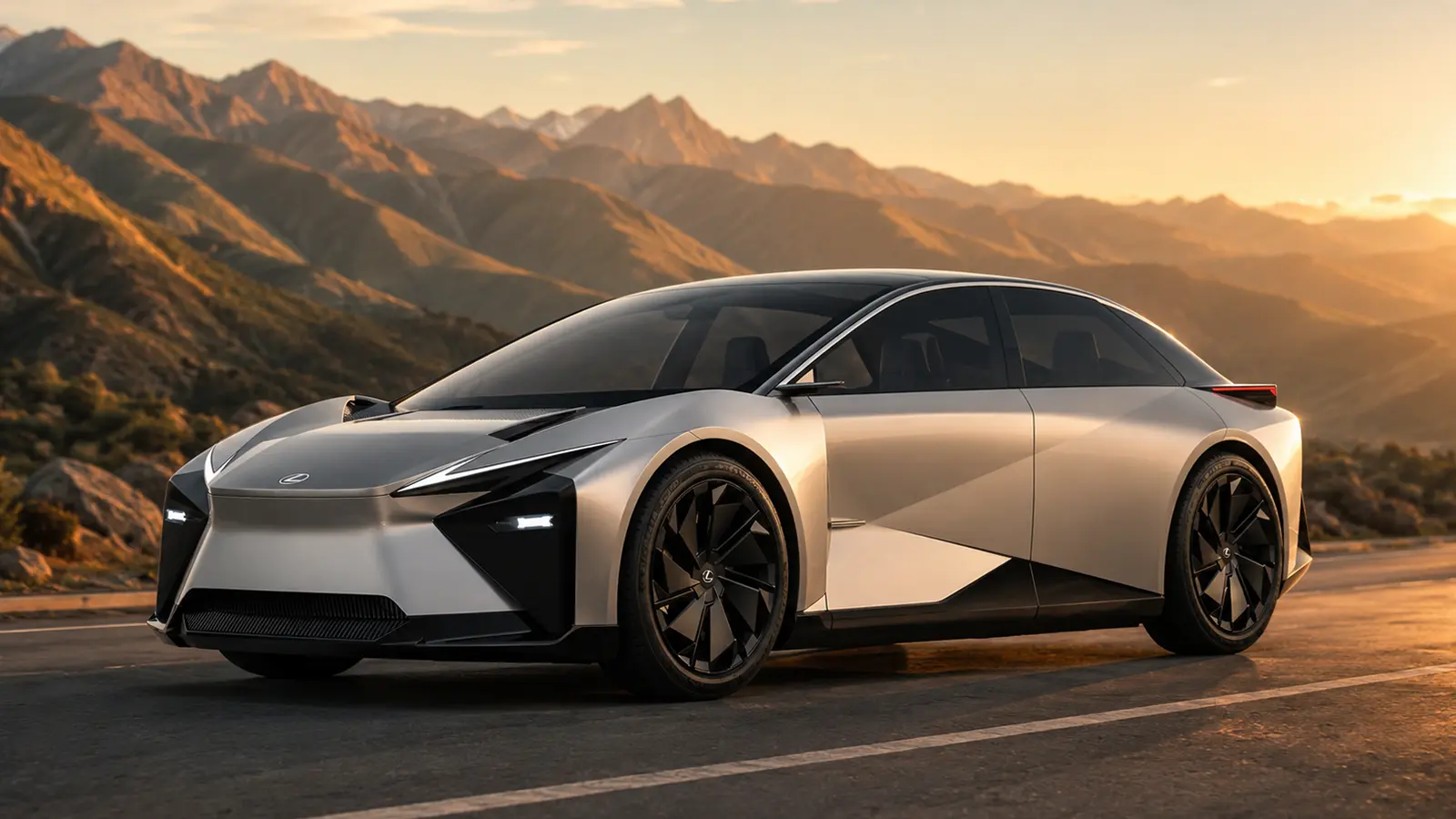

Fast Facts | Lexus LF-ZC Cancellation
🚘 Canceled Project: Planned LF-ZC electric sedan
📅 Timeline: 2026 target, delayed to 2027, then halted
🏭 Planned Technology: Gigacasting, Arene OS, and next-generation batteries
📈 Global Plug-In Sales: More than 20 million in 2025, up 20%
🔋 Toyota/Lexus BEVs: About 200,000 sold globally in 2025
🚙 Toyota EVs: bZ, bZ Woodland, C-HR, and 2027 Highlander
✨ Lexus EVs: RZ, electric ES variants, and 2027 TZ
Toyota has cancelled the production version of the Lexus LF-ZC, a sleek electric sedan it once positioned as the future flagship of its luxury brand. The news, first reported in Japan and later confirmed by the company, is the latest in a string of pullbacks from Japanese automakers. It has fueled a familiar headline: that the world is cooling on electric vehicles. The fuller picture is more interesting than that.
What Toyota Actually Cancelled
The LF-ZC first appeared as a concept at the 2023 Japan Mobility Show and was meant to showcase a wave of new technology. It promised a new manufacturing method called gigacasting, advanced prismatic batteries aimed at roughly doubling typical range, and a fresh software platform called Arene OS. Production was planned for 2026, then slipped to 2027, and has now been shelved.
Toyota says it will shift its near term focus toward electric SUVs while continuing to develop the underlying battery and software technology, leaving the door open to a future flagship.
When Lexus first revealed the LF-ZC, the sedan previewed a new generation of vehicle architecture, software, battery packaging, and manufacturing methods explored in our first look at the LF-ZC and Lexus’s next-generation EV concepts ➜
A Pattern Across Japan
Toyota is not alone. Subaru has pulled back on parts of its electric plan after a difficult stretch for profit. Honda has scaled back portions of its ambitious 0 Series electric program. Mazda has also softened its timeline. Taken together, these moves look like a coordinated retreat, and that is the story many headlines have run with.
What the Data Actually Shows
Here is where it gets complicated. Global electric vehicle sales are still growing, not shrinking. Toyota and Lexus together sold about 199,000 fully electric vehicles worldwide in 2025, a jump of more than 42 percent over the year before. The slowdown that automakers point to is real in specific markets, including the United States, where the end of the federal tax credit reset demand. But a regional reset is not the same as a global decline.
The same brands cancelling some models are also adding others. Toyota announced that an electric Highlander will join the bZ, the bZ Woodland, and the C-HR EV in its electric lineup. Subaru's electrified roster includes the Trailseeker, the Uncharted, the Solterra, and the Getaway. Lexus itself just announced that an electrified ES sedan and the three-row TZ will join the RZ among the brand's 2027 electric options. A company quietly expanding its electric lineup is not a company walking away from the technology.
What is really happening looks more like a change in strategy than a loss of belief. Several Japanese brands were comparatively late to electric vehicles and are now choosing to delay rather than ship products that are not yet ready or not yet profitable. That is a business decision about timing, not a verdict on whether electric cars have a future.
Why Hybrids Are Part Of The Story
There is another thread worth pulling. Toyota built its reputation on hybrids, and hybrids are selling extremely well right now. The company sold more than four million hybrids worldwide in 2025. For many buyers who are not ready to go fully electric, a hybrid or plug-in hybrid offers lower fuel costs without the worry of running low on charge. Leaning into that strength while the charging network expands and battery costs keep falling is a defensible path, even if it makes for a less dramatic headline.
Toyota’s shift toward higher-volume electric SUVs is easiest to see in the 2027 Toyota Highlander EV reveal, which introduces the brand’s first three-row BEV for the U.S. market ➜
The Takeaway For Shoppers
If you are considering an electric vehicle, one cancelled luxury sedan does not change much. The number of models on sale keeps growing, prices in the used market are falling, and the technology keeps improving. What stories like this really highlight is that the road to electrification is not a straight line. Automakers will speed up, slow down, and change direction based on cost, policy, and demand.
GreenCars will keep separating the signal from the noise, so you can focus on what matters: finding the right vehicle for your needs today.
⚡More Electric Toyota and Lexus Reviews
2026 Lexus ES350e/ES500e First Drive Review: Sharp Dressed Sedan
The electric ES shows that Lexus has not abandoned battery-powered sedans, even as the more ambitious LF-ZC project disappears.
2026 Toyota bZ Woodland First Drive
Toyota’s adventure-oriented electric crossover adds more power, cargo room, and capability as the company concentrates on more popular SUV body styles.
Toyota’s 2026 bZ Finally Gets It Right
The heavily updated bZ demonstrates how Toyota is improving its current EVs while becoming more selective about expensive next-generation projects.



-building-thumb.webp)


