



 Previews
2025 Nissan Qashqai e-Power First Look
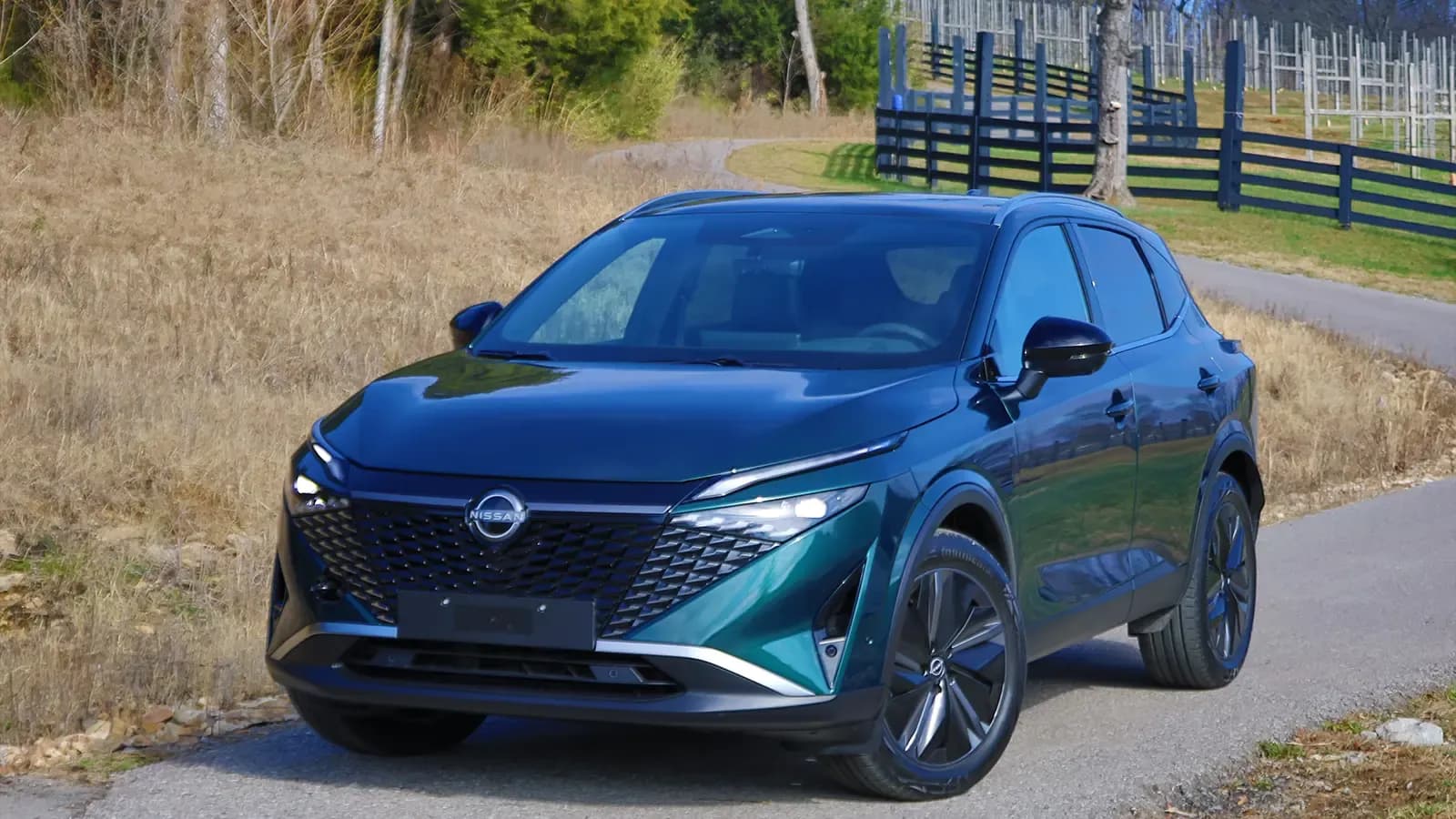
Taking a closer look at Nissan's Qashqai e-Power reveals the innovative hybrid tech set to transform the next-generation Rogue for 2027.
Sam Abuelsamid6 min read

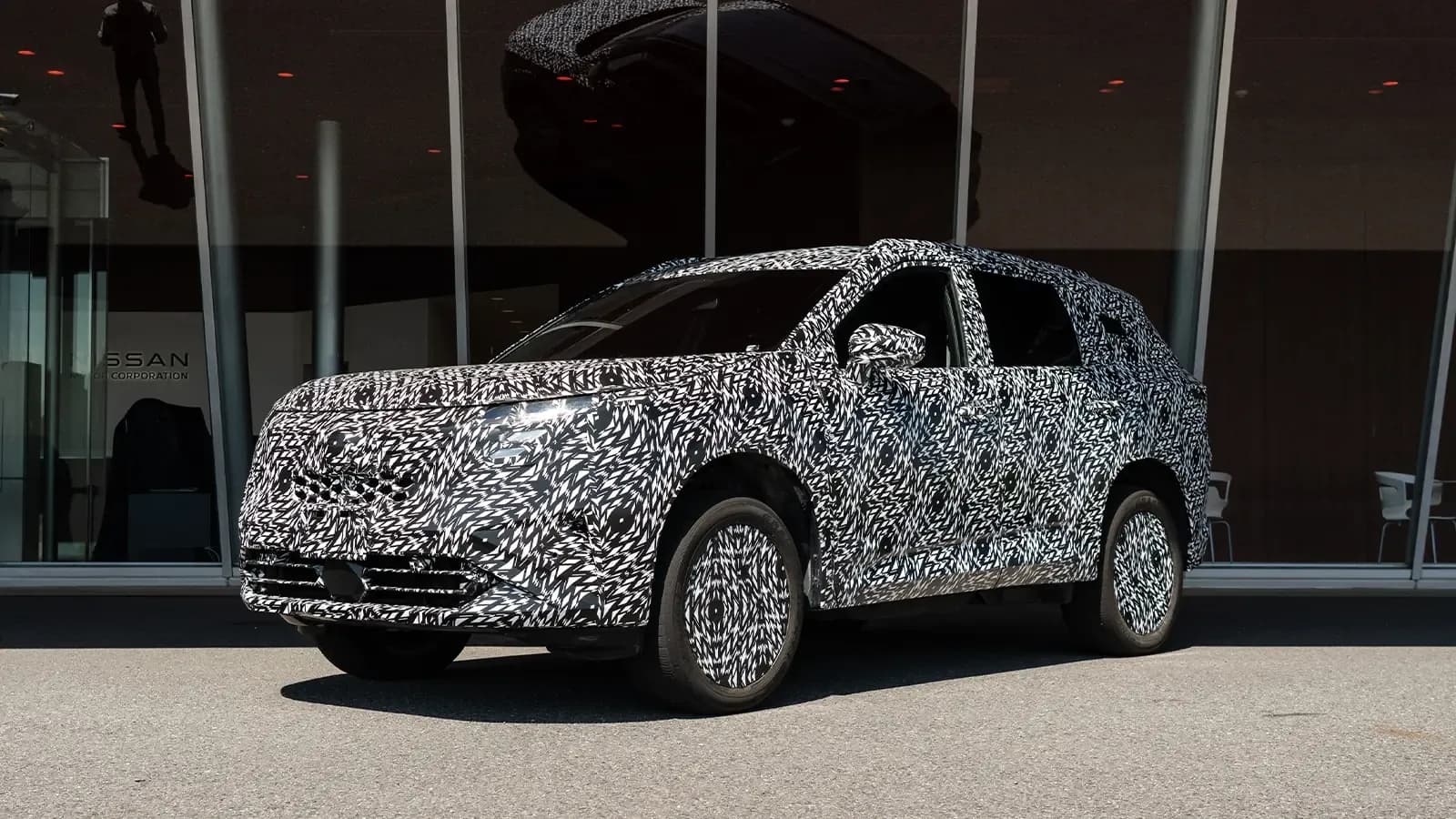
Nissan’s new Rogue e-Power is not a typical hybrid. It drives like an EV, skips the plug, and may finally give Nissan the standout hybrid SUV it has been missing.
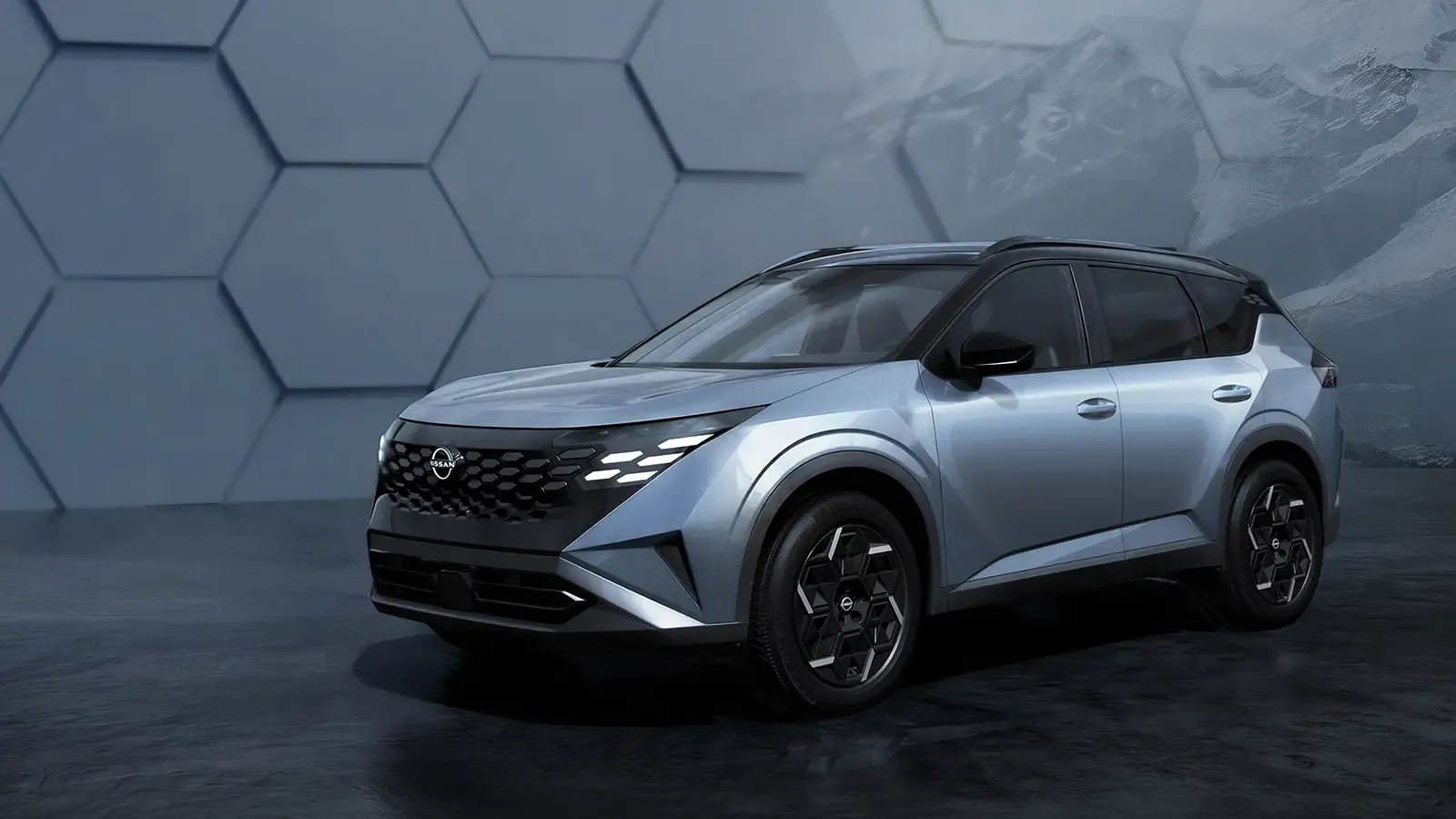
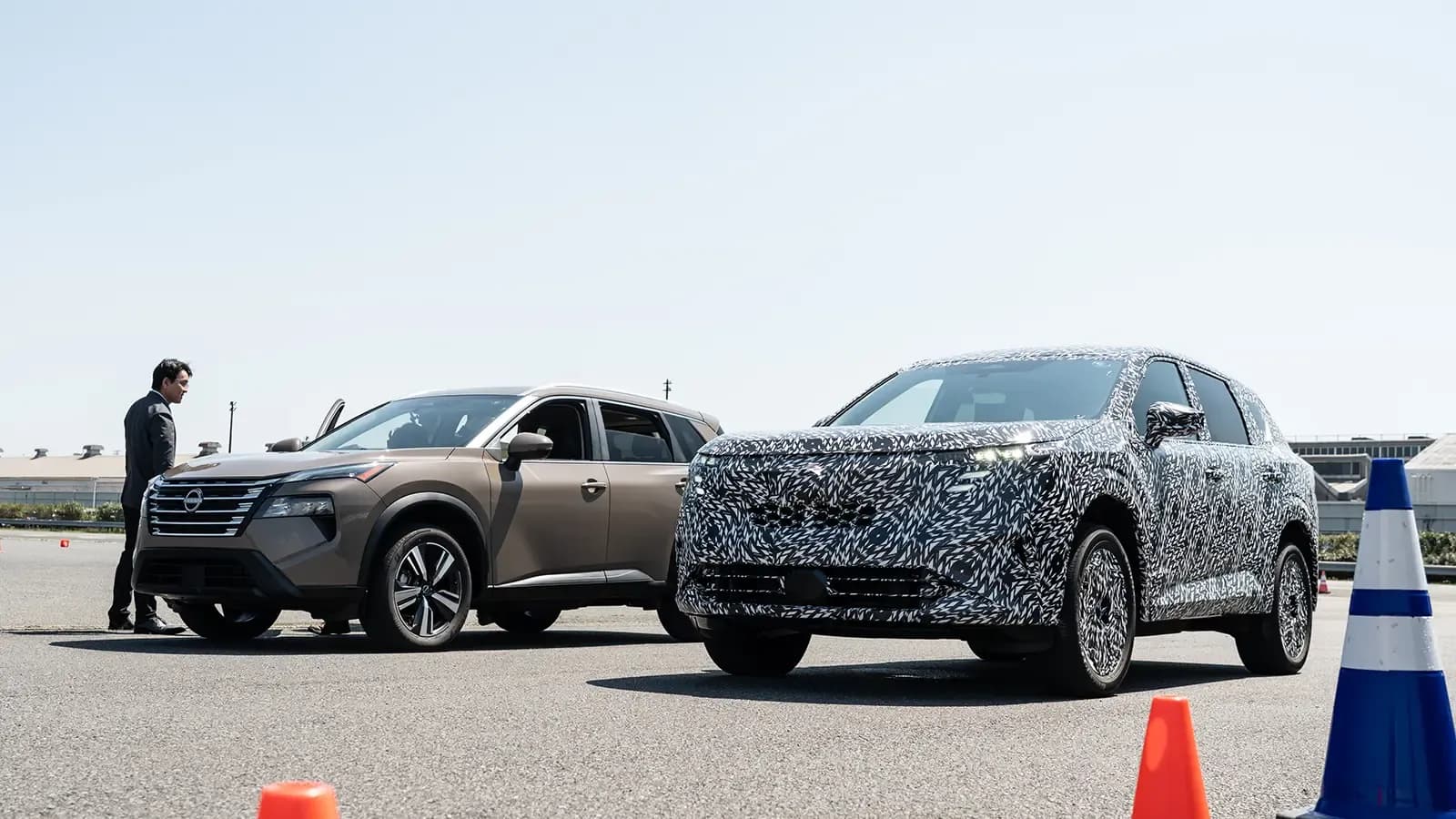
Nissan's Rogue SUV has been a perennial bestseller practically since it first went on sale in 2007. That was true even of the last generation, which was Nissan's most popular vehicle in the United States despite one major issue: It didn't have a hybrid drivetrain.
As gas prices soar and EV interest remains uncertain, more and more buyers are turning to hybrids to ease the pain at the pump, and Nissan didn't have anything for them. A Mitsubishi-based Rogue plug-in hybrid (PHEV) was rushed in as something of a stopgap, but everything changes with the next-generation Rogue. It's slightly larger than before and significantly different-looking, but the biggest changes are under the skin.
The 2027 Rogue launches as a hybrid first, powered by a radical new drivetrain called e-Power. GreenCars got a taste of an earlier version when we tested an international-market Qashqai, but this will be the debut of the third-generation, dual-motor version of e-Power. And after a few laps around Nissan's test track in Japan, I'm happy to say it's worth getting excited about.
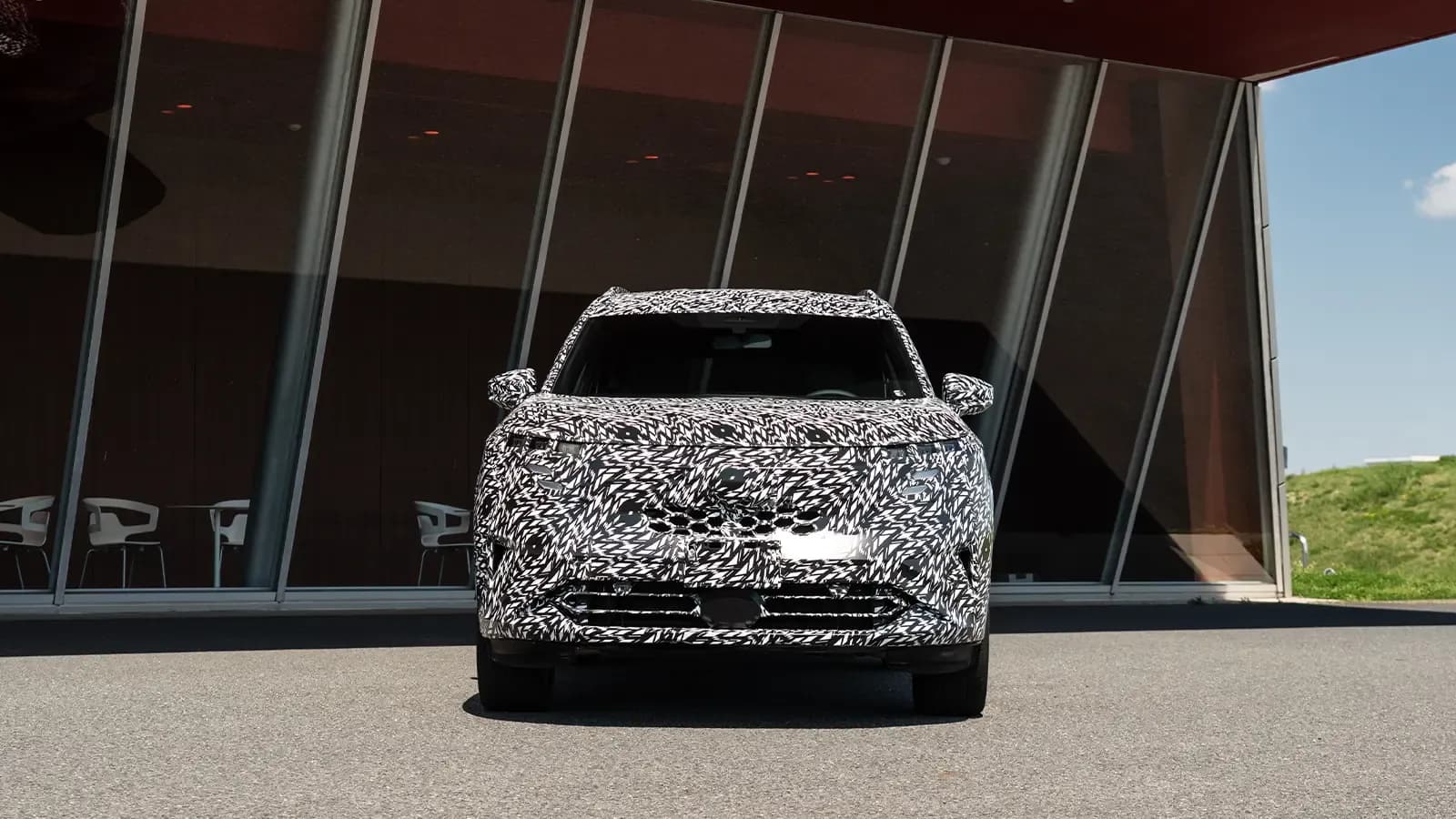
It's not too often that you hear about a dual-motor car that isn't fully battery-powered, but that's exactly what you get with the Rogue. It's driven entirely by a pair of electric motors, one at each axle, with the front motor delivering 201 horsepower and 244 pound-feet of torque, and the rear delivering 134 horsepower and 144 lb-ft. But Nissan didn't quote a combined figure, and maximum power will be dictated by the electric system. Expect something between the 236 horsepower from Toyota's all-wheel-drive RAV4 Hybrid or the 194 horsepower from the Subaru Forester Hybrid, its closest rivals.
If you want the clearest explainer on what Nissan is building here, this Qashqai e-Power first look lays out the system beautifully ➜
The dual motors are powered by a battery, but it's a small one. Nissan hasn't finalized the size in the new Rogue, but in earlier e-Power cars like the Qashqai, the battery is just 2.1 kilowatt-hours. That's barely enough for a few miles on electric power alone, but the Rogue is not a PHEV, and that battery isn't meant to drive the car on its own. The real power comes from somewhere else.
That somewhere is a 1.5-liter three-cylinder engine. It's the same displacement as the outgoing Rogue, but where that car sent its power through a continuously variable transmission (CVT), the new engine is connected directly and only to an inverter. It never drives the wheels.
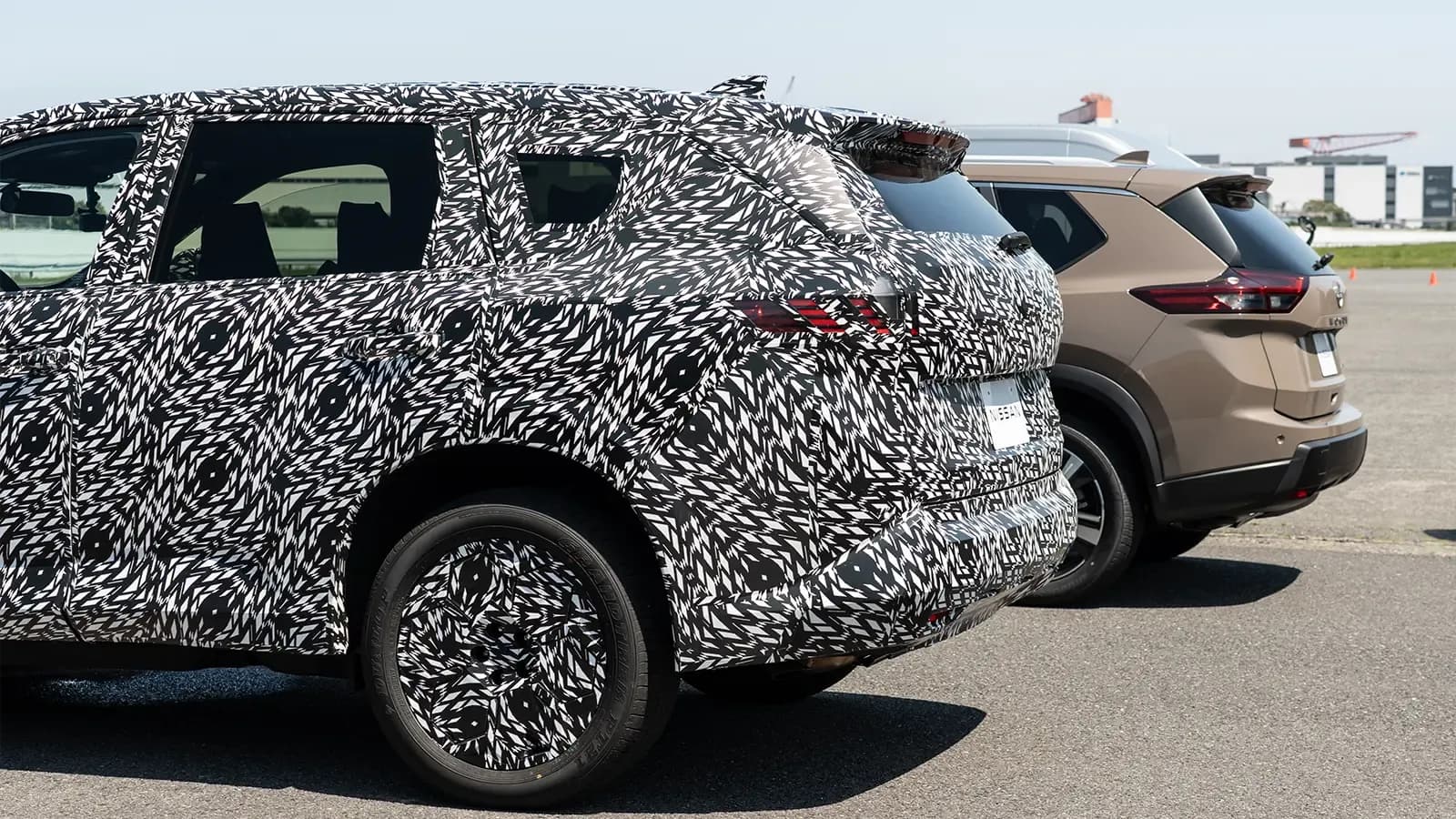
A gas engine that doesn't spin the wheels but acts as a generator instead is what's called a series hybrid. We've seen variations of this system in cars like the original Chevrolet Volt and Honda's new Prelude, but where those could drive the wheels from the engine in certain situations, the 2027 Rogue cannot. The electric motors handle all propulsion, all the time.
Nissan has been using an older version of e-Power on cars sold internationally for years. This new, third-generation system has a number of improvements. The engine, inverter, and reduction gearset have been integrated into a single unit, which simplifies packaging and enables everything to be better isolated from the rest of the car.
The promise of all this: a better-driving, smoother-stopping hybrid SUV with all the rolling charm of an EV but without ever needing to find a charger. True? That's what I went to Japan to find out.
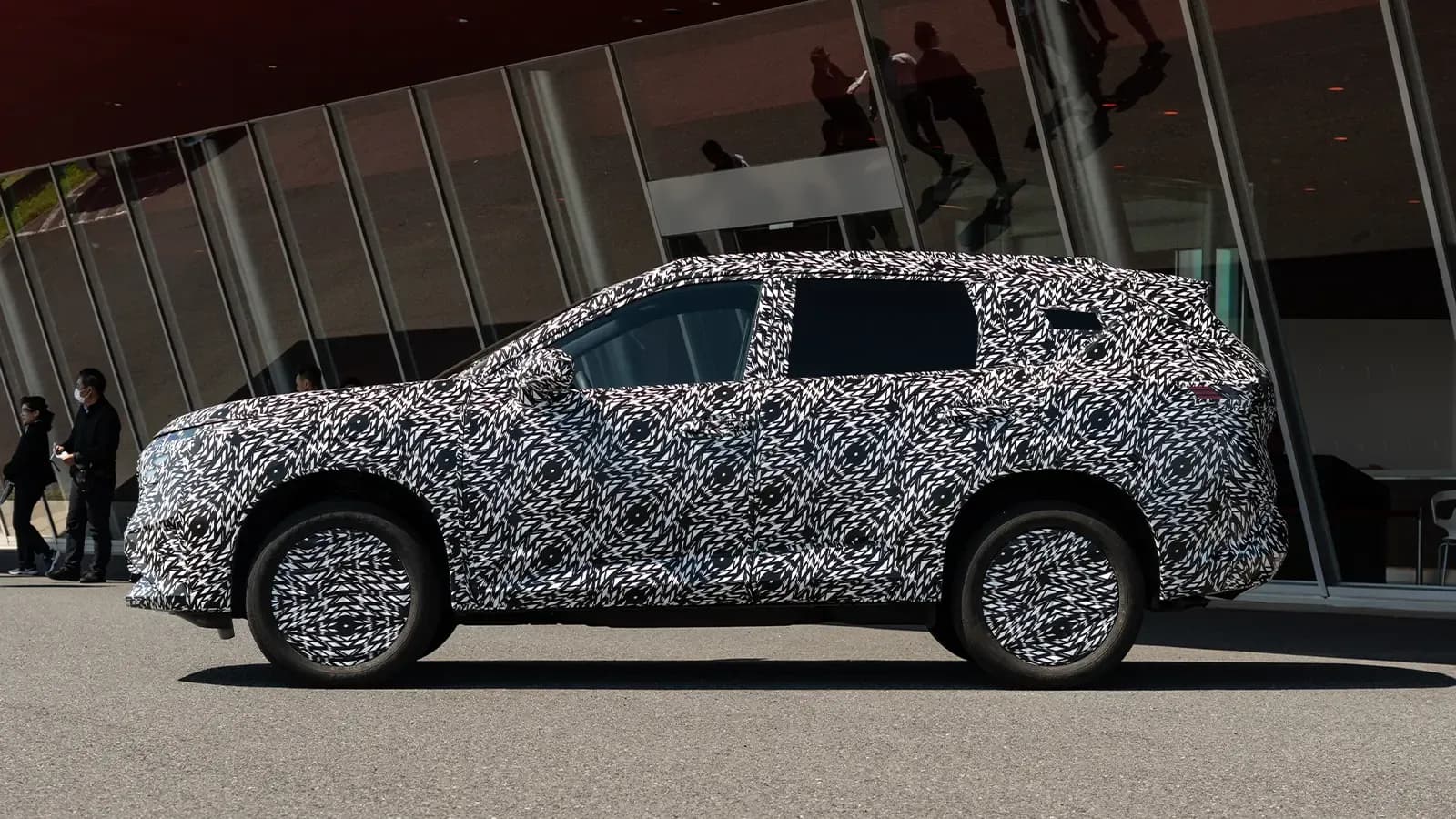
Before lapping in the 2027 Rogue prototype, I was given a chance to sample the current-generation, nonhybrid Rogue as a refresher. Nissan sold over 200,000 of them last year alone, but it's not exactly a hallmark of refinement. The 1.5-liter engine is harsh and feels overworked, with uneven power delivery through the CVT. It's buzzy, and definitely the low point of an otherwise perfectly fine SUV.
The new series-hybrid Rogue, in comparison, is a smooth operator. Put it in Drive and start to move forward, and there's no sound at all. No hesitation, either. It just whisks forward with that effortless feeling that EV owners know and love.
It was only after I'd picked up some speed that I heard the engine kick on and start doing its thing. But where that was a constant annoyance in the old Rogue, I could barely hear it in the new one. More importantly, I couldn't feel it at all. I've driven series hybrids in the past where the engine note is a constant, annoying drone. Not here. The 2027 Rogue really does feel like an EV, with such a modest reminder of internal combustion that you'd need only turn up the music to forget about it. Well, that and the occasional stop at the pump.
And if you are still deciding whether plug-in or no-plug electrification fits better, this Rogue PHEV review shows the other path Nissan has been using as a bridge ➜
Even at higher speeds, this series hybrid had plenty of power and throttle response, never feeling slow or anemic. It was far more engaging than the outgoing Rogue, and even more so than competition like the aforementioned hybrid competition from Toyota and Subaru.
The best part, though, might have been the braking. The Rogue offers a one-pedal driving mode, enabled via a button on the center console, that brings it to a complete stop without touching the brake pedal. Nissan has tuned it to offer the same sort of ultra-smooth stopping that BMW has been touting in its new iX3. Nissan's version isn't quite at that level, but it still comes to a stop so subtly you can barely tell when the wheels cease rolling. For those who regularly find themselves stuck in stop-and-go traffic, this should make a much more calming commute.
Nissan hasn't confirmed exactly when this new Rogue will be hitting the market, and the prototype I drove was still wrapped in camouflage, so it's difficult to say how close to production-ready it was. That said, the company did unveil a camo-free version while I was in Japan, and it looked more or less ready to roll.
That means it shouldn't be too far off from hitting American dealers. At least initially, the hybrid will be the only Rogue available. If Nissan can get the price right, a factor that's always key for the Rogue, the new one has every reason to be an even bigger success than the ones that came before.
2025 Nissan Qashqai e-Power First Look
This is the cleanest companion read because it explains the same e-Power concept in a more production-like package and previews what makes the Rogue different.
Read More ➜
First-Ever Subaru Forester Hybrid
The Forester Hybrid is one of the Rogue’s closest rivals, and this piece gives readers a useful contrast in how another brand is approaching compact-SUV electrification.
Read More ➜
Honda CR-V Hybrid vs. Toyota RAV4 Hybrid
A smart market-context read for shoppers who want to compare the Rogue’s unusual e-Power setup with the two mainstream hybrid benchmarks in the segment.
Read More ➜
GreenCars Contributor
Tim Stevens is a veteran automotive and technology journalist with nearly 30 years of experience covering everything from smartphones to supercars.
Get vehicle reviews, practical tips, and the latest GreenCars news.
PreviewsTaking a closer look at Nissan's Qashqai e-Power reveals the innovative hybrid tech set to transform the next-generation Rogue for 2027.
 Reviews
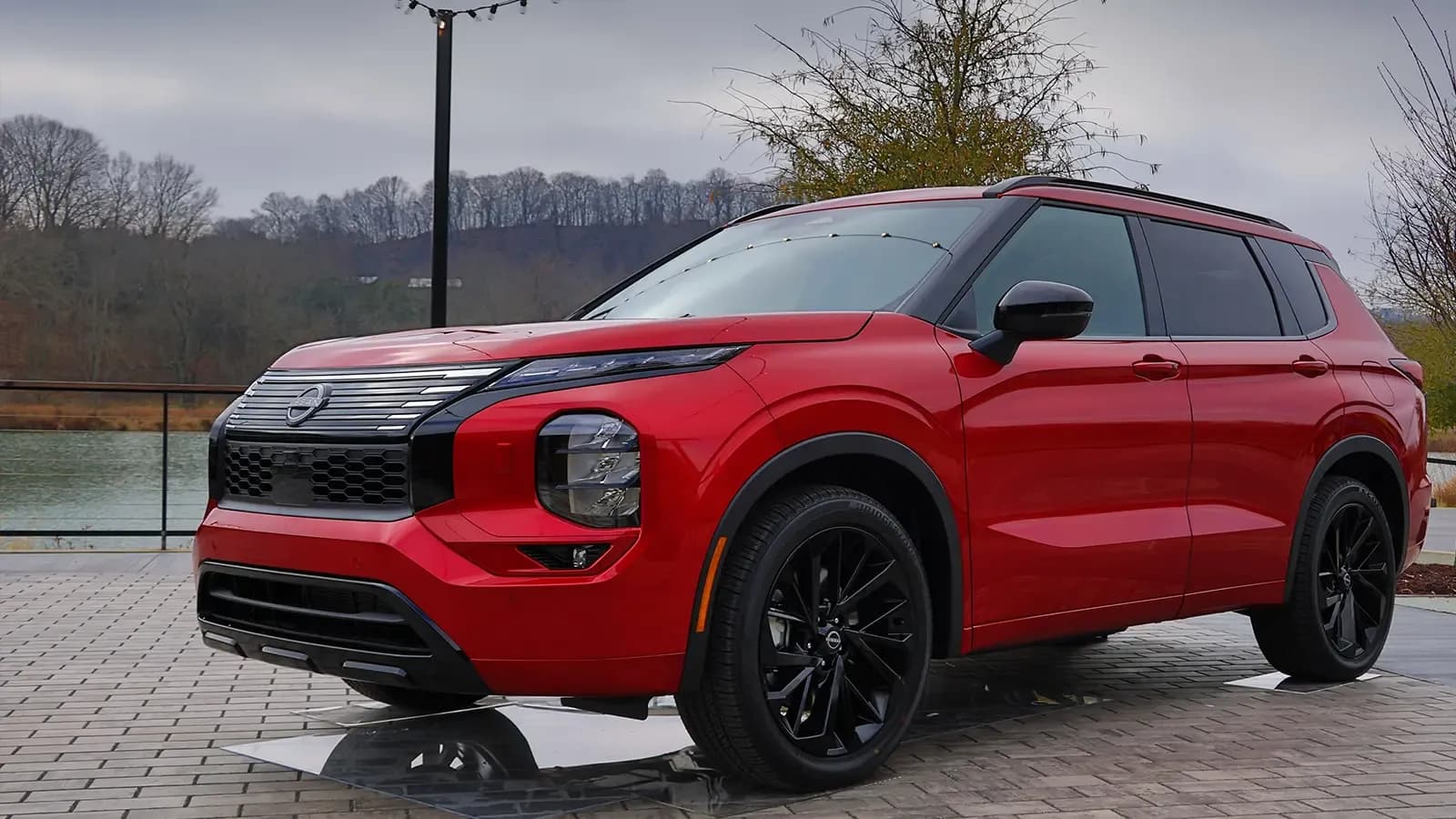
Though Nissan's plug-in hybrid Rogue is actually a Mitsubishi Outlander in disguise, it's actually a crossover worth considering for those who don't want to wait for next year's redesign.
 Previews
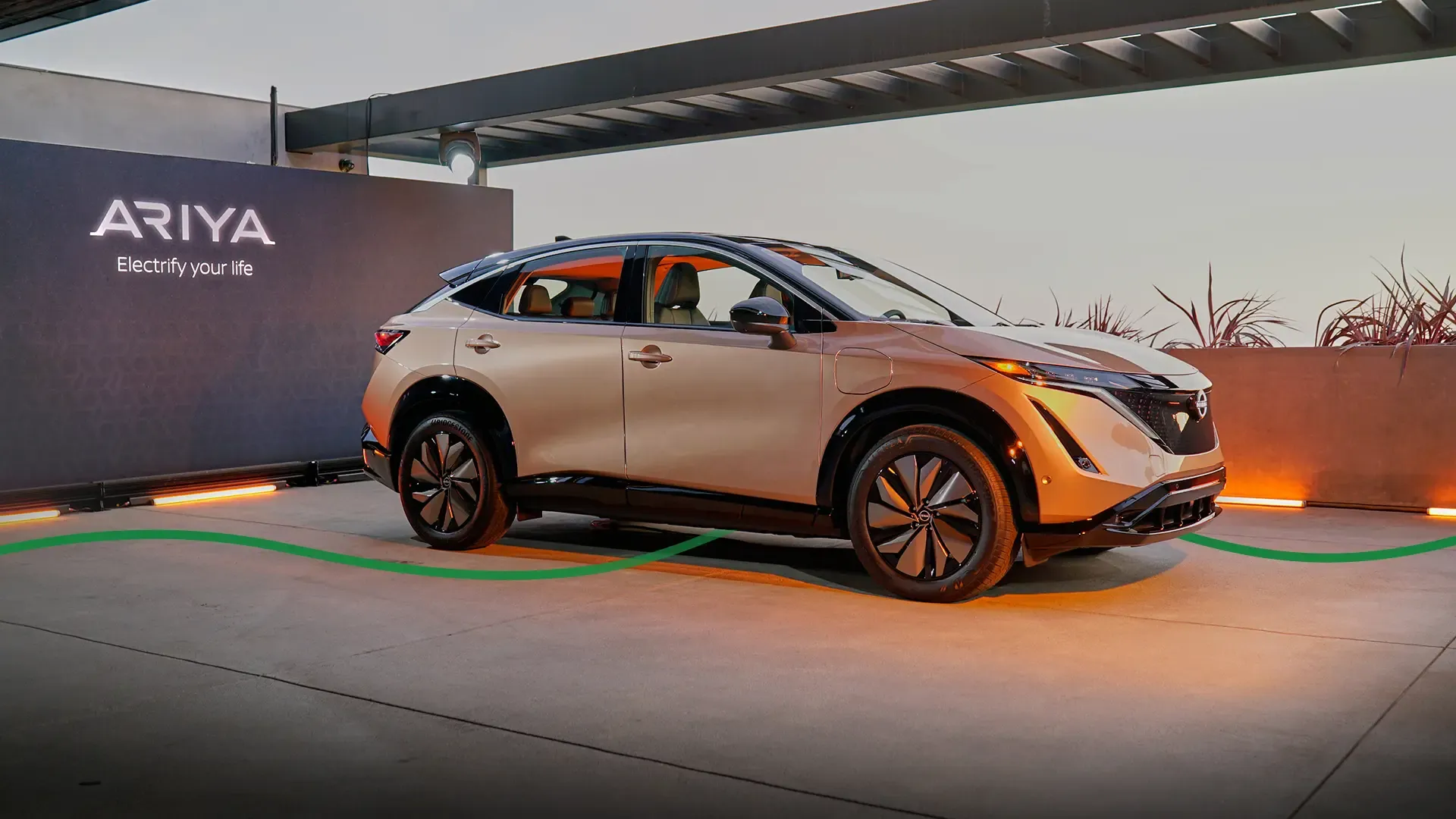
The Nissan Ariya is a mainstream electric crossover targeted right at the heart of the market, with pricing (before incentives) starting in the high forties and with a physical footprint similar to the successful Rogue. On paper, it's a very appealing package. Read about it here.