
Fast Facts | Kia Sorento Plug-In Hybrid vs. Mazda CX-90 Plug-In Hybrid
Output: The Kia Sorento PHEV has 268 horsepower, while the Mazda CX-90 PHEV has 323 horsepower
EPA-Estimated Fuel Economy: The Kia Sorento PHEV gets up to 33 mpg combined, while the Mazda CX-90 PHEV gets up to 26 mpg combined
All-Electric Range: The Kia Sorento PHEV gets up to 31 miles of all-electric range, while the Mazda CX-90 PHEV gets up to 26 miles of all-electric range
Tech: Both the Kia Sorento PHEV and Mazda CX-90 PHEV have a 12.3-inch touchscreen and wireless Apple CarPlay and Android Auto
MSRP: The Kia Sorento PHEV starts at $49,785, while the Mazda CX-90 PHEV starts at $52,340
Kia Chases Efficiency. Mazda Chases Performance.
For families that need to seat up to seven and don't want a minivan, a three-row SUV is often the answer. Unfortunately, three-row SUVs aren't known for fuel efficiency, and that's where a plug-in hybrid (PHEV) comes in.
A PHEV can run on electricity alone for a limited distance, around 30 miles in the case of the Kia and Mazda. That covers a lot of daily driving: school drop-off, the playground around the block, or a game at the neighborhood baseball diamond. With gas prices hitting wince-inducing levels, handling short treks on electricity alone sounds pretty good. And once the battery runs out, a PHEV operates like a conventional hybrid, so you can take it on a family road trip without worrying about finding a charger.
These SUVs make the most sense when their batteries are charged regularly, so see how plug-in hybrids blend electric driving with gasoline backup ➜
Here's what you need to know about the Kia Sorento PHEV and the Mazda CX-90 PHEV.
Exterior Design and Dimensions
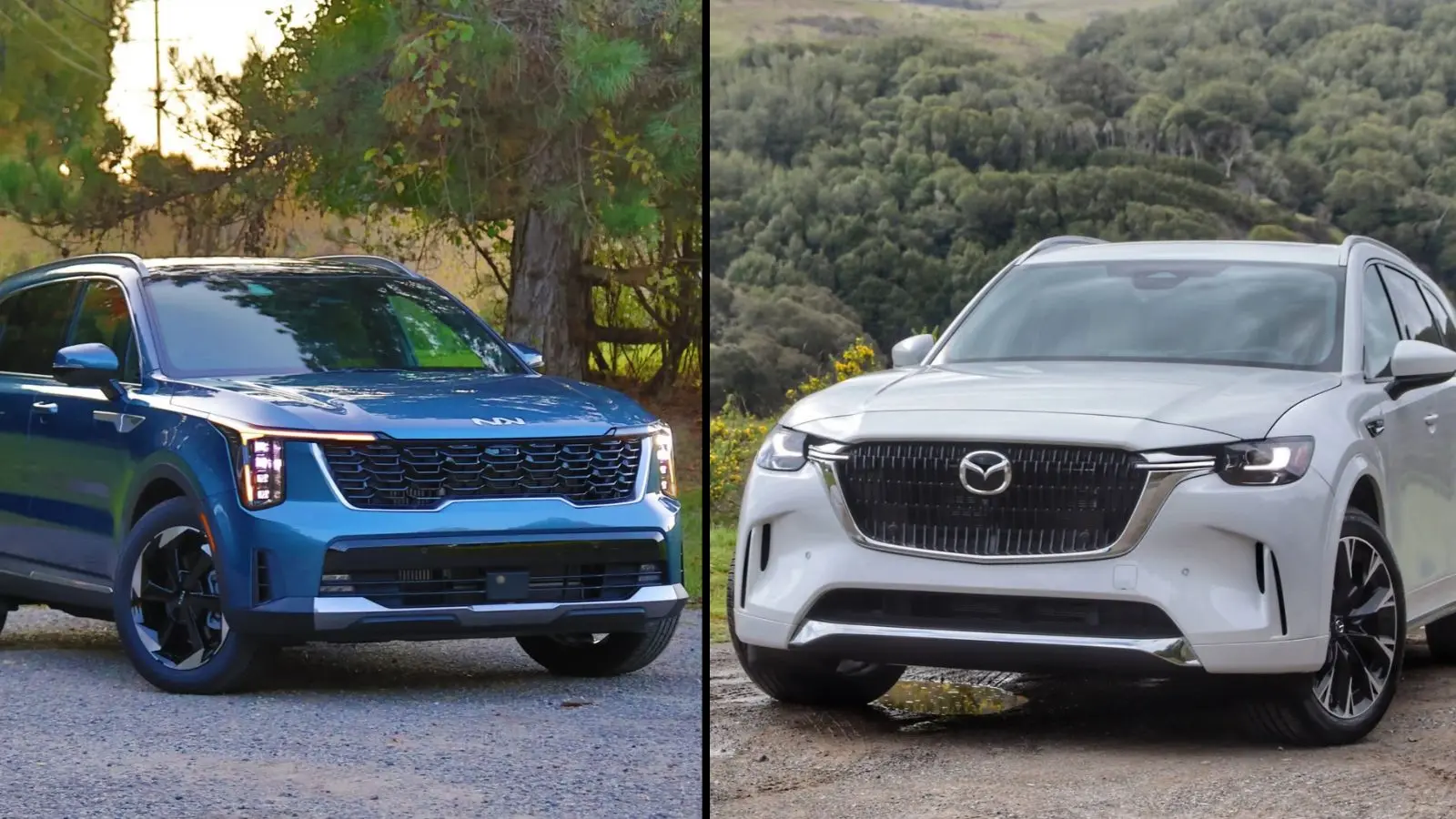
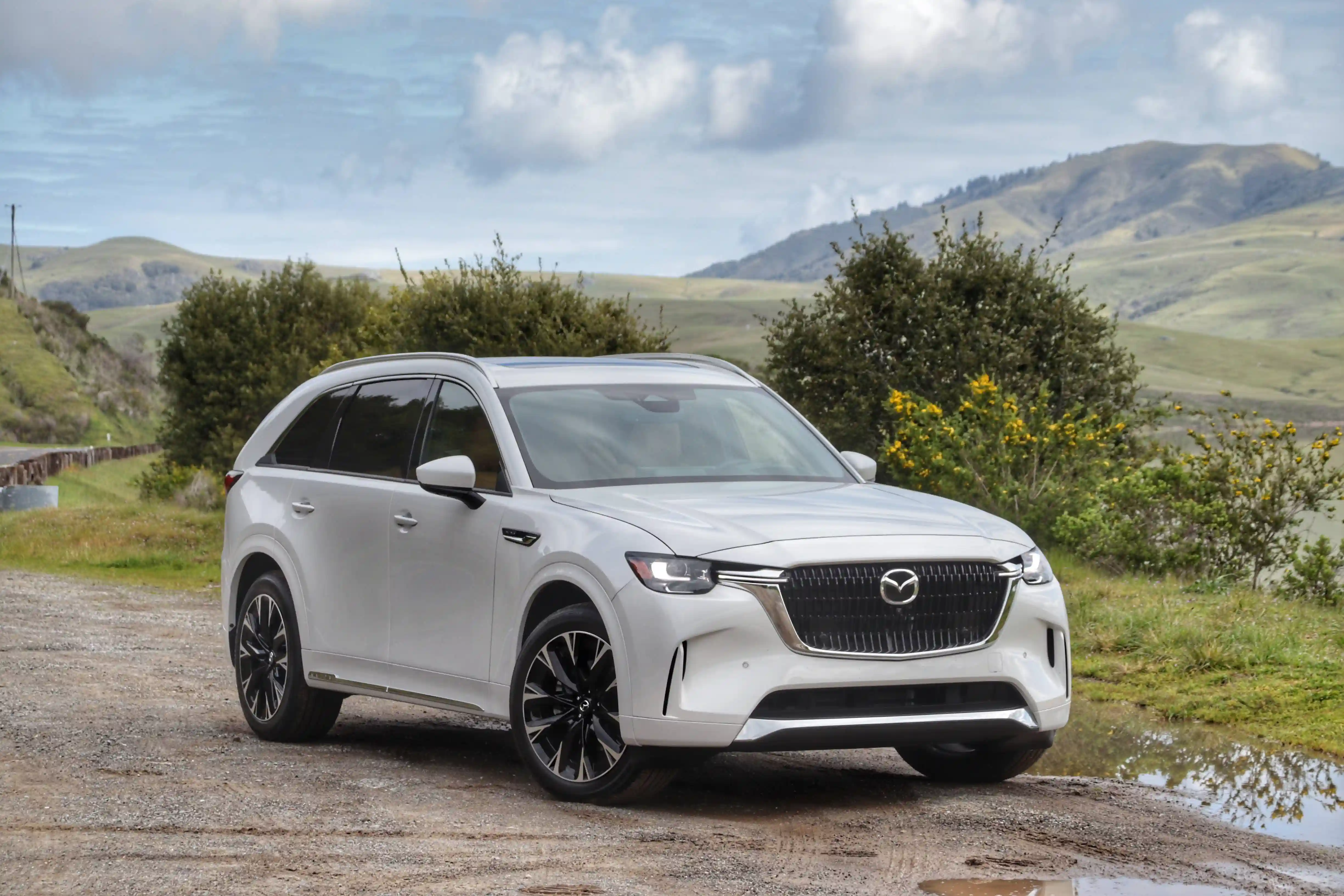
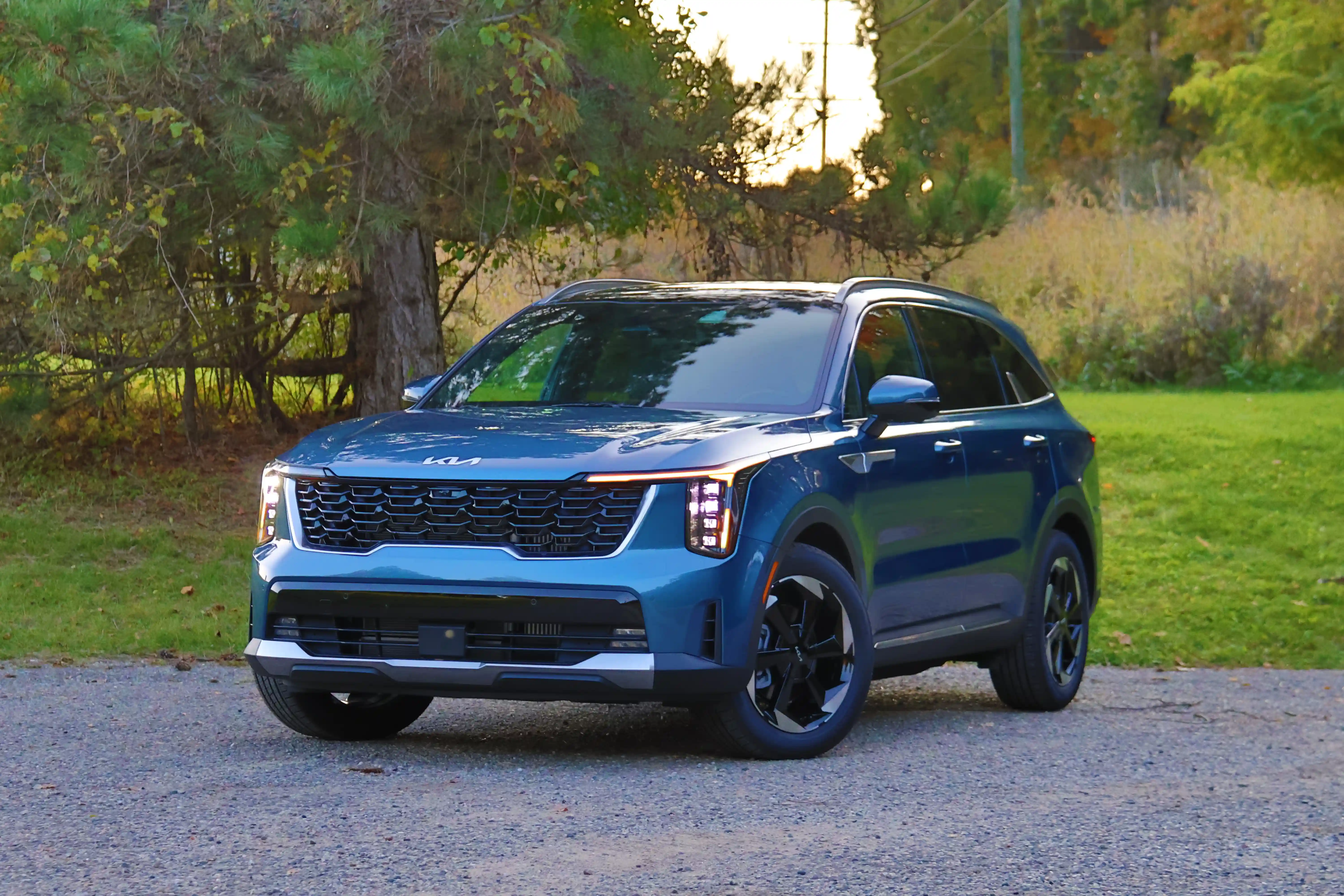
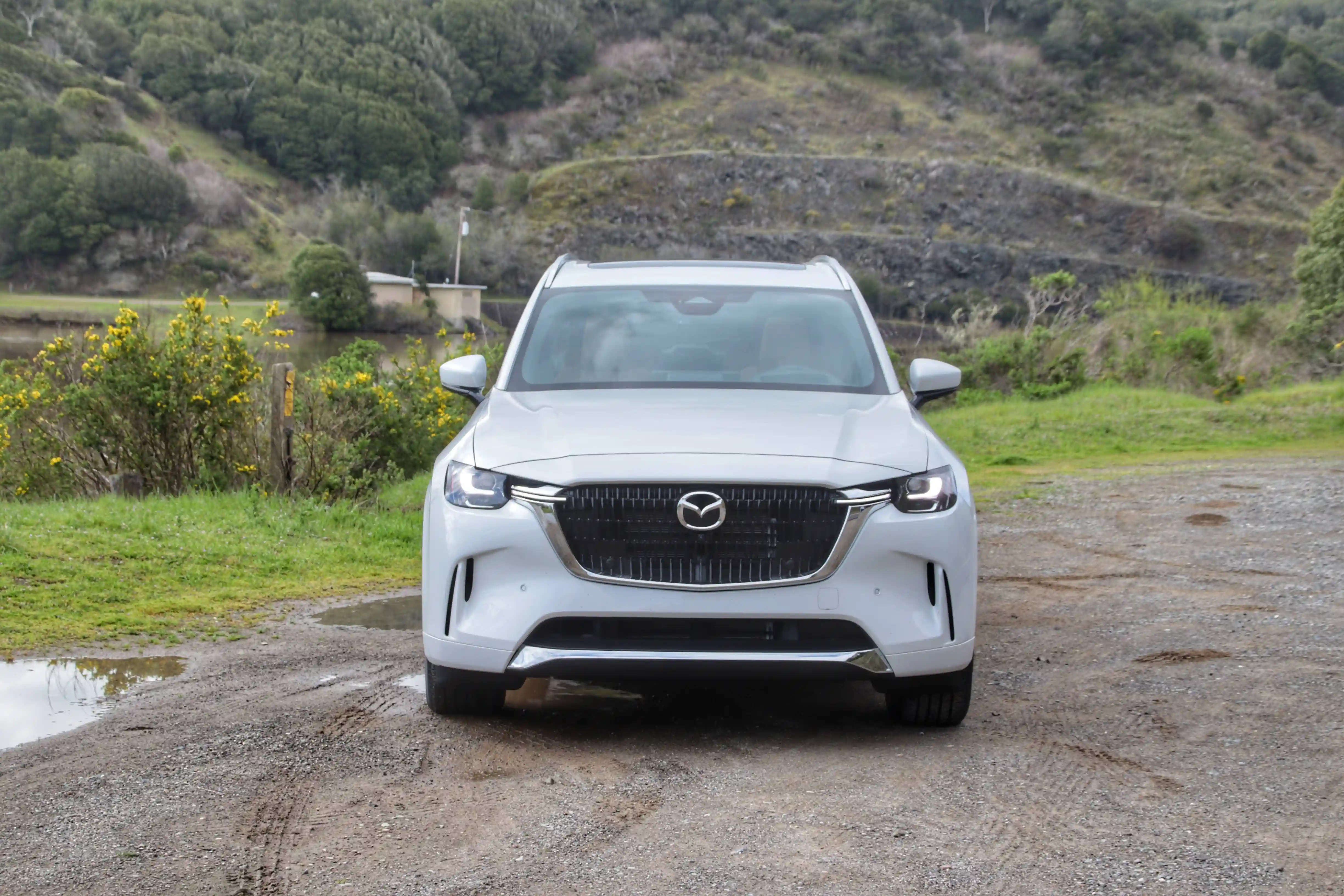
These SUVs share a similar overall shape, but the details are very different. The Sorento PHEV has a more upright grille flanked by vertical headlights and a boxier look overall. The CX-90 PHEV has wide, horizontal headlights and the more organic lines of Mazda's Kodo design language. The biggest difference is size, as the CX-90 PHEV is more than 11 inches longer and rides on a wheelbase a full foot longer.
Interior Space and Tech
Despite the CX-90 PHEV's larger footprint, that size doesn't translate into more passenger room. The Sorento PHEV has 0.6 inch more front headroom, 1.9 inches more front shoulder room, and 0.9 inch more second-row legroom. In the interior measurements that the CX-90 PHEV wins on, it's not by much: 0.3 inch more front legroom, 0.2 inch second-row legroom, and 0.1 inch more third-row headroom. One measurement might matter more for those who regularly plan on toting around people in the third row: the CX-90 PHEV has 0.3 inch more in the third row.
Both SUVs seat seven and come standard with a second-row bench and a two-seat third row, with second-row captain's chairs and a three-seat third row available.
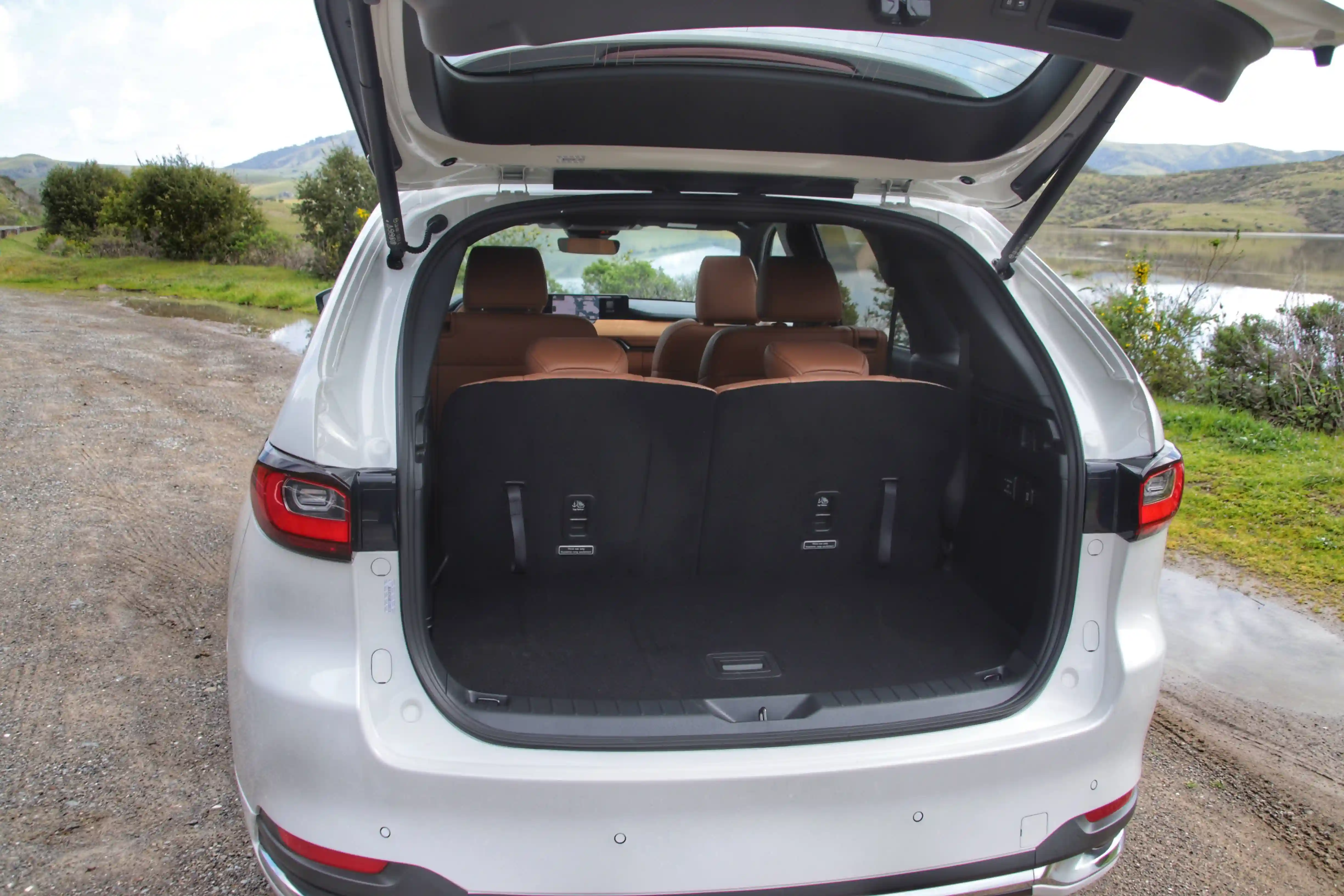
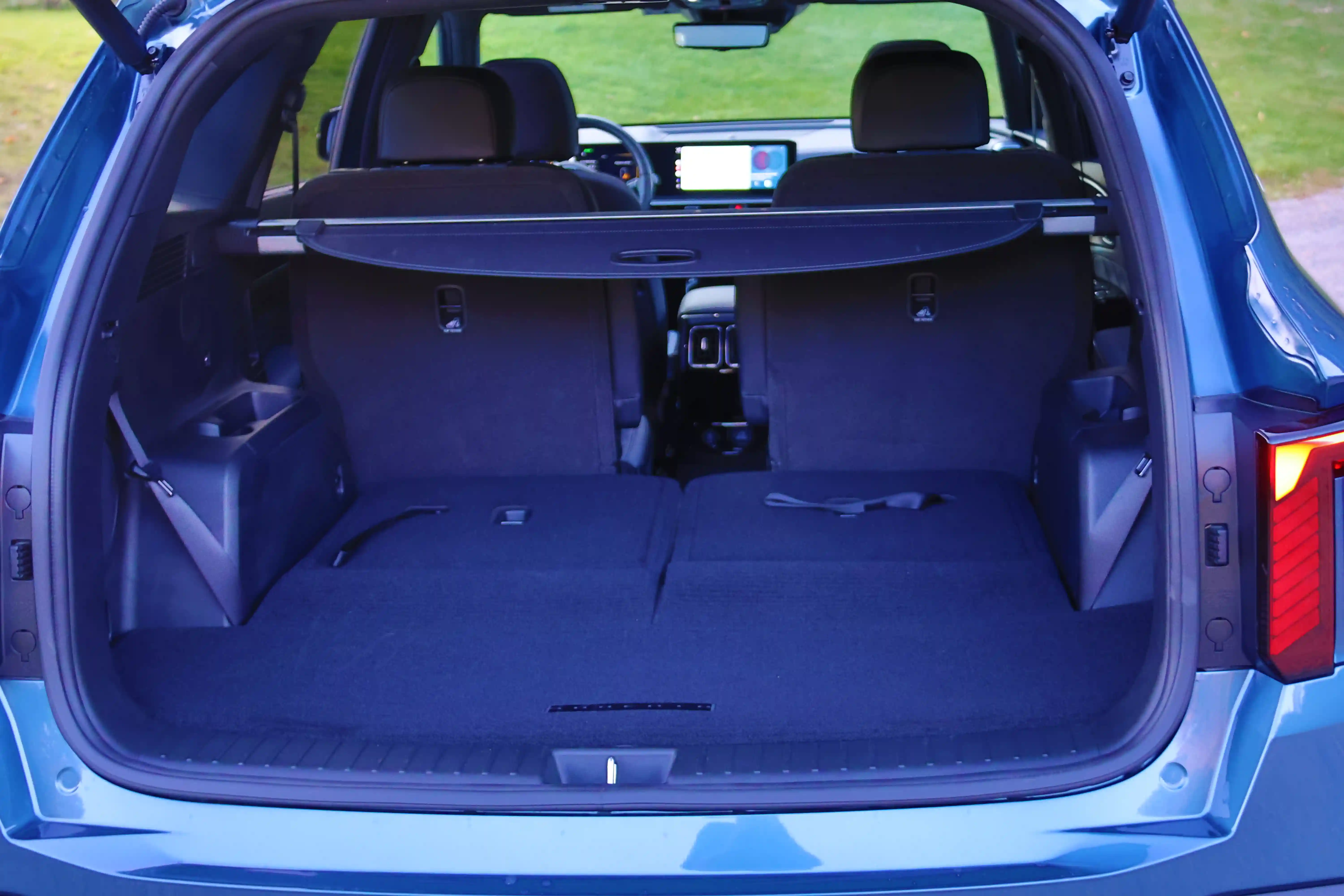
For cargo space, the CX-90 PHEV has 2.3 to 3.3 cubic feet more behind the third row, but the Sorento PHEV has 1.6 to 4.9 cubic feet more behind the second row.
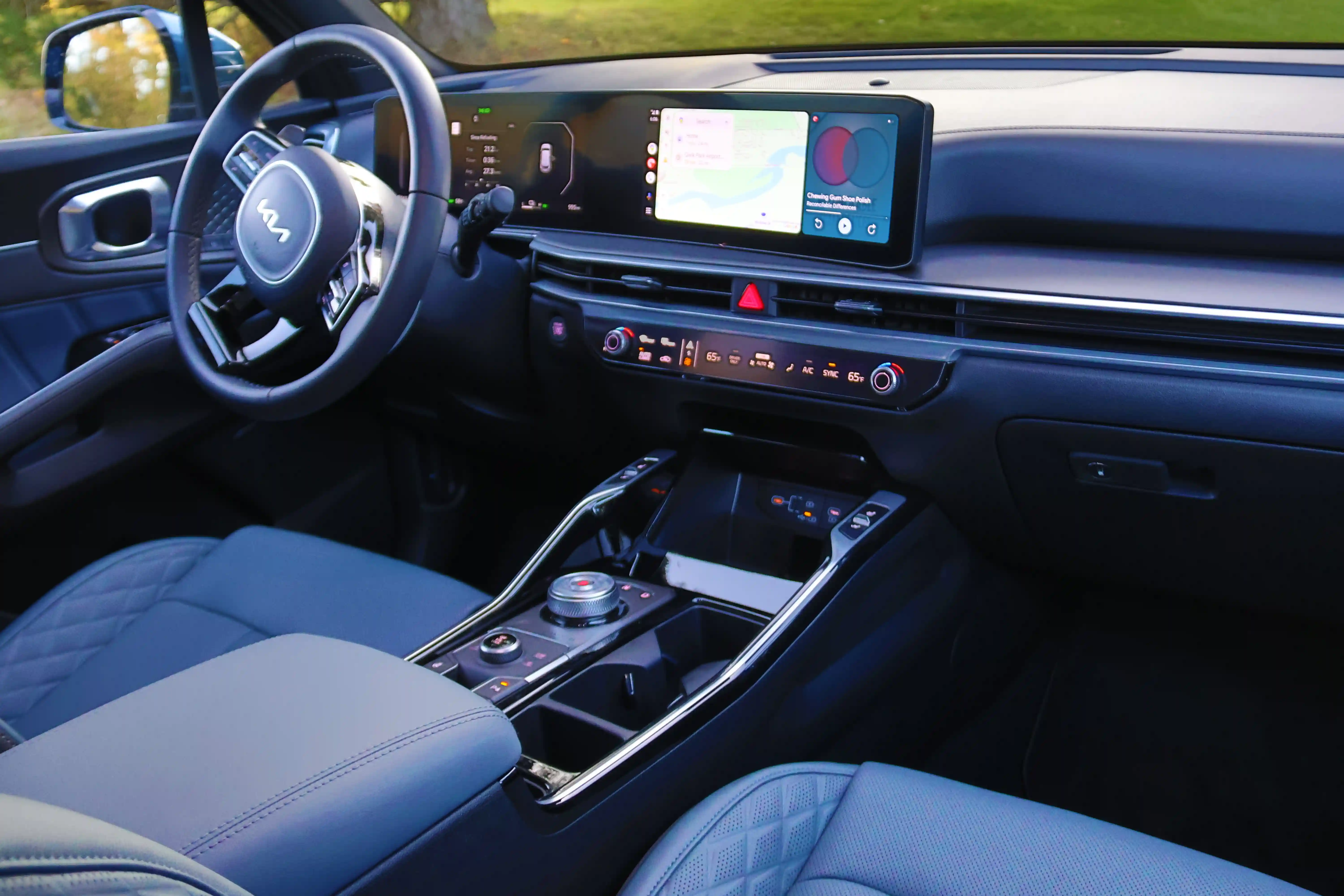
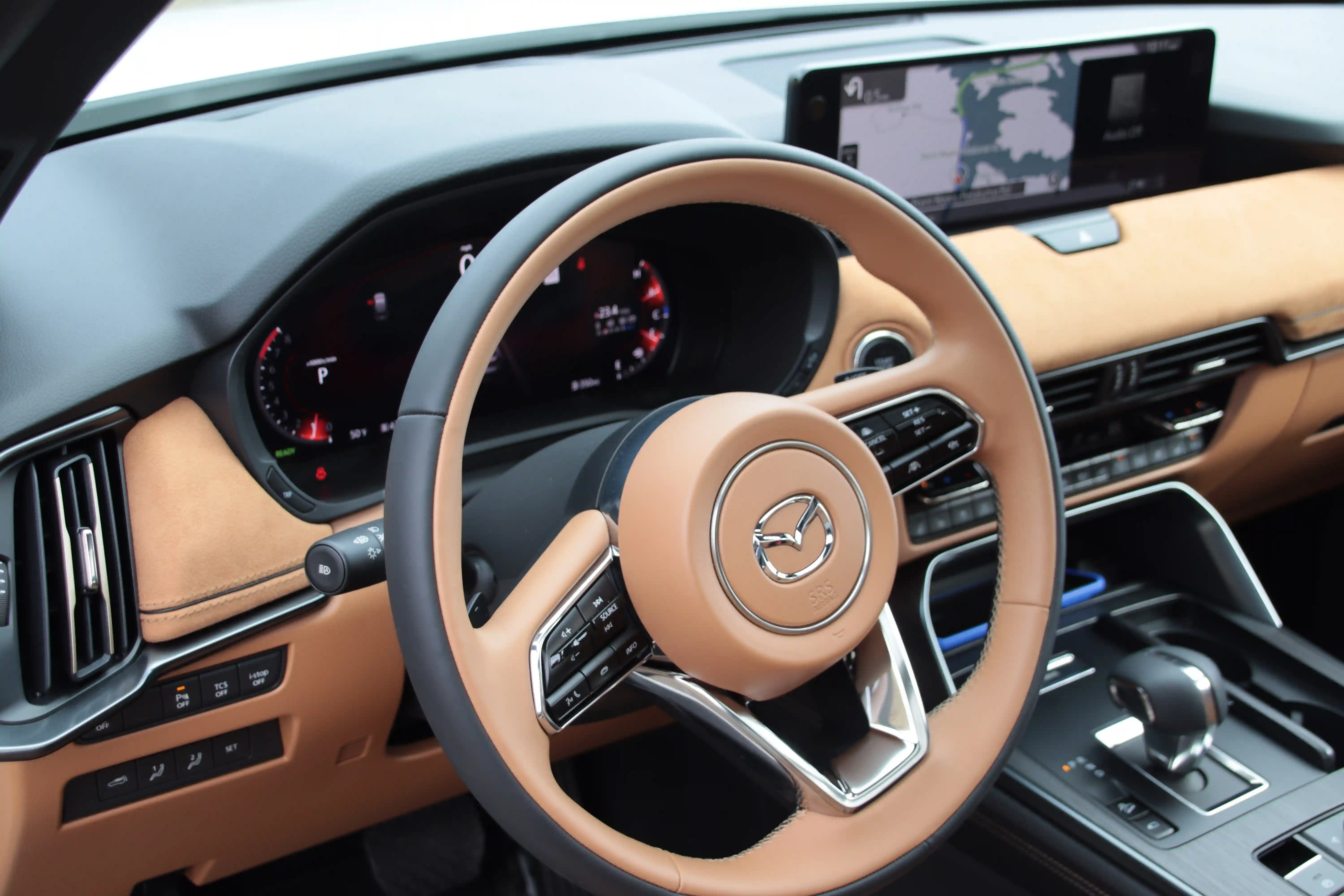
Both come standard with a 12.3-inch infotainment screen, wireless Apple CarPlay and Android Auto, wireless device charging, keyless entry, push-button start, a power liftgate, heated front seats, a power-adjustable driver's seat (eight-way on the Mazda, 10-way on the Kia), and USB ports. However, there's an important distinction with the Mazda. When using the built-in infotainment software, the screen doesn’t support touch. You control it with a rotary control knob on the center console. Touch works only when a smartphone is connected and projecting through Apple CarPlay or Android Auto.
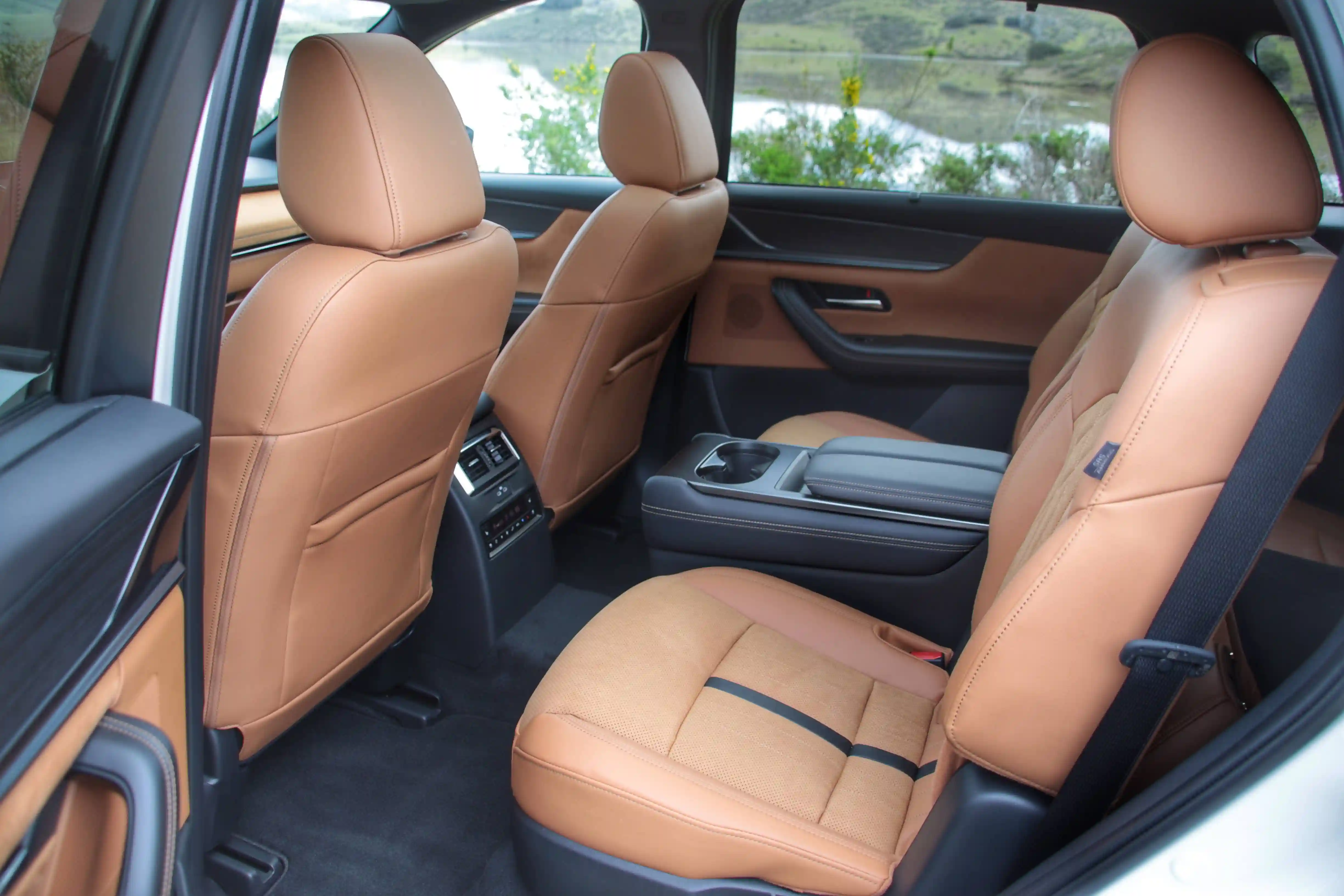
The CX-90 PHEV comes with a few more standard goodies, all of which are upgrades on the Sorento PHEV, including a sunroof, ventilated front seats, a heated steering wheel, heated second-row seats, driver's seat memory, second-row window shades, leather-trimmed seats, and a 12.3-inch digital gauge cluster. The Sorento PHEV, on the other hand, comes standard with navigation and an auto-dimming rearview mirror, which are upgrades on the CX-90 PHEV.
Additionally, the Mazda comes standard with a leather-wrapped steering wheel, eight-speaker audio, Alexa Built-in, a reclining 60/40 second-row bench, a 50/50 split-folding third row, and tilt-and-slide third-row access
On the safety front, both come standard with adaptive cruise control with stop-and-go, automatic emergency braking, blind-spot monitoring, rear cross-traffic alert, lane-keeping assist, rear-seat reminder, safe-exit warning, front and rear parking sensors, and driver-attention warning. Both PHEVs come with the option to add a surround-view monitor, blind-spot assistance, and reverse automatic braking.
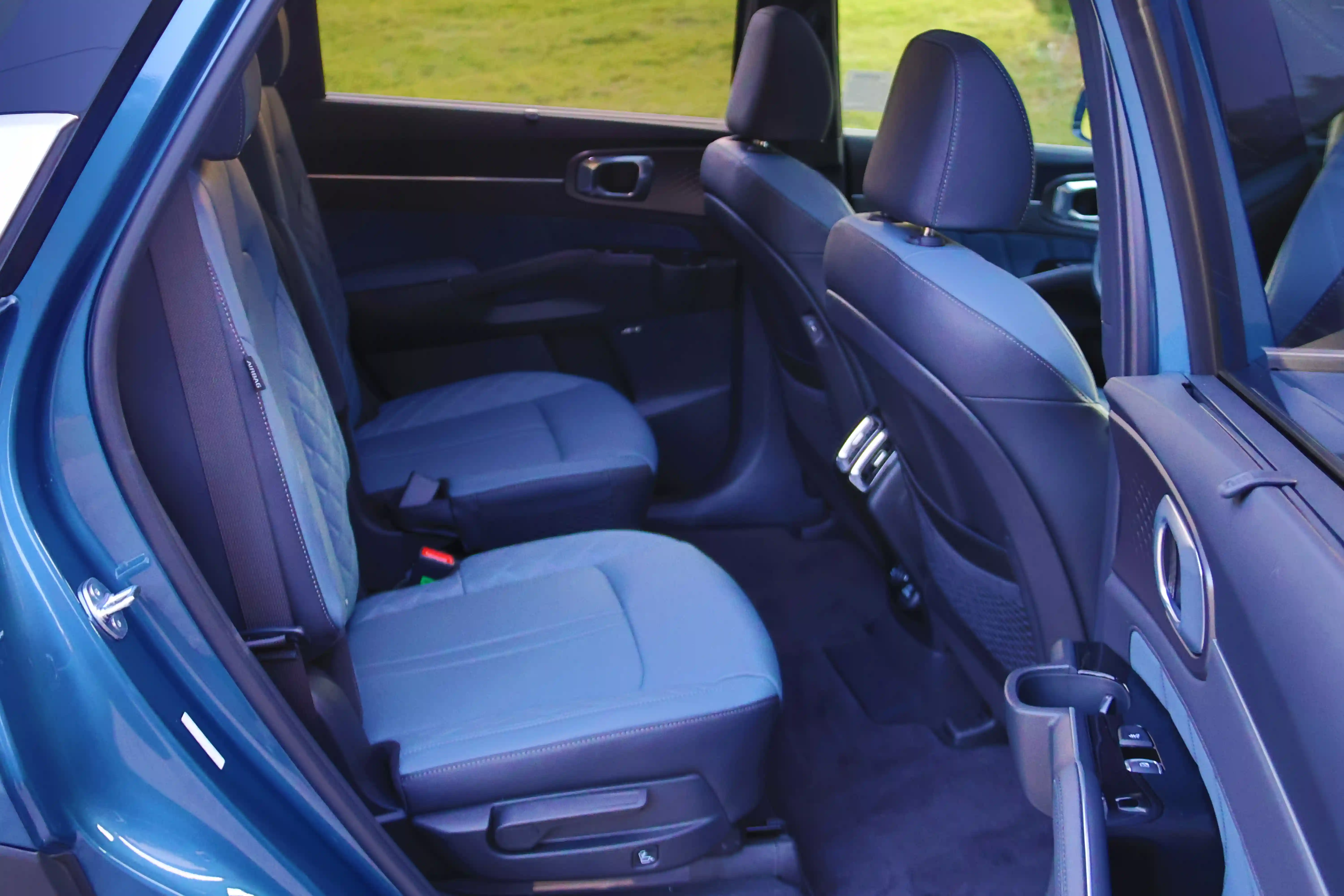
The Sorento PHEV comes standard with pedestrian, cyclist, and junction-turning detection, highway driving assist, and leading-vehicle departure alert, with the option to add highway driving assist 2 and side parking sensors.
The Mazda comes with the option for traffic-sign recognition, front cross-traffic alert and braking, pedestrian detection, and turn-across-path alert and braking.
Powertrain and Fuel Economy
The CX-90 PHEV makes more horsepower and torque than the Sorento PHEV. However, the Sorento PHEV wins on fuel economy, getting 7 mpg more combined on gas alone and 18 MPGe combined on gas and electricity. It also has five more miles of all-electric range.
For charging, the Mazda can go from 20 to 80 percent at a Level 2 charger in 1 hour and 30 minutes, while the Kia can fill up in 4 hours. With either one, you can plug in before bedtime and wake up with enough battery charge to get to school on electricity alone.
The charging gap matters most for drivers trying to refill between trips, so see how Level 1 and Level 2 charging work for plug-in hybrids ➜
Price
The Sorento PHEV undercuts the CX-90 PHEV in every configuration. The base Sorento PHEV is $2,555 less than the base CX-90 PHEV, and the top Sorento PHEV is $5,360 less than the top CX-90 PHEV. The Sorento PHEV's top trim is also $2,160 less than the mid-level CX-90.
Behind the Wheel
They're competitors on paper, but the CX-90 PHEV and Sorento PHEV have distinctly different characters. The Sorento PHEV feels more like a mainstream SUV, and Kia has really improved the color, materials, and finishes over the years. Mazda, meanwhile, has spent the last decade moving its whole lineup upmarket. Its exterior design and interior appointments feel genuinely premium and capable of competing with European luxury models.
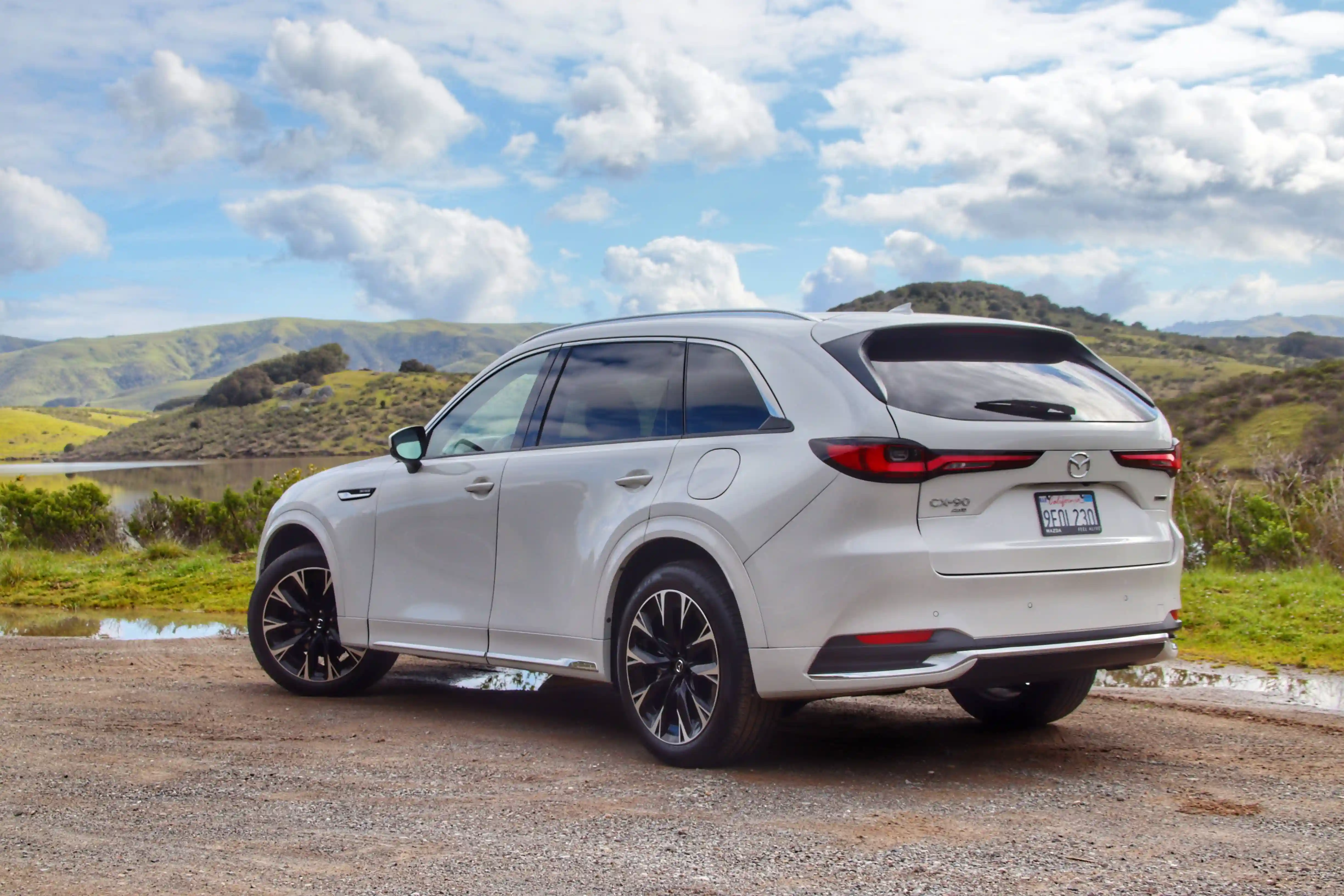
When Mazda launched the CX-90 a few years ago, it switched to a new platform with a longitudinally mounted engine. Gas models get a new inline six-cylinder, while the PHEV uses a 2.5-liter four-cylinder engine. The result is a better-balanced vehicle with a rear-drive bias in its dynamics. Mazda has moved away from the old “Zoom-Zoom” tagline, but most of its vehicles, including the CX-90, still feel sportier than the competition.
The turbocharged 1.6-liter four-cylinder in the Sorento PHEV makes similar peak power and torque to the CX-90 PHEV’s naturally aspirated engine, although as a turbo, it makes a lot more low-end torque. However, the CX-90 PHEV's electric motor churns out 173 horsepower compared to the Sorento PHEV's 90 horsepower. You can feel it in the system's overall responsiveness and its ability to operate in electric-only mode. Unfortunately, the CX-90 PHEV’s hybrid control isn’t as refined as the Kia's, and it can feel a bit jerky when switching between electric and hybrid.
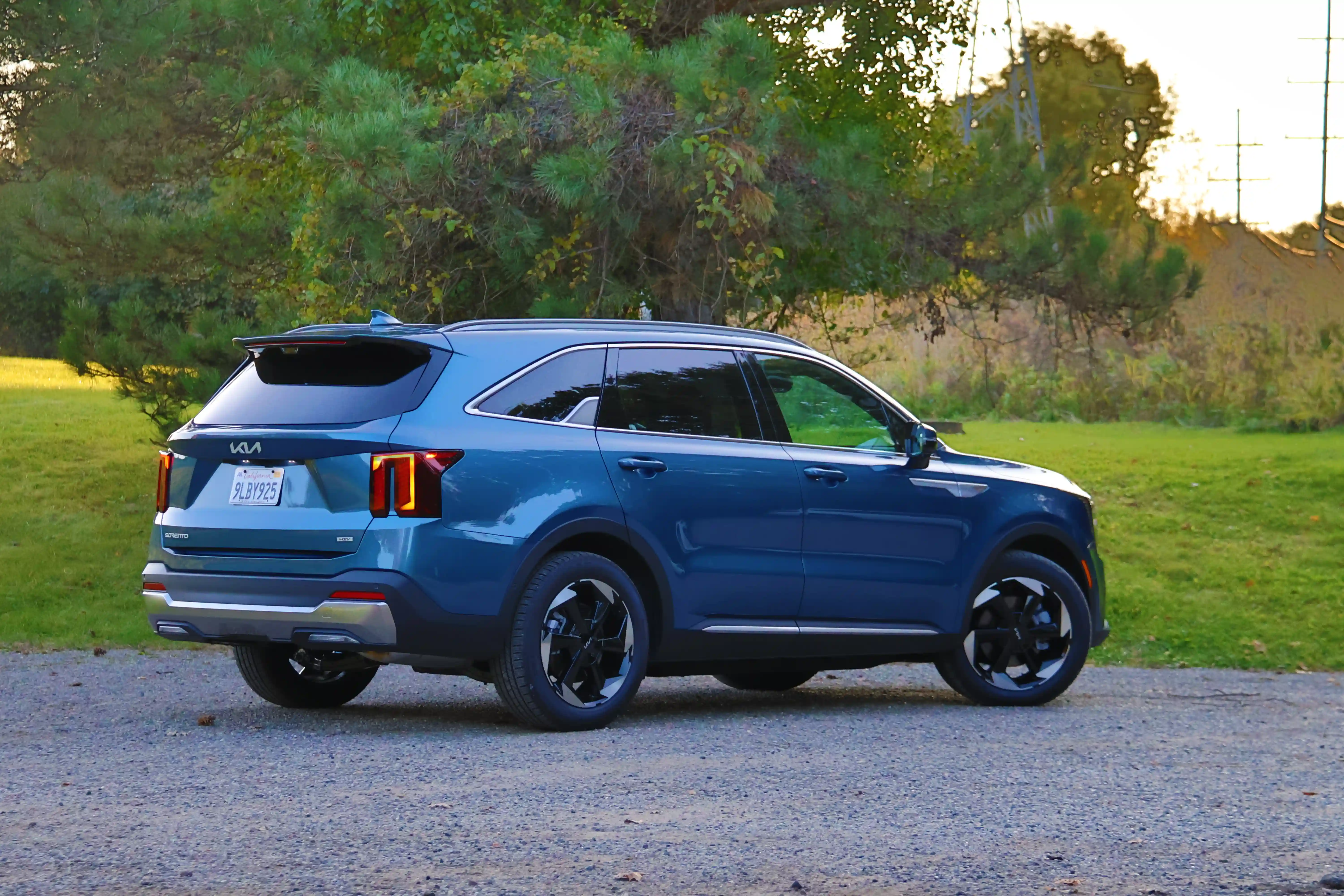
The interior numbers also don’t always tell the whole story. The interior dimensions seem close on paper, but the Mazda's third row actually feels roomier, although it isn’t competing with full-size SUVs. Adults will fit in the back, but they won’t want to spend a long road trip back there.
Which One's Right for You
On price, hybrid system operation, and fuel economy alone, the Kia is the easy winner. Its smaller size and roughly 600-pound lower weight give it a big edge in efficiency. But car-buying decisions are rarely just about economics. The CX-90 PHEV looks far more expensive than its model price suggests, especially in Artisan Red Premium or Soul Red Crystal Metallic.
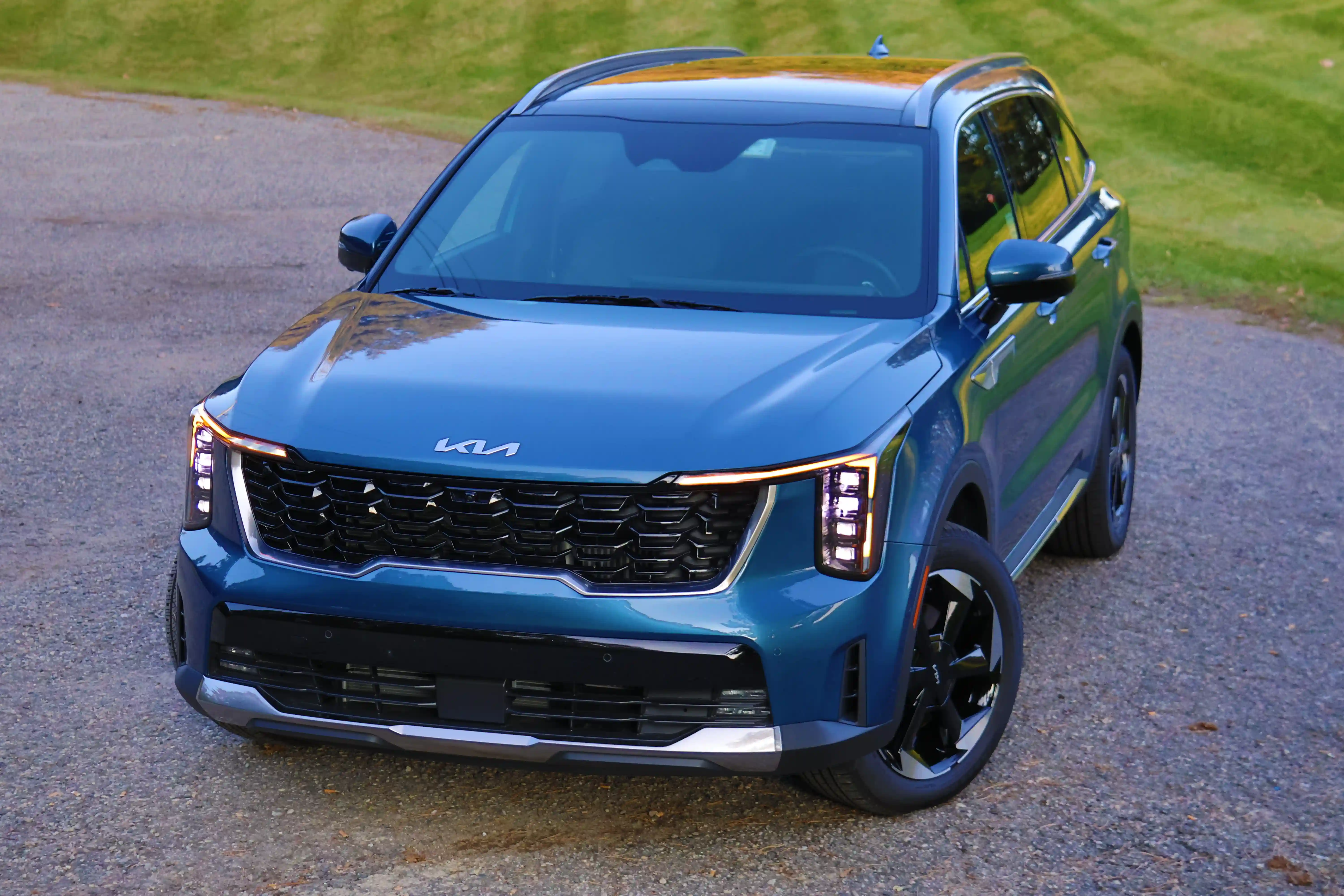
You’ll probably want to try the CX-90 PHEV's infotainment controller before making a final decision. Drivers used to touch interfaces may not like it, but if you only use phone projection, it won’t be much of an issue. The Kia is definitely the best value overall and the easier one to adjust to, while the Mazda may be a more affordable alternative to a BMW, Volvo, or Mercedes-Benz.
Both make more sense for households with dependable charging and daily driving inside their electric range, so see whether a plug-in hybrid fits your routine before paying the PHEV premium ➜
More Three-Row Plug-In Hybrids to Consider
2026 Nissan Rogue Plug-In Hybrid Review
Nissan’s three-row Rogue PHEV offers 38 miles of electric range and another mainstream alternative for families not ready to go fully electric.
Read More ➜
2026 Lexus TX 550h+ PHEV Review
The Lexus TX moves farther upmarket with more power, luxury, and space, giving CX-90 shoppers a useful premium comparison.
Read More ➜
Best Plug-In Hybrid Crossover SUVs
If neither three-row option is quite right, this broader guide compares more plug-in hybrid crossovers across size, price, range, and everyday usability.
Read More ➜